 MiG-23MLD
At least the Western sources can claim they have actually been there, while the Russians saw it mostly on CNN.
Yeah the russian were not there, of course they do not train the armies that fought the western alliance and basicly they did not send advicers yeah schorsch yeah :rolleyes: the MiG-15 was so good that basicly it was better than the F-86 and simply shot down 4 F-86s for each MiG-15 when flown by Russian pilots
MiG-23MLDSo there were 4 times the number of coalition aircraft to take shots at for the Iraqi Airforce and, yes and the Air defences, so by that they should have knocked 4 times as many coalition jets out the air then what they did if they were equal. The point is Iraqis had both aircraft and air defences in the form of SAMs and AAA to attack the coalition aircraft, not just aircraft to achieve this supposed 1:1 ratio. Example, Tornados getting shot down over iraqi airfrields was not as a result of Iraqi fighters but Iraqi air defences. I’m sure if you look into air to air combat during GW1 the figures would come out slighty differant then a 1:1 ratio.
Wow i see you have just added in the line ‘Remember that is the official western version, the iraqies and russians claim more aircraft were shot down’ – wow just wow, wheres the wreckage, weres the photo’s of triumphant Iraqis surrounding the wrecks of the coalition aircraft, thats right you guessed it, they don’t exist because its pure propaganda at its worst. Sheesh i suppose Venik is the source for these claimes. wow just wow.
The Western powers had a more poerful army that is the reason the won, however the reality is Russian equipment even old equipment is good even to shot down a F-117
MiG-23MLDWell the Su-24’s did a runner to Iran thats why they didnt get destroyed, as for the 1:1 ratio, that’d be Iraqi Aircraft and Air defenses vs Coalition Aircraft, so no its not really a 1:1 ratio at all.
Funny but you forget the Iraqies were outnumbered at least 1:4 in aircraft and 1:10 in fourth generation fighters and still the iraqies managed to destroy one western fighter for each iraqi aircraft destroy in the air, a F-16 for each MiG-29, a MiG-23 for each Panavia Tornado and they could not destroy the Su-24 simply because to catch a low flying intruder like the Su-24 is too hard simply like that.
Remember that is the official western version, the iraqies and russians claim more aircraft were shot down in fact the iraqies claimed up to 20 F-16s shot down
MiG-23MLDSure i’ll back it up, its that little thing called history, go back and look what those countrys that always got pounded used, hint: it wasn’t ‘western’ equipment.
The Soviet/Russian gear never ever lived up to expectations/hopes of its users.
tell that to the 1:1 aircraft losses rate in GWI sure never admit that for each MiG-29 shot down in 1991 also an F-16 was shot down and for each MiG-23, a Panavia Tornado was shot down and no Su-24 was destroyed
MiG-23MLDOne should be very careful what kind of aircraft they got. The Iraqi Mirage F.1 were specially equipped and were actually quite useful machines. The Soviet types were standard units and – as flex297 pointed out – probably more suited to Soviet style air defense.
As we have concluded in many other threads, Soviet types (at least most of the time) were often cheaper, simpler and tougher. Their operating costs hang however on the access to spares and the type of system (a Western style army will find an old Suchoi or MiG very expensive to maintain). On the other hand, Soviet systems sometimes lacked the flexibility of Western systems, in later years the avionics suite of Soviet systems was often inferior to Western types. This is, however, often due to the Soviets not exporting their latest hardware and being a bit clandestine with their technology (wise move actually, given that basically all Soviet types were evaluated by the West but none (except the F-5A) made it into the Soviet Union).
In the end, for each case specific reasons can be found. Iraq operated mainly MiG-21 and -23 configured for air-to-air role, along with some rather unsophisticated fighter bombers. Their training and tactics were inferior to that of the Iranians, and a MiG-21 (later models) or MiG-23M can hardly stand against well led Phantoms. Of course, the Mirage F.1 with specialized avionics did a much better job in many situations. Very important was that France not only delivered the aircraft, but also tactical advice.
Another thing: for long term peace duty most pre 1990 Soviet types (excluding later MiG-29 and Su-27 derivatives, but including all early MiG-29) are not really suited. Life time is short, engine life is short. The low purchase price then does not compensate for higher life time costs. In the Luftwaffe the MiG-29 proved to be quite a maintenance nightmare, especially the engines. That the MiG beats the Tornado and the 20 year old F-4F on maintenance cost is an achievement of its own. 😀
All of this is based upon Western accepted kill rates, in Russian literature the MiGs and Sukhoi did better,
The Question is if the Russian aircraft are so bad why are sold around the world?
A) price
B)quality
C)maintainability
In the 1990s Russia sold many Sukhois and MiGs however Western Europe came in second place, in this decade the Su-27 still is sold and the MiG-29 still is sold even in traditional western markets.
All those nations know something, the Russian aircraft are not less sophisticated than the western counterpart, simply they are build by cheaper labour.
Of course as a commercial slandering campaing no western media acknowledges air to air kills even when in GWI the kill ratio was 1:1 for each an every MiG or Sukhoi, a western fighter was shot down of course that is the first commercial our fighters and pilots are invulnerable.
The Mi-8 and Mi-26 still are sold despite are basicly 1970s and 1960s aircraft, the reality is Russia sells aircraft and continues to be the second supplier of combat aircraft in the world
MiG-23MLDWell I wish them the best of luck, it is definitely an achievement. If the other Latin/Mercosur countries are smart, they should all come together with this project and have their own regional helicopter. The Latin American industries have a lot of potential given the chance and the ability to unite.
—–JT—–
I do not know it is probable that the design might be like the IA-63, a mediocre design only bought in small numbers and only by Argentina that bankrupts its maker, Embraer followed a very smart strategy by becoming a civil aircraft maker, if Cicare can do the same with some strategic alliances and the right sales strategies it can become another Embraer however if they fail to make large numbers and make a profit it will pass into History as the Pulqui, Pucara and other interesting designs built in Latin America did
http://razonyfuerza.mforos.com/549925/7061973-fue-presentado-el-ch-14-cicare/
MiG-23MLDDon’t give me that nonsense that it requires a good TF for post Mach 2 speeds. Many fighters in the sixties are capable of quick dashes right to around Mach 2. That was an important requirement in the Cold War needed for bomber intercepts. Regulated inlet systems have been part of aircraft since the late fifties, nothing new about that. TF is really a poor engine to go past supersonic speeds because you cannot go faster than the speed of your exhaust gases existing the rear. That’s plain physics, similar to why a car cannot go faster than the rate its driving wheels can turn. Shift to turbofans was because the TF is more fuel economical, accelerates better, has much higher payloads and because of the realization that most combat takes place at subsonic. But make no mistake that a TJ fighter like a BAC Lightning, F-4 Phantom or a Starfighter is still pretty fast even for today. The J-8F has an operational weight of around 14,000 to 15,000kg, yet one of the two engines has an output of 7600 to 7800kg (later variant of WP-14).
Crobato speed is totally related to the inlet design and engine air preassure needed, in terms of power plant specifications and we can prove it with two examples
The F-16 has a fixed inlet and is barely a Mach 2 aircraft, the F-15 has vg inlets and can go up to speeds of Mach 2.5 however both are powered by the same turbofan; and in the other hand both the MiG-25 and MiG-31 are Mach 2.8 fighters and the MiG-25 has turbojets while the MiG-31 has turbofans even despite they have similar but not the same inlets
Speed in physical and aerodynamical terms is fact is just the result of a few factors air drag and weight versus thrust and lift you can have fighters with low thrust to weight ratio but very fast like the MiG-21 or MiG-25. Then why you need higher thrust to weight ratio? simply to turn and if you have better aerodynamics and engine design for speed and acceleration but basicly for turning and payload
Why for turning? well while turning, the extra thrust to wieght ratio gives better maneouvrability to defeat inertia and the centrifugal forces, having a better thrust to weight ratio should make the latest J-8II variants probably as good if not better than the MiG-23MLD and F-4E, however without having its performance specifications it is hard to know if air drag and wing design allows it to take advantage of that to the full extend, in my humble opinion it won`t beat an F-16 and hardly will be better at high AoA than an F-18, probably it can be competitive with the Mirage 2000 up to some degree in terms of acceleration and rate of climb but i doubt it is very agile.
MiG-23MLDI would seriously doubt that the documentation of a top secret state of the art project being developed would be transferred to China. Even by the late fifities, there was already increasing tension between China and the Soviet Union. The J-8I also has considerable “waisting” in the center of the plane which the YE-152A did not, which means that the Chinese were able to study the area ruling concepts that were tested on the F-102 Delta Dagger.
Chinese engineers did study under Russian universities, so they are taught engineering and design concepts the Soviet way. One can imagine students and teachers brainstorming all sorts of ideas in the blackboards then, all becoming future designers in their respective countries.
Crobato
The YE-150 does have an area ruled fuselage, so that is not a reason to say they are different. however there is little information about the documents transfer in Russian sources. Also the YE-150 program started in 1957 so it is not inprobable the Chinese were aware of the program or at least had some knowledge of it.
Nevertheless few russian sources will claim a very close relation as they claim for the MiG-23 and J-8II
MiG-23MLDFunny how you can clone something if you never seen it before.
Sino-russian relations had broken down even before transfer of Mig21 tech was complete, and China had to effectively reverse engineer the Mig21 itself. The twin engine Mig21 came much later, and at that point, the USSR was as hostile to China as it was to the USA, so tech transfer was just plainly not going to happen.
But back on subject.
The J8II is not only fast, but also has a suprisingly high service ceiling, which together makes it a uncharateristically good BVR fighter.
It is like the Chinese equivilant to the Mig31 in Russian service, only much less capable. But it should still be able to give even modern western and Russian types a good run for their money at BVR and might make an interesting penetration attacker to hit high value assets deep inside enemy territory (like AWACS and tanker etc).
The Chinese will keep producing it for a number of reasons, including retaining skilled workers but also because its just too good a deal to pass up as it is so damn cheap for what it does. AT BVR, there is really little difference between a J8II and a J10/J11B (the J8F is superior to the Su27Sk and early J11s on account of its more modern/capable radar as well as active BVR missiles).
You can send a wave of J8s up with your other BVR plateforms (J10, J11, JF17 if the PLA ever take it, and even the JH7A) to boost numbers that will help you to win there. Or you can send them first to wear down the opposition and allow your more capable but expansive modern fleet to move in for the killer blow etc. Just so long as you don’t let J8s get into dogfights, they will do fine, which is hardly a big risk for the PLA as they have swams of dogfighting specialists from the J7 right through to the J11B who would take over from there with relish.
Even after the likes of the J10 and J11 become more common within the PLA, I think there will still be a place for the J8II. The plane is capable and brings useful capabilities to the table. It is cheap both to produce and also to maintain since the PLA no doubt has a vast spares inventory and readily trained crews for them. Production will eventually stop, and probably soon, as Shenyang shifts more focus onto the J11 and their XXJ proposal, but the PLA would likely maintain the fleet at least until spares start to run out and the type may then eventually be phased out.
That is, of course assuming that nothing happens with Taiwan. We can all work out what would happen if war breaks out, but if the island suddenly reunites with China or make it clear they have no intention of breaking away, then the PLA would no longer be on a war footing. In which case you can expect them to start cutting quantity in favour of quality in a far larger and comprehansive scale, and one of the first to go would likely be the J8II as it does nothing that cannot be done by another type.
I think you are simply overstimating the J-8II, the J-8II is a F-4E equivalent, not a MiG-31, it barely can fire modern weapons but it is not something that goes beyond the F-4F Luftwaffe variant.
About the YE-152/YE-150 and J-8I relations a lot has been written about it some Russian sources say part of the documentation was given to China, others simply say the aircraft has no relation, however it has the same engines and almost the same aerodynamic configuration.
Сборка первых двух опытных самолетов завершилась в июле 1968 г., первый полет самолета состоялся 5 июля 1969 г. (летчик Юн Юхуан). При создании самолета был широко использован опыт, полученный в процессе изучения и освоения производства в Китае самолета МиГ-21 (J-7). Конструктивно самолет J-8 близок к советскому опытному истребителю-перехватчику Е-152А, созданному в 1959г
The construction of the first two experimental aircraft ended in July 1968, the first flight of the aircraft took place on July 5, 1969 (Yuen Yuhuan was the test pilot). During the development of the J-8 it was extensively used the experience gained in China of the manufacture and study of the MiG-21 (J-7). Structurally J-8 aircraft follows closely the Soviet fighter aircraft-E-152A, created in the year 1959.
Сборка первых двух опытных самолетов (1- для статиспытаний) завершилась в июле 1968 г., первый полет самолета состоялся 5 июля 1969 г. (летчик Юн Юхуан). При создании самолета был широко использован опыт, полученный в процессе изучения и освоения производства в Китае самолета МиГ-21 (J-7). Конструктивно самолет J-8 близок к советскому опытному истребителю-перехватчику Е-152А, созданному в 1959г. Документация по Е-152А, не пошедшему в СССР в серию, была ранее передана Китаю (без двигателей, ракет и РЛС).
The construction of the first two experimental aircraft ended in July 1968, the first flight of the aircraft took place on July 5, 1969 (Yuen Yuhuan was the test pilot). During the development of the J-8 it was extensively used the experience gained in China of the manufacture and study of the MiG-21 (J-7). Structurally J-8 aircraft follows closely the Soviet fighter aircraft-E-152A, created in the year 1959.
Documentation for E-152A (which never entered mass production in the USSR ), was transferred to China (without engines, missiles and radar).
http://www.sergib.agava.ru/china/shenyan/j/8/j8.htm
http://www.airwar.ru/enc/fighter/j8.html
The aircraft is a third generation fighter and it can dogfight with fighters of its own age such as the Mirage F1, MiG-23M or F-4E however it should not dogfight with fourth generation aircraft unless it carries Python V or AIM-9X type weapons
MiG-23MLDthere are a few air forces in the world that use both European/American aircraft and Soviet/Russian aircraft.
it would seem that in almost every case, their western aircraft have proven to be much more worth than their Russian counter part.
This is not representative of every variant of aircraft that these countries make, but primarily on the export models which often are not up to spec.
IAF: Prefers Mirage 2000, offered high serviceability rates and even though it was not equipped to do the job, was valuable in high altitude ground attack than the dedicated attack aircraft, the MiG-23ML. Their MiG-27 may have been better initially than the Jaguar, but the Indians found the Jaguar to have more potential in capabilities and upgrades than the MiG-27.. not as maintenance costly ..both the Mirage and Jaguar.
Iraq AF: Mirage F1 more of a threat to US forces than any of their other Soviet aircraft bar probably the MiG-25. More useful for anti shipping than any other Soviet type. only the Su-25 was better in other specific roles.
Iran AF: Prefers their Iraqi F1s over their Mig-29s. Prefers their F-4s and F=14s as well, new aircraft they are building are based on old western types, not Russian or Chinese aircraft they use. The only non-western aircraft they actually like is the Su-24.
Yugoslavia: Wanted the Mirage 2000, had to settle for the MiG-29
Peru: Prefers its Mirage 2000 over MiG-29
Sri Lanka: probably one of the few cases where they prefer their Russian aircraft, over their Western one (the Kfir).
Germany: found more use of its F-4s over the MiG-29
Tha Shafaq is based upon a Russian design called Istrevitel 2000
http://www.aviapedia.com/forum/future-of-aviation/t-vityaz-2000-66.html
MiG-23MLDthere are a few air forces in the world that use both European/American aircraft and Soviet/Russian aircraft.
it would seem that in almost every case, their western aircraft have proven to be much more worth than their Russian counter part.
This is not representative of every variant of aircraft that these countries make, but primarily on the export models which often are not up to spec.
IAF: Prefers Mirage 2000, offered high serviceability rates and even though it was not equipped to do the job, was valuable in high altitude ground attack than the dedicated attack aircraft, the MiG-23ML. Their MiG-27 may have been better initially than the Jaguar, but the Indians found the Jaguar to have more potential in capabilities and upgrades than the MiG-27.. not as maintenance costly ..both the Mirage and Jaguar.
Iraq AF: Mirage F1 more of a threat to US forces than any of their other Soviet aircraft bar probably the MiG-25. More useful for anti shipping than any other Soviet type. only the Su-25 was better in other specific roles.
Iran AF: Prefers their Iraqi F1s over their Mig-29s. Prefers their F-4s and F=14s as well, new aircraft they are building are based on old western types, not Russian or Chinese aircraft they use. The only non-western aircraft they actually like is the Su-24.
Yugoslavia: Wanted the Mirage 2000, had to settle for the MiG-29
Peru: Prefers its Mirage 2000 over MiG-29
Sri Lanka: probably one of the few cases where they prefer their Russian aircraft, over their Western one (the Kfir).
Germany: found more use of its F-4s over the MiG-29
The typical chiche, Russian aircraft low quality and prefered by customers who use western and Russian aircraft.
The reality Russian aircraft have excellent quality and durability, everything depends in the customer needs and the time and model it operates an aircraft.
Iraq Mirage F1 never achieved a single air to air victory in GWI, at least a MiG-25 shot down an F-18.
The Mi-8 is used in some nations that use western helicopters and despute opinions will vary no one can say the Mi-8 is a bad helicopter it is even used by UN forces.
The same is the Il-76, Mi-26 and An-124 used by many cargo or UN forces

MiG-23MLDIt definitely has potential. If they can create a family of these helicopters, one very light for scouting and light attack, a light attack/support one and a small transport one (maybe for 6-8 troops), they could be useful for Argentina’s Air Assault Brigade.
—–JT—–
The CH-14 is now in the flight test phase to see if it satisfies international flight standards, however it combines the efforts of Cicare industries, La Plata University and the Argentine army in order to create a pratical Helicopter that can be used and sold around the world. i think Argentina needs a commercial success to consolidate a relatively simple helicopter design into an international commercial success
http://www.lasintesis.com.ar/anteriores08/dia071213.html
MiG-23MLDWell i think your little helicopter is very nice Mig23MLD.
I would like the CH-14 was of my creation but sadly it is not, however it is a great feat for Argentina that created the first Jet fighter in Latin America and one of the first jet aircraft in the world, and in 2007 has once more become the leading nation in helicopter design in Latin America, Cicare created his firsts helicopters not many years after Sikorsky and bell but it took to many years for Cicare to build a relatively large helicopter.
However Cicare was not acknowledged as he should had until the CH-14 was presented by the government of Argentina in 2007.
http://www.procedimientospoliciales.com/nota.asp?CodigoNoticia=2774
http://extrafam.mforos.com/628472/6471738-el-nuevo-helo-del-ejercito-argentino-ch-14-de-cicare/
http://www.lamanana.com.ar/28-11-07/pplana.html
The pictures show the CH-1 and CH-2 helicopters and Augusto Cicare inside the CH-14
MiG-23MLDHawker Beechcraft last week formally opened a new plant in Chihuahua, Mexico for light sheet metal assembly. The facility is slated to employ 250 workers initially, but that number could grow to up to 650 within the next five years, the company said. The plane maker said the addition of a Chihuahua facility would “enhance its competitive position in the world market” and develop a reliable supply for its main manufacturing facility in Wichita, Kan. The facility also will help ease space constraints at Hawker Beechcraft’s U.S. facility, the company said. “We are increasing our manufacturing footprint to meet current demand and aggressive growth plans,”said Jim Schuster, chairman and CEO of Hawker Beechcraft Corp. “This facility opening joins other examples of recent expansion and renovations in Little Rock, Ark., the United Kingdom and Wichita, Kan.; the opening of a new service center in India; and our increased international sales presence.” Hawker Beechcraft also is hoping to increase its presence in the Mexican market with the new plant. The company already has a wire harness manufacturing facility with Labinal, a service center and fixed-base operation and dealer in Mexico. “Mexico has traditionally been a strong market for Hawker and Beechcraft product,” the company said, noting that 168 Hawker Beechcraft turbine aircraft operate in the country.
http://aero-intelligence.blogspot.com/2007/10/hawker-beechcraft-adds-sheet-metal-shop.html

http://www.military.ie/aircorps/fleet/beech/index.htm
The Air Corps operates one Beechcraft Kingair 200. This aircraft entered service in 1980 and operates seven days a week carrying out a wide variety of roles for the Air Corps.
In addition to its transport role, the Beechcraft Kingair is utilised to a large extent in the multi-engine, multi-crew training scenario for both cadet pilots and qualified pilots. It provides an excellent platform for imparting essential multi-engine flight characteristics and Multi-Crew Co-ordination techniques to students before progressing onto other multi engine, multi crew aircraft in the fleet.
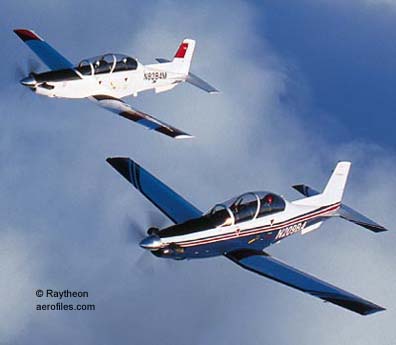
MiG-23MLDa few more aguilucho pictures


 Sign In








