MiG-23MLD
What makes the F-22 that good in your opinion ? Fine it’s a stealth platform, but where are the available weapons ?
Eurofighter is a complete dud in a2g and anti-shipping, Rafale is promising, but not yet ready.
Only Gripen offers a wider range of available munitions.The Teenfighters offer the full range of weapons and in their latest incarnation the best avionics fit. But as I already wrote, they suffer in my opinion from the black box syndrome.
Leaves the latest MiG-29 and Su-27 derivates. Especially the Sukhoi offers everything one could ask for. Long range, excellent aerodynamic performance, BVR weapons, HMS+high off boresight IR-missiles, the complete set of a2g weapons, and you can choose between Russian, French or Israeli avionics.
The F-22 can carry air to ground weapons, however it seems its main mission is air to air

http://www.militar.org.ua/foro/las-generaciones-de-los-aviones-de-combate-modernos-t14227-210.html
http://www.noahshachtman.com/archives/cat_raptor_watch.html
Of course up to these moments the Eurofighter has been more missionized with air to ground in mind but the F-22 can be used with high lethality in air to ground.
WHile the Eurofighter needs long stand off weapons due to a less stealthy airframe, the F-22 can get closer, i do not know but i guess the large Su-34 should be very competitive in terms stealth/payload capability
MiG-23MLDThe discussion is somewhat pointless, without knowing what is meant with best.
If we only take pure a2a, then the Raptor comes out on top.
If we include available weapons, mission flexibility, and availability for export customers, we will most probably see a Su-30MK Variant on top. US types suffer from the black box syndrome, and the new European fighters shine with the absence of available weapons.
Well it is diffucult to say what is best, in air to air the F-22 is the top operational fighter, followed by the Eurofighter, Rafale, JAS-39, Su-30MKI.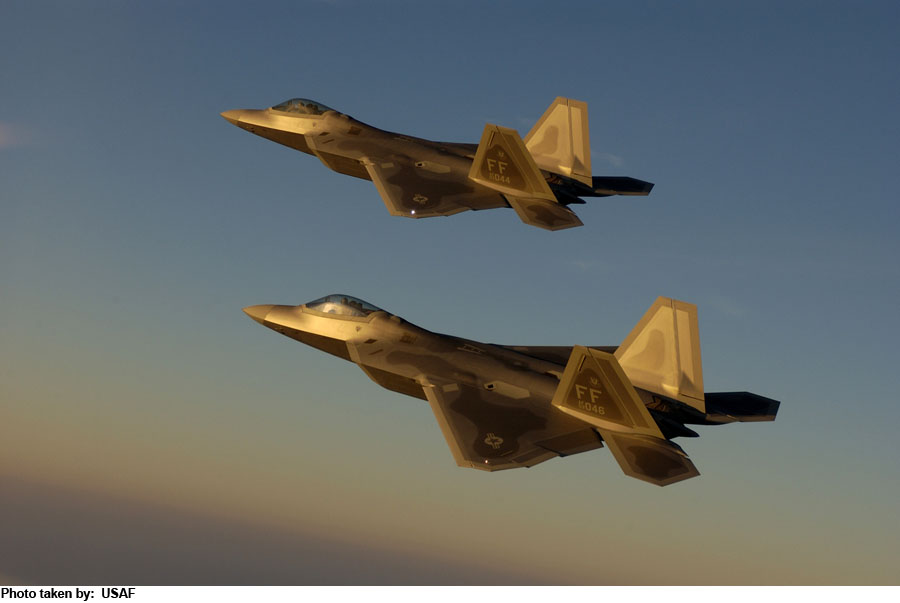
the best in air to air, low observability, supercruise and excellent agility coupled with AIM-9X and AIM-120http://www.combataircraft.com/aircraft/ff22.aspx
The Eurofighter has excelent agility and supercruise, but still has no thrust vectoring niether faceting or RAM treatement as the F-22, has excellent weapons AIM-132, AIM-120 and Meteor.
in air to ground, the F-22 should be still the best however it is probable the Su-34, Eurofighter and Rafale are the best swing role fighters followed by the F-15 and Su-30MKI
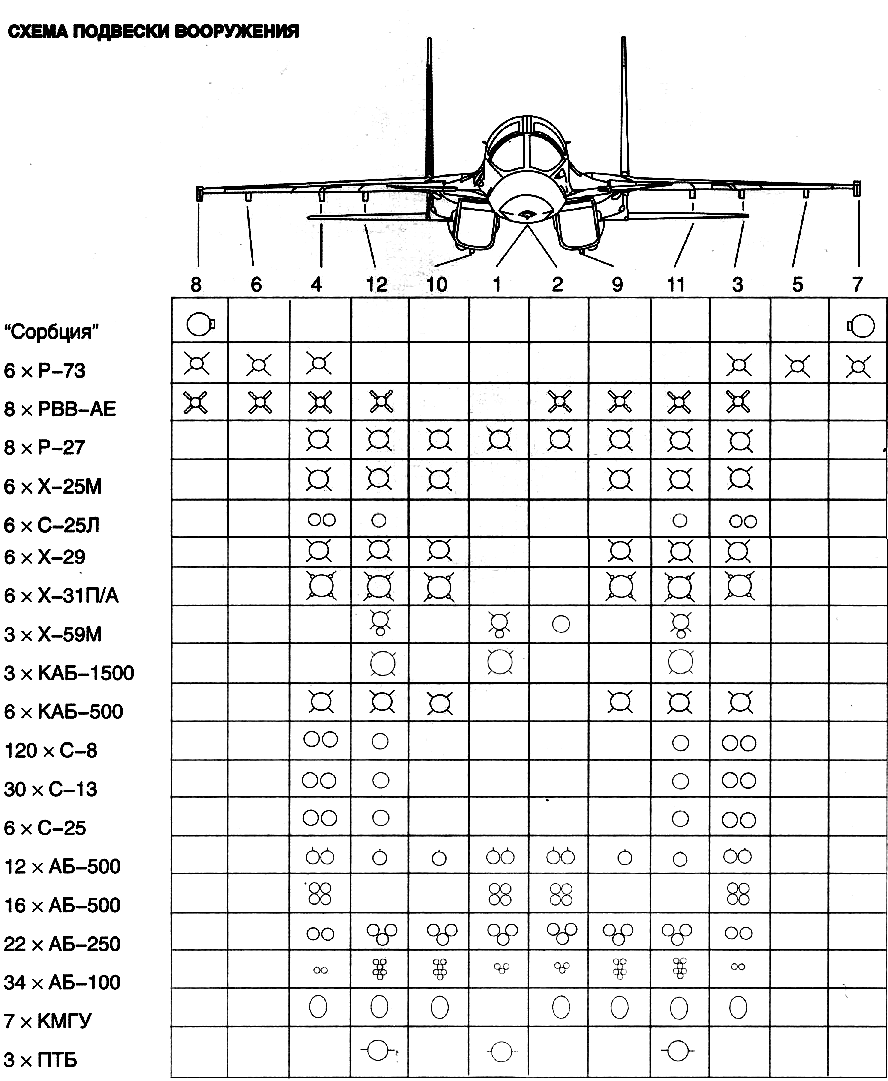
http://www.aviapedia.com/video/su-34-video
MiG-23MLDI must say, I am somewhat surprised by the number of Mirage 4000’s fans, out there…
Okay, I like the design and I’m a somewhat chauvinistic French, but apart from being basically a twin-engined Mirage 2000, what’s so great about the “4000” ?? :confused:
That said, if any British are around there do they think that the mirage 4000 would have been a good choice for the RAF in replacing it’s F-4 Phantoms, in lieu of the Tornado ADV ?
To go back to the topic, I can’t help considering the TSR-2 as the best nuclear strike aircraft ever designed, and I’d have gladly seen the French Air Force dropping the Mirage IV in favor of the TSR-2… 😎
I think the Mirage 4000 is still alive in the Rafale, up to what i know the Mirage 4000 was reworked in the Rafale, both are different aircraft of course but the inlets of the Mirage 4000 were considered still imperfect, later on the new Eurofighter specifications and the original Mirage 4000 configuration lead to the Rafale.
So i can say the French basicly still have the Mirage 4000.
Nevertheless why you need a 4th generation Mirage 4000 when the Rafale is a 4.5 generation?
MiG-23MLDSomeone in the Russian armed forces did say the Su-27SM should be more capable than all export models, including the Su-30MKI :confused:
However.. on topic
Today:
1. F-22
2. Su-27SM
3. Su-30MKI
4. Typhoon
5. Mig-29M/M25 – 10 years:
1. PAK-FA
2. F-22
3. F-35??
4. Su-27/30/Rafale
5. Typhoon
Currently the best fighters are Western, if we are totally and obsolutedly honest, Russia has only prototypes and only a fighter that is more or less in the 5 best fighters.
The F-22 is the best fighter now, followed by the Eurofighter, Rafale, JAS-39 and later we can either include the MiG-31, or the Su-30MKI, the Su-35BM and MiG-29OVT are still in prototype form and the MiG-31 is in process of upgrading so probably the Su-30MKI is the best operational russian aircraft.
Now if we include possible aircraft that might influence history as the MiG-21 did well i would say the J-10
MiG-23MLDSOC, I agree with this view. The J-10 has similar single-engine power of 129 kn as the F-16. It also has similar empty-weight, length and 11 hardpoints, as the F-16.
MiG-23MLD, in technology (as you said) the Tejas can also potentially compete with most western fighters.
In technology the LCA is a very advanced design but politically speaking India is less willing to antagonize the Western political will, it is less likely that India wants to play the role of the new military superpower and less willing to attack a neighbour than the Chinese.
The US is even willing to sell F-18Es to India a very advanced fighter, and honestly the J-10 already has operational capability and seems to be in large scale production, and that is the main reason it can become the new MiG-15 or A6M Zero
MiG-23MLDI wouldn’t put the J-10 in the class of the F-15, simply because the F-15 and the PLAAF’s Su-27/J-11 are the heavy, long range/endurance fighters. The J-10 is the Chinese F-16 equivalent, the shorter-ranged, multipurpose type. This is not to state that some of the performance characteristics or some of the equipment might exceed or outperform that which you find on an F-15C, but merely a statement of context. Think of it as an analogy: J-11 is to F-15 as J-10 is to F-16 (or F-18 for that matter).
I agree but if you consider that in terms of technology the closest and most probable non western fighter that can wrestle air superiority to the Western fighters built by Europe and the US is the J-10, non other potential rivals sumarize the state of political change as the J-10 brings to the arms race.
MiG-23MLDNumber one F-22 why? well it is the best in everything, the most balanced design, stealth and agility with supercruise and good avionics If it can shoot down 12 J-10s per each and every one F-22 lost or 9-7 Su-35BMs per F-22 lost well it is worthed besides it is a very nice looking aircraft
http://www.ausairpower.net/raptor.html
Number two F-35 why? it is stealthy and well armed it makes enemy aircraft pilots trying to shoot down a F-35 like children trying to hit a pinata
http://www.bbspot.com/News/2003/11/hotel_heir_video.html
number three Su-35BM why? it has Supercruise, supermanuevrability, good electronics and good price
http://www.airwar.ru/enc/fighter/su35bm.html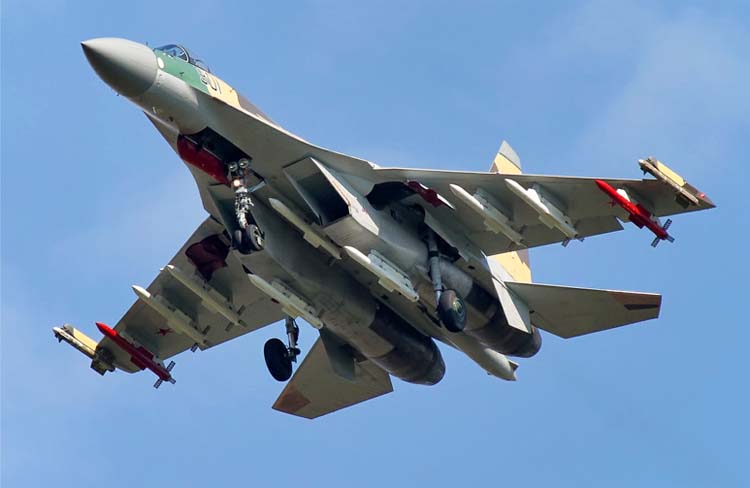
number four Eurofighter why? it has Supercruise and multinational economic and political commitment to its production, and it is a very well armed aircraft
Number five J-10 why? numbers might make it a very difficult adversary, it is not super in technology but perhaps in numbers is a great machine and still as good as the Mirage 2000, JAS-39, MiG-29, Su-27, F-16 and F-15
MiG-23MLDThe aircraft i would had liked it would had reached production is the LAVI
MiG-23MLDMiG-23MLDFascinating anthropology discussion. But rather pointless, IMHO.
If a “pan-Asian” fighter happens or doesn’t happen, it’s not going to be because of ancient ethnic similarities.
Whatever their shared history, culture, food, religion…all that was swept aside by various wars and threats of the 20th Century.
It didn’t make the Japanese treat any of its neigbors nicer in WWII, nor did it stop the North Koreans from invading South Korea in 1950. And it hasn’t stopped Chinese aggression in Tibet.Recent history and political factions (and of course money) will be the reason something happens..or not.
I do agree, economics and politics are the only reason an aircraft is made by two nations or more.
However we live in a world where economics are bringing togather different nations, for example now some McDonell Douglas helicopters are made in Mexico for the US army, Brazil offered the ERJ-145 for an USAF surveillance aircraft program.
Russia has flirted with Brazil to make the PAKFA a common program.
However in the context of the Eurofighter and JSF a common culture and a common economy has glued some Western Nations.
The term EURO-fighter denotes a common political and cultural project, like EUROATOM, EUROCOPTER or the EURO it self
What we were analysing was if it was possible a similar program in north east asia or if a far eastern program could be formed and this could only happen if these nations would create a common market as the EEC was created and if a regional common currency could be created, this could happen only if these nations could see the common culture they have as Europe did and they would see the economic and political advantages of such project, otherwise the political alliances will depend in the technological and economical risks they want to share but this can lead to other types of agreements like Embraer has with Harbin and Mitsubishi.
However the FC-1 has the prints of a pan asian fighter program
MiG-23MLDPlease get back on topic, or the thread will get closed.
Thank you.
Okay i got it
MiG-23MLDAs some one who speaks Japanese and lives in Japan, I feel I have some standing on how Japanese and Chinese languages are different :rolleyes:
I would like to see you prove that the grammar in Japanese and Chinese are even the same.In fact the Chinese and Japanese characters or Kanjies for Tokyo and Beijing are the same North capital for Beijing and Eastern capital for Tokyo this is the Kanji for Beijing 北京 this is the kanji for Tokyo 東京 [/B]
which simply reflect that Japan borrowed Chinese characters, but it does not prove at all how grammar is the same.
Right here you have revealed your total lack of knowledge on the Japanese and Chinese language. Even with out the i, the way these two characters are used are an example of how the Japanese sometimes use chinese characters very differently than the Chinese. In addition, the pronunciation used is native Japanese rather than the Chinese style pronunciation, reflecting different linguistic roots.
if you still need further proof
Linguistic
http://media.maps.com/magellan/images/worldlang.gif
http://webspace.ship.edu/cgboer/languagefamilies.html
Genetic
http://i126.photobucket.com/albums/p104/kinnchii/W-MAP.gifIn anycase, this is my last reply on this subject because it has nothing to do with military programs and that you are simply too lazy to do a little research (just go look at Wikipedia), to see how Asian countries are different.
which is utter nonsense. China, its neighbors, Japan and its neighbors, or the rest of Asia for that matter, have rivalries now and rivalries back then. Alliances and enemies change and will continue to change. Asians are no exceptions. Koreans may be resentful of Japan invading their country in the 19th-20th cnetury, but Japan and Korea fought a number of times before that. Korea and China have fought and allied with each other a number of times as well. It is also important to note that in ancient times, Japan was of relatively little importance to China as it had few things of value trading wise, and was often in frequent civil war with itself. China was far more interested in S.E Asia, contacts with India, and expanding into Central Asia.
yeah yeah more about the uniqueness of Japanese, why you can not understand is the grammar is not a structure as you think, languages like the English and Russian have different grammars, spanish and english have also different grammar and Urdu and portuguese also have a very different phonetics and grammar however all are related.
乾杯 干杯 this means in chinese Gambei or Cheers in japanese is Kampai 乾杯 かんぱい see the similarities
now water melon 西瓜 xī guā in Japanese is Suika 水瓜 【i hiragana すいか】
watermelon
三 sān three; 3 in Chinese and 三 san in Japanese
九 jiu nine; 9 in Chinese and 九 in japanese 九(きゅう) kyu
War in japanese is sensou 戦争(せんそう) and in Chinese 戰爭 战争 zhàn zhēng war; conflict and 爭鬥 争斗 zhēng dòu struggle; war
血 xiě, xuè, blood 血液 xuè, yè blood in Chinese 血 in Japanese ち chi, ketsueki, chishio
Sun in Chinese is 太陽 太阳 tài; in Japanese sun is 太陽 taiyoo
Now why Teppen in Turkish and Japanese in tepen in japanese mean the same and can be understood as top of a mountain?
During the early Yayoi era, probably the language of South Koreans and our proto-Japanese were identical. But as time went by, the language on the island started to be influenced by the phonetics of native islanders. Island people didn’t have consonant ending syllables so they couldn’t hear them clearly. Susumu Oono show many examples to corresponding
It’s one of important aspects that indicates the relation of Altaic languages and Japanese, but this vowel accordance and even the distinction of two groups of vowels disappeared by the 10th century. Isn’t this a linguistic version of same phenomena, that the average Japanese became 160 cm tall hundreds of years after the shock wave from Korea? As time passes, the Japanese language has been losing the characteristic Altaic part of its origin.
Phonetically speaking, Japanese belongs to the Southern Islanders languages.
Japanese and Korean thus separated about 1800 to 2300 years ago. Korean seems to have been losing its Southern elements, and Japanese has been losing its Northern elements. So, it’s not easy for students of today’s forms of both languages to find similarities between the two, except for syntax structure and common borrowed words from Chinese.
source http://users.tmok.com/~tumble/jpp/japor.html
You can not refutate that despite Japanese has a very distant lenguistic relation with Chinese it does have words that are common to its origins in central Asia.
If you have some knowledge of semantics and phonetics you will know how sounds are related and can be turn in other languages throughout inflections of a sound.
Now if you do not want to see that politically Japan is allied to the US and China to Russia you can not see that basicly that is what makes impossible a Chinese-Japanese jet fighter
MiG-23MLDthe K-8 and the FC-1 are primarily designed by China with Pakistan’s involvement being primarily financial. the Jaguar had both British and French engines, British designed wings, and French designed landing gears. I don’t really know the extent of Pakistan’s involvement in the development of the FC-1 and K-8, so do tell if you can…
You really need to study some more on Asian history and language. Yeah, they’re Asian, and Japan as well as many Asian countries adopted a number of elements of Chinese Culture, but they certainly are not Chinese. The Japanese language has totally different grammar and vocabulary. The same is true with Korean and Vietnamese, both of whom are more strongly influenced by China than Japan, but are not Chinese either. The Japanese, Chinese, Mongols, etc are all mongoloid but still slight physical differences that set them apart. But then again, you probably think all Asians look the same.
Japan’s architecture is derived from a certain period of ancient China.. and the key word is derived.. meaning it has been modified. The writing system is not the same. China uses traditional and simplified scripts. Japan uses two of its own scripts that the Chinese cannot understand, and Chinese characters which are closer to tradtional. And even then, some of the ways the Japanese use these characters are different than how the Chinese would use them. For example, 面白い would probably not make sense to many Chinese.. even though it uses Chinese characters. who read it unless they are familiar with some Japanese. Japan’s religion is a mixture of Shinto (non Chinese) and Buddhism (similar to other E.Asian countries).. but the fact that both elements are mixed make it unique to Japan. Also what makes China more “Asian”? Malaysia, India, Pakistan, and Iran are also Asian and they are hardly anything like China, Japan, etc.
In anycase, I won’t be bothered explaining things that you should already know and could easily look up on the internet before spouting off your lack of knowledge on the issue. As stated before, your ideas of countries banding together due to cultural, ethnic, and linguistic reasons are absurd and aren’t worth debating over. By your logic, Britain and Russia should be paired together because they’re both European, Christian, and speak Indo-European languages.
and in the end, the Boeing is an American aircraft made for the civilian market. talk about comparing apples to oranges.
Man it makes me laugh you simplistic idea of Japan, Japan is asian is not western, niether african or Latin american, it has not grammar very different from other asian languages as you claim,
Japanese language has some similarities with Turkish in words such as Tepen=top same meaning in Turkish and some central asian languages and however its essence belongs to extinc family of central asian languages.
Japanese has Kanjis or Chinese ideograms and two sillabaries katakana and Hiragana, it has adopted words from English and portuguese such as Pan=bread, Doa=door, sararyman=salary man, Castera=a portuguese type of bread brought by portuguese sailors, bidoru=glass in portuguese and so on, it has some words even from German such as arbaito=meaning work or job
In fact the Chinese and Japanese characters or Kanjies for Tokyo and Beijing are the same North capital for Beijing and Eastern capital for Tokyo this is the Kanji for Beijing 北京 this is the kanji for Tokyo 東京
this word means interesting funny or Omoshiroi 面白い and the only reason why a Chinese would not understand it is simply because the last phonetic element of the word is a hiragana character for the letter i and becasue some kanjies have different meanings and uses due to phonetization.
The Japanese architecture is a modification of original Chinese architecture and in many ways the original chinese culture was modified however the original element is the base of the current japanese culture since the Jommon civilization was not what has made japan unique but the Koreans who brought the Chinese culture to Japan and the later modifications made by the japanese.
Why i am only saying is Japan and China can not cooperate now simply because both nations are military rivals and politically are not aligned, Japan is aligned to the US and China to Russia and Pakistan .
Also the Japanese are very worried about the Chinese military build up, the only reason why Japan and China do not cooperate is politically they are not aligned however historically and culturally share a common origin.
MiG-23MLDthe FC-1 cannot be compared to multinational projects like the Tornado or the Typhoon. Pakistan may have contributed half (or perhaps even more) of the funding, but much of the development itself was primarily done by the Chinese aviation industry.
Japan, Korean and Chinese cultures may be similar (more so between Korea, Vietnam and China than Japan).. but ethnically they are actually not the same, even the Chinese themselves are not homogeneous, but rather a mixture of varying groups that include those who became Sinicized. However arguing that countries would come together to develop military weapons due to similar culture and ethnic ties is totally idealistic.
Countries come together to develop military weapons out of political and/or economic priorities, not cultural. the FC-1 is between two countries that have very little in common culturally and ethnically, but much in common strategically (common rival in India).
Even within Europe, Italy has often worked together with Germany.. while some here often like to lump all Westerners as the same.. Italy and Germany are different culturally, linguistically (being different sub groups of Indo European), and ethnically.. but have worked together due to the same common enemies (Warsaw Pact).
When applied to Asia, there are many divergent views on foreign policies between Asian countries.
The FC-1 and K-9 are comparable to the early Jaguar and Alpha jet programs, so they are in the begining.
Japan is not different to China culturally niether ethnically, Usually Japanese view themselves as unique but under that disguise they are simply afraid of acknowledge their own asian identity and also because of a bit of arrogance.
Japan has similar architecture, food, religion, writing system and ethically are the same race, China is even more asian because it has a more influential culture and has more intercultural exchanges with their neighbourghs.
Japan however was for many years the only developed asian country and could only learn from nations like the US or Germany, but in 2008, China has an aerospace industry second to none in Asia and in terms of rockets and space program they are ahead of Japan.
Japan of course has its own very advanced technology and its own culture with distingtive features but Japan share many features with its asian neighbours and basicly is an offspring of the Chinese culture.
In future years Japan will be forced to share aircraft programs because economically speaking Japan is declining and China is ascending, so both nations will need to create an interdependece to survive.
At the moment that possibility is not military, but in civil aircraft already the Boeing 787 has collaboration between Japan and China
Rudder of Boeing 787 made in Chinahttp://english.peopledaily.com.cn/90001/6214104.html
The Japanese have been in discussions at this point with AVIC I facilities,” says Boeing’s Cornelius. “We have not seen them consummate any contracts yet, but there are discussions under way to look at taking on some subcontract work” for the 787 and 777, and Japan is considering China for the 777 because the production rate on the aircraft is increasing, he adds.
http://www.sbac.co.uk/community/cms/content/preview/news_item_view.asp?i=14610&t=0
MiG-23MLDAnd do you know anything of maritime disputes outside of Asia? They are also over little rocks that contain energy deposits and strategic waterways but you often don’t see its citizens or government react the same way Asian governments do.
The creation of a Asian jet program does exist in the form of the FC-1 and several other programs, however the leader in Asia of such programs is China.
The Chinese and japanese aeorspace do work togather in civil programs, but under american leadership.
Asia is quit homogeneous, Japanese, Chinese and Koreans share a very common culture, their nationalisms are in reality ignorance of the common culture, ethnicity and civilization they share, they can not put togather a common program because western influence is strong enough to eliminate that possibility and China has not been seen yet as a benign power.
In Asia China will end up becoming the glue of a panasian civilization like always it has been.
It is just a matter of time


 Sign In