 MiG-23MLD
Still guessing around with your questionable source?!
http://en.wikipedia.org/wiki/Jet_fuel
JP-4 is ~0,78 and JP-8 is higher
The densety of 0,75 is related to lighter avgas and not to jet-fuel.
15491 kg is the weight of 19860 litres of jet fuel. To that you have to add the weight of the empty weight of the three ETs.
Your careless behavior with important details becomes infamous in the meanwhile.
The man of details now claims the Soviet Union used the same NATO standard fuels, by the way even with 0.77 the weight is 15292 kg.
So now the soviet pilots before striking the western bases needed to fuel at the next NATO base:D :rolleyes:
Former Soviet Union
Soviet kerosine type jet fuels are covered by a wide range of specification grades reflecting different crude sources and processing treatments used. The grade designation is T-1 to T-8, TS-1 or RT. The grades are covered either by a State Standard (GOST) number, or a Technical Condition (TU) number. The limiting property values, detailed fuel composition and test methods differ quite considerably in some cases from the Western equivalents.
The principle grade available in Russia (and members of the CIS) is TS-1.
The main differences in characteristics are that Soviet fuels have a low freeze point (equivalent to about -57 degrees C by Western test methods) but also a low flash point (a minimum of 28 degrees C compared with 38 degrees C for Western fuel). RT fuel (written as PT in Russian script) is the superior grade (a hydrotreated product) but is not produced widely. TS-1 (regular grade) is considered to be on a par with Western Jet A-1 and is approved by most aircraft manufacturers.
MiG-23MLDI am well aware that your basic knowledge is very limited. For the benefit of the others. Above 450 kt the transonic range did start and with it the rise in drag. It is a mix of different elements to create that drag related to air-pressure, which does rich its peak-value close to Mach 1. It is no constant peak and related to design there are some sweet points to find close to that peak (Mach 0,98 or Mach 1,02 f.e.). But all that does not change the demand in thrust to overcome the max peak. After that the drag does drop again. Above 800 kt you leave the transonic range and become true supersonic. From that point you can stay supersonic with much less drag. “True supercruise speed”.
The second serious problem is the fuel demand. Your engine/engines do guzzle fuel at a tremendous amount at that speed and level in full AB.
All that in mind loaded fighters are limited to 500 till 600 kt max low level speed, related to the drag and thrust-ratio. For the Su-24MK the drag is the limiting factor. Even at best sweep the clean Su-24MK is limited to 1315 km/h or 710 kt, which translates into Mach 1,074.
600 kt translates into Mach 0,908, what is still an excellent value for an loaded striker!
Related to wing-load most fighters can keep such speed for a brief period only. In the transonic speed a level of bouncing does start.
A MiG-29 has a design limit of ~800 kt and seems to be faster than a Su-24MK for example. With an AAM-load that MiG-29 is down to ~700 kt. When the heavy Su-24MK with high wing-load has a smooth ride close to Mach 0,9, the MiG-29 driver is in trouble there. The bouncing does limited his stay there for a very brief time, before he has to climb-up or throttle down. Hence the importance of a credible look-down/shoot-down capability of a fighter to deal with such strikers at all.
See the MiG-27 about that, which is limited to Mach 0,95 for similar practical reasons, when it can go with a regulated inlet over Mach 1. But as shown before, in loaded condition it will not pass Mach 0,9. Most fighters will not reach more than Mach 0,8-0,9 under such conditions.
Before our Eastern fraction will become upset. The Western fighters do suffer similar limitations. See the F-18s or F-4s about that.
Mach 1.1 is around 1315km/h however at 200 meters it can carry two bombs and fly at 1350km/h Су-24 с двумя ФАБ-500М-62 мог на высоте 200 метров держать скорость 1350 км/ч.
Общая эксплуатационная емкость внутренних баков составляет 11860 литров (у самолетов до N 8-11 с неувеличенным 1-м баком – 11200 литров). Запас топлива может быть увеличен с помощью двух подкрыльевых подвесных баков емкостью по 3000 литров (ПТБ-3000) и одного подфюзеляжного подвесного бака емкостью 2000 литров (ПТБ-2000). При подвеске трех баков суммарный запас топлива доводится до 19860 л.
The overall operational fuel capacity is 11860 litres with internal fuel tanks ( the planes before 8-11 series aircraft with no Enlarged 1 – m tank – had a mx internal fuel capacity of 11200 litres). Fuel can be increased by means of two external fuel tanks with capacity of 3000 litres (PTB-3000) and one ventral suspended tank capacity of 2000 litres (PTB-2000). In total suspension of three fuel tanks brought to 19860 litres.
so if the Su-24 carries 19860 liters and the relation fuel kg is 0.75:1 you get a total fuel capacity of only 14895 kg since Топливо
внутренние топливо, кг 9800
внутренние топливо, л 13000
where in kg the total internal fuel is 9800kg and in liters is 13000
sourcehttp://www.airwar.ru/enc/bomber/su24.html
here no one is saying what speed it will cruise simply what is the max speed and both the F-111 and Su-24 were designed to have a max penetration speed in the region of Mach 1.1, however the F-111 carrying more fuel in fact 1/3 more fuel and having slightly more efficient engines has a longer range in the region too of 1/3 more range, but a speed of 1300km/h for both designs is claimed at sea level or near that altitude.
Both aircraft are very similar even despite the Su-24 has reduced operational speed at high altitude.
MiG-23MLDThe producer contradicts your wishfull claim!
Maximum flight speed at sea level (without external ordnance and stores), km/h 1,315
Source:
http://www.sukhoi.org/eng/planes/military/su24mk/lth/The 800 kt is the design limit of the Tornado and can be reached in clean egress at low level f.e..
Only the F-111 fields an internal weaponsbay and can go supersonic related to that.
However the manufacturer does not mention what speed it gets with external ordenance and what altitude is sea level.
The most obvious is a Mach 1 speed around 1245km/h or a speed around it, the F-111 gets to around Mach 1 speed too, so at what speed the Su-24 flies is basicly expeculation of your part, each external store has a drag coeficient and very likely some of them barely reduce its max speed so it is probable that with some external stores it can keep a Mach 1 speed.
Mach 1.1 is around 1315km/h however Су-24 с двумя ФАБ-500М-62 мог на высоте 200 метров держать скорость 1350 км/ч. at 200 meters it can carry two bombs and fly at 1350km/h
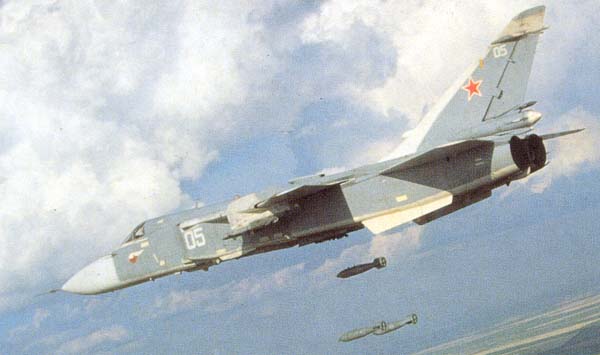
Общая эксплуатационная емкость внутренних баков составляет 11860 литров (у самолетов до N 8-11 с неувеличенным 1-м баком – 11200 литров). Запас топлива может быть увеличен с помощью двух подкрыльевых подвесных баков емкостью по 3000 литров (ПТБ-3000) и одного подфюзеляжного подвесного бака емкостью 2000 литров (ПТБ-2000). При подвеске трех баков суммарный запас топлива доводится до 19860 л.
The overall operational fuel capacity is 11860 litres with internal fuel tanks ( the planes before 8-11 series aircraft with no Enlarged 1 – m tank – had a mx internal fuel capacity of 11200 litres). Fuel can be increased by means of two external fuel tanks with capacity of 3000 litres (PTB-3000) and one ventral suspended tank capacity of 2000 litres (PTB-2000). In total suspension of three fuel tanks brought to 19860 litres.
so if the Su-24 carries 19860 liters and the relation fuel kg is 0.75:1 you get a total fuel capacity of only 14895 kg since Топливо
внутренние топливо, кг 9800
внутренние топливо, л 13000
where in kg the total internal fuel is 9800kg and in liters is 13000
MiG-23MLDMy point is that if the generations of fighters are defined by capabilities then the generations must be blurred. If a 4th gen fighter needs to exceed mach 2 then the F-18 doesn’t qualify and the F-16 barely makes it for example.
5th gen requires stealth but doesn’t define how stealth is achieved. The only faceted in service stealth aircraft I know of was the F-117. The B-2 and F-22 use curves rather than flat surfaces due to the increase in processing power of modern computers. A modified Mig-15 that uses plasma stealth instead of shaping could be just as stealthy… in fact it can be more stealthy in that plasma stealth absorbs all radio frequencies rather than just the high frequencies absorbed by RAM.
Shape does not effect long wave radar as long wave radar can’t even see shape.It doesn’t need a 5th generation engine to make it supercruise, a newly developed engine sized to fit a Mig-15 optimised for supercruise could be made if required to allow a Mig-15 to have one capability of a 5th gen fighter.
The difference that I am not interested in F-86s and really don’t care much about them, and that I was discussing Mig-15s.
If you define fighter generations by capabilities and nothing else then NO IT ISN’T MORE COMPLEX THAN THIS.
Perhaps the role of the fighter is a better indicator of the difference… of course then you have the problem of seperating the fighter from the interceptor from the fighterbomber.I disagree. Drop the requirement for operations at Mach 2.83 for the Mig-25 and you can put in more fuel efficient engines, change the wing profile to give more lift because low drag is not so important now, use more fuel efficient turbofan engines… like the Mig-31s engines but optimised for transonic flight rather than high supersonic flight and then use all that enormous space inside used up by all that Soviet era avionics with modern digital computers and systems and it would be easily comparable to the F-15 in performance. Its main problem was that it was intended to fly too fast to be a good airsuperiority fighter… which was ok because it was never intended to be an air superiority fighter.
Not really that different… extra seat, better engines, better radar, newer weapons.
The Su-34 was designed and put into service when there was no money. It is an example of how easy it is to modify an aircraft rather than develop a whole new one. When the Su-34s are available in numbers the Su-24 can be withdrawn and logistics will be simplified because of the similarity between the Su-34 and the Su-27 series. There was no similarity between the Su-24 and the Su-27 regarding anything except some weapons. For the same reasons the F-15E is in service instead of the F-111, though the changes made to the Su-34 were deeper and probably have made an aircraft closer to the F-111s potential capability than the F-15E is and certainly more than the Su-24 was till the very latest upgrades of the Fencer.
With new more powerful engines the Su-35 is reportedly able to supercruise. Fitting the F-22s engines to the F-15 and using an alternative stealth method like plasma stealth there is no reason why an F-15 cannot be upgraded to a supercruising stealth aircraft with AESA and other features of 5th gen fighters.
Again assuming stealth only comes from basic design with shaping and materials… how about if it comes from a pod that can be carried on a pylon?
So to be a certain generation of fighter it needs to be still in service… that means there are probably no 1st generation fighters left so 5th gen must become 4th generation etc.
But the F-22 is not faceted.
F-117 technology is already obsolete… there would be no benefit to making an F-117 now. If Fiji decided to design their own firearm they wouldn’t start by designing a musket, and then move from matchlock to wheellock etc etc and then move to the minne bullet and rifling and then develop cartridges and bolt actions then to develop gas operated automatic mechanisms.
Yeah… it is a direct copy of a Mig-21 experimental model… :diablo:
Man many things you are saying are incorrect.
First the MiG-31 is not a a MiG-25 both aircraft are different, their aerodynamics have changed a lot
The MiG-31 has different inlet, different wing, different frontal fuselage cross section, in the MiG-25 the fuselage narrows while in the MiG-31 it becomes a rectangular section and blends with the engine nacelles. The MiG-31 is much heavier has different internal structure while the MiG-31’s airframe is based on the MiG-25, it is a really a new aircraft, with several design changes and differences. Unlike the MiG-25, the MiG-31 is powered by afterburning turbofans. Its air frame construction is made up of nickel steel (50%), light alloy (33%) and titanium (16%). The MiG-31 is also the first production aircraft to feature an electronically scanned phased array radar — the SBI 16 Zaslon (‘Flash Dance’) — which is operated from the second cockpit by the dedicated weapon systems operator. It can track up to 10 targets and engage four simultaneously. Via datalink the MiG-31 can be controlled automatically by a ground control interceptor. Other changes include a retractable in-flight refuelling probe (on later production aircraft), an internal gun and tandem main undercarriage, the MiG-25 to the contrary was mostly built of steel alloys, in fact the MiG-25 originated from line of experimental interceptors Ye-150, Ye-151, Ye-152, the first MiG-25P took off on September 6, 1964 as the Ye-155P-1. Powerful engines and choice of airframe materials (80% steel, 8% – titanium alloys, 11% – aluminum alloys, 1% – other) allowed to built the fastest interceptor of the time.
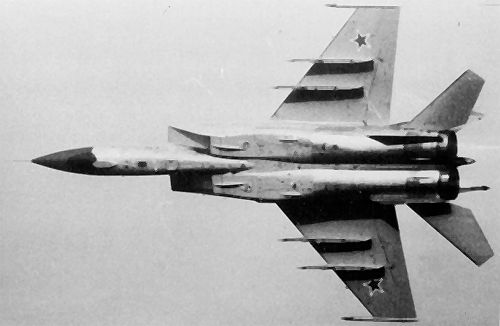

The F-22 is faceted and by facet we understand: A small, smooth, flat surface, as in a diamond, gemstone or crystal
the F-22 is a faceted aircraft, not like the F-117 but undoudtedly is faceted, it has planform alignment to retain the same reflection angle that its diamond shaped fuselage has.
However you can not facet the entire fuselages of F-15 or Su-27s because it would mean transform all the design parameters, they only did facet what was possible in the F-18E to retian commonality with the basic design of the F-18A/C
Now GarryB the increase in power makes an increase in fuel, fuel by it self needs to carry its own weight and power the aircraft and an increase of fuel demands an increase of power, an increase of power demands an increase of fuel so as in a rocket it demands bigger and bigger aircraft and heavier and heavier fuel loads
The MiG-15 is much much smaller than a MiG-25 and much much lighter than a MiG-31, to carry missiles you have to increase fuel carriage and this makes for a different aircraft in fact you can see it in the Ye-150/MiG-21 scale up.
The MiG-21 only carried AA-2 Atolls, the Russians tried to make it carry long range missiles and in the Ye-152/Ye-150 program they scale up the whole design so it could carry BVR missiles but this meant a scale up MiG-21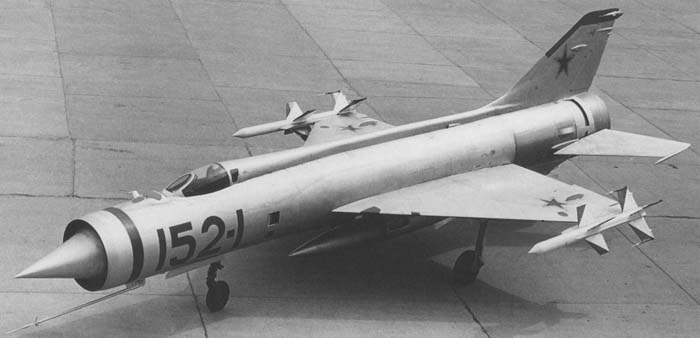
The MiG-21 can not carry too much load in fact that is what makes it a second generation aircraft, the MiG-21 has a very limited carrying capacity in order to retain a basic performance
So the MiG-15 is ill equipped to carry long range missiles see that even the MiG-21 only carries two R-77 and with earlier technology it meant a total scale up of the design, first they tried two R-11-300 to power the scale up MiG-21/Ye-150A and later they just fitted a single R-15 to the Ye-152/MiG-21 scale up, the inlet cone radome was also enlarged to allow for a bigger radar and increased engine power, this was done in order to make a MiG-21 aerodynamic concept carry a heavier load, same happened with the MiG-15/MiG-17
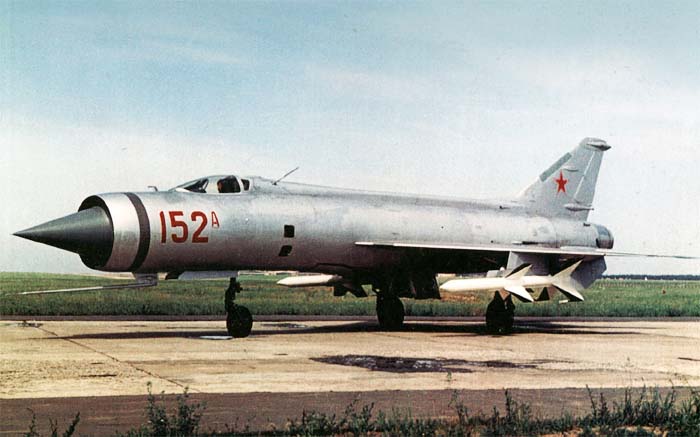
The Ye-152 used a single R-15 of higher yield and more thrust than the early R-11s of the Ye-150A and was able to fly at faster speeds carrying heavier loads of K-9 air to air missiles than the single engine MiG-21, in fact the K-9s were not very different from earlier AIM-7 sparrows, this scale up was the result of trying to make the MiG-21 a BVR fighter
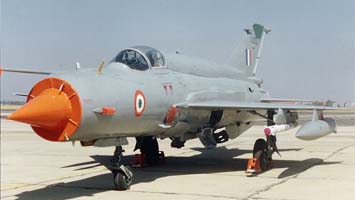
For a MiG-15 even carrying small fuel tanks is a big burden in fact small unguided or very light air to air missiles are a heavy warload

MiG-23MLDWrong, the sub classification with 0.5 or +/- was not used before the late 1990s and it was introduced by the Russians for their MiG-29SMT and Su-30MKK/MKI. The Russians weren’t able to complete their 5th generation designs like the MiG MFI and Su-47. Interestingly you refer these aircraft as 5th generation, while they lacked all aspect stealth which you say is a must. Therfore these aircraft couldn’t have been anything else than 4.5 generation according your definition:rolleyes: .
BS there was never another design in Europe apart from Rafale, Eurofighter or Gripen around that time. Why should have Europe intended to develope a replacement for aircraft whose development only started and which were intended to replace a couple of older types. Your statement is out of every logic! The X-31 configuration was in fact based on the EFA configuration and not the other way round, but it was never planned to be an operational airframe. The X-31 was in the end just a demonstrator for TVC. The basic concept was invented by a German back in the 70s.
The reason why you do not see that is because you do not know well where the F-22 comes from.
The F-22 is bascly the result of two main programs, the F-117 and the F-15 ACTIVE and MTD.
The faceting is a direct result of the F-117
the thrust vectoring 2D nozzles, twin fins, wings, and taiplanes were prefered thanks to the F-15 ACTIVE and MTD instead of the more unusual YF-23 configuration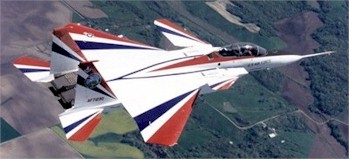
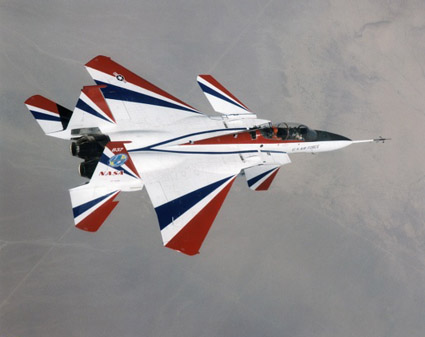
combine that technology and you get this
Russia only has had half of the technology it has the F-15 ACTIVE technology but Russia lacks an F-117 equivalent, but at least it has now X-45 technology
MiG-23MLDThe X-31 and Typhoon have nothing in common whatsoever other than basic layout (you’d have been more accurate if you’d simply called the Typhoon a modernized Viggen or called the Su-47 an X-29 equivalent).
The X-31 has some degree of commonality with the Eurofighter because it is a MBB program, exactly the same creators of the Eurofighter

MiG-23MLDThe X-31 and Typhoon have nothing in common whatsoever other than basic layout (you’d have been more accurate if you’d simply called the Typhoon a modernized Viggen or called the Su-47 an X-29 equivalent).
If you recall the development of stealth aircraft, you will remember the fact the X-31 is a basic layout of a fourth generation aircraft, no faceting or planform alignment, in Russia Yakolev did propose aircraft with planform alignment.
The J-10, X-31 and Eurofighter more or less represent the same basic aerodynamic concept, the Germans were interested in thrust vectoring since long time ago in fact the wanted the Eurofighter with it.
The Russians also did design the MiG 1.44 without planform alignment or any faceting, plasma stealth might be real however it seems the F-22 epitomizes the whole technology and the russians dumped the canard delta wing Eurofightersky MiG-1.44.
The PAK FA might use planform alignment and faceting and/or plasma stealth but it seems the Mig design was at least a generation behind the F-22 at least in stealth.
In the US the only fourth generation to have recieved the 4.5 level is the F-18E an excellent machine armed with weapons that simply makes thrust vectoring a surplus thing and with real stealthy treatment, form my point of view if the F-18E would had gotten suprecruise it would had become probably the best fourth generation fighter
MiG-23MLDDo you know what is most interesting for me? The 0.5 classing was never used before the 4th generation! It arose around the late 1990s/early 2000s when new aircraft like the Rafale, F-22 or Eurofighter where about to enter service.
This 4.5 bla bla is created by the marketing departments of some manufactures in Russia. The Americans simply class aircraft as 4th or 5th generation. But the public has accepted the 0.5 generation classing.BTW Rafale and Eurofighter both entered in the 2000+ time frame;). You can define things as typical but you will often find examples which don’t fulfill the “requirements” defined by Mr. X.
And how can someone put the Su-33/35 (I assume the old model) on par with aircraft like the Eurofighter or Rafale. There are huge technological differences and the Su-33 is not much different than a stock Su-27 from the technological standpoint. While the Su-35 is similar in technology to early F/A-18E/F or later F-16s.Everyone who deals with the matter a little bit should know that MiG MFI and Su-47 are long dead and that they will never enter service:rolleyes:
There are two reasons why they used that classification, before the 1990s, an aircraft development and deployment lasted for around 10 years, from first flight to deployment, basicly each decade there was a new generation of aircraft.
However with the demise of the Soviet Union military programs dragged for years, in theory if the Soviet Union would not had collapsed, by 1997 a new generation of Migs and Sukhoi would had been deployed however it was not.
In the US even the F-22 development lasted 20 years, the Europeans were unwilling even to develop a Rafale or Eurofighter replacement even sometimes there were troubles in the finance of these two programs.
As a stop gap the 4.5 generation was created in Russia, a very upgraded fourth generation fighter with technologies of the future fifth generation.
the other reason is the russians contrary to the americans did deploy what was in the US experimental aircraft into full fledged operational fighters.
basicly the F-16MATV and the the F-15VISTA

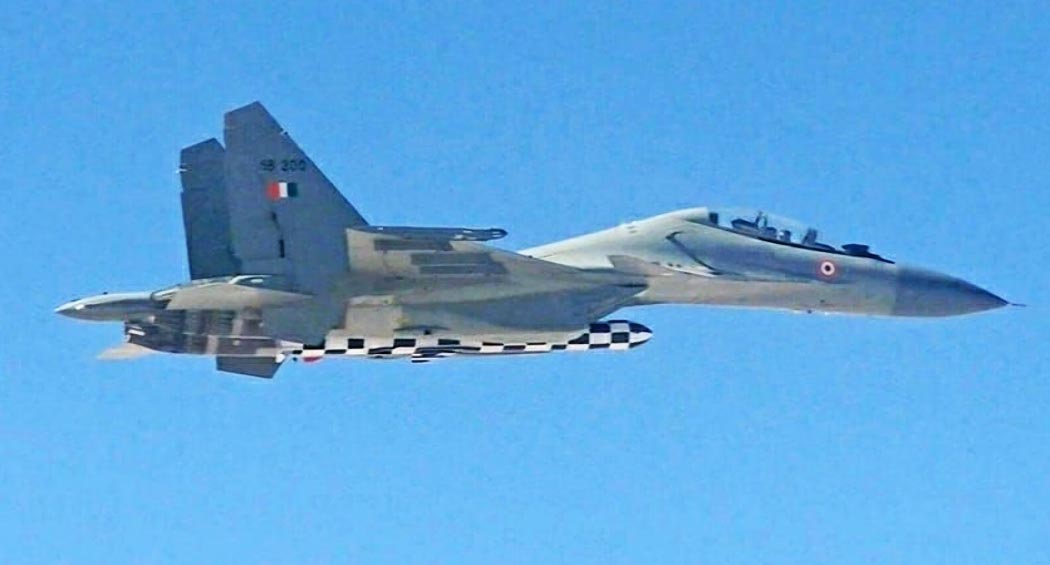
The americans did not do what the Russians or Europeans did, they designed and deployed real fifth generation fighters, in Europe was politics and in Russia economics what delayed or cancelled the fifth genration aircraft, so they simply used the technologies develop for the fifth generation fighters to upgrade fourth generation aircraft, the Eurofighter is no more than an operational X-31 and the Su-30MKI an operationa F-15 VISTA, the MiG-29OVT an operational equivalent of the F-16MATV

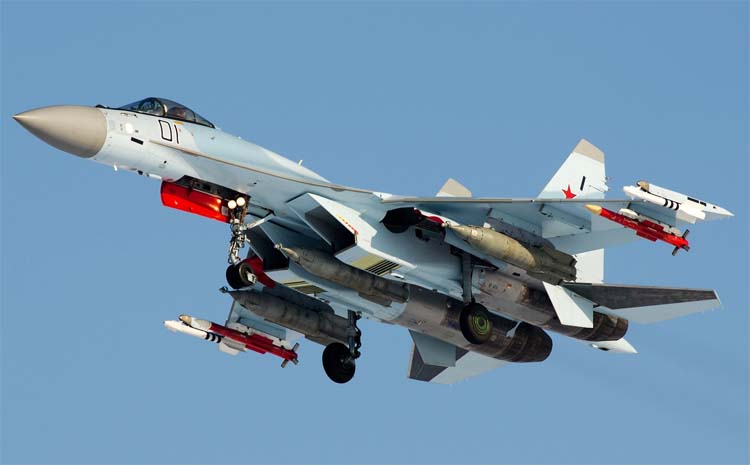
MiG-23MLDThe Soviets didn’t copy them, thats a BIG misconception.
Planes can only be built in a certain way because of the “Laws of Areodynamics”, the best way I can explain it is to use this example: “If you want a plane to fly an X-Amount of speed you can only design it in a certain way, if you don’t want it to fall apart”
Russia can argue and say the F-86 is a copy of the MiG-15, or the F-22 is a more refined copy of the MiG-31, for example the Tu-144 was designed and built before the “Concord”
and BTW the Su-24 is Russia’s version of the A-10 Groundfighter, not F-14.
The Su-24 is not a A-10 equivalent, it is a F-111 and Panavia Tornado equivalent it will penetrate enemy territory at mach 1.2 at very low altitude with terrain following radar, in the same way the Western aircraft will do it, however it has lower max speed at high altitude
MiG-23MLDI didn’t mention the F-86.
What range radar does a 4th gen fighter need? An AESA radar small enough to fit in the nose of a Mig-21 would certainly be able to detect and track targets beyond the normal launch range of most in service medium range BVR AAMs. Having radar blasting energy all over the place is becoming counterproductive anyway. Obviously upgrading a Mig-15 to be comparable in performance to a modern fourth gen fighter would probably cost more and be more risky than simply upgrading a Mig-23 or Mig-29 or Mig-21 due to the fact that the mig-15 is subsonic. That however doesn’t mean it is not possible, but the fact remains if you define the generations by capabilities therefore a plane should be able to move from one generation to another simply by adding a new capability. If stealth is a requirement of 5th gen then add a fully operational Keldesh Plasma stealth system to make it stealthy. 5th gen stealth is not defined by the method of stealthyness, but rather the effectiveness of the stealth.
Actually the Mig-9 was a Mig-3 with a jet engine replacing the piston engine and could be considered a hybrid of propeller design with jet propulsion.
Why? Replacing the wings and horizontal tail surfaces with a related plane able to fly supersonically and put in an engine several times more powerful than the original engine, with wing mounted radar our Mig-15BS ( :diablo: ) would have the ability to fly supersonically and carry BVR missiles. Blended fuselage is not a requirement of being a particular generation as the F-15 does not use blended design. The F-18 is a mach 1.8 plane so mach 2 is not required either. In fact early service F-16s had sidewinders only so BVR requirement is questionable too. It was later upgraded to have AMRAAMs but by what you are saying upgrades don’t effect the generation of the aircraft…
Things are more complex than just adding a new radar or mounting new missiles even a new engine.
A fuselage is the product of many hours of wing tunnel tests and these hours reflect an organic design that works well as a unity of all its parts.
The MiG-15, F-15, F-14 or any design won`t be transformed into another generation because their aerodynamics and structures can not be upgraded and modified beyond some parameters
look at the F-15 variants basicly all are very similar and keep almost the same performance.
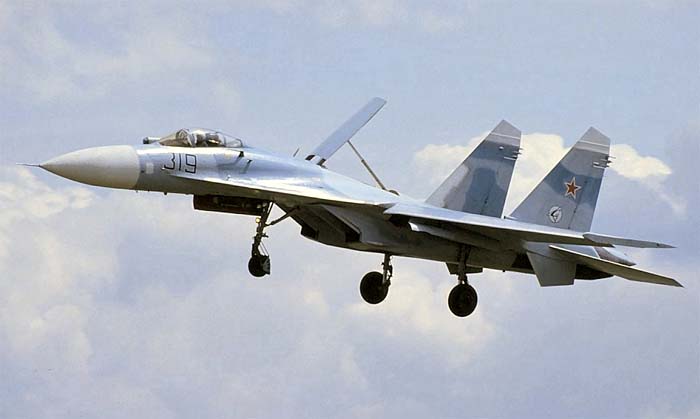
the Su-27 has been much more modified and this have resulted in performance gain and losses, the modern Su-35BM in fact is not very different from the Su-27B in order to keep the same aerodynamics
Let us take the MiG-25, F-15 and MiG-29, these three aircraft even despite they are similar can not be modified beyond a set number of parameters and this is proven by the fact the variants spawned always tried to remain the most homogeneous, you can not transform the MiG-25 into an F-15 type aircraft without creating an entirely new aircraft
One example is the MiG-25 transformation into the MiG-31, yes the MiG-31 is a fourth generation interceptor or a fourth generation MiG-25 however it is an entirely new aircraft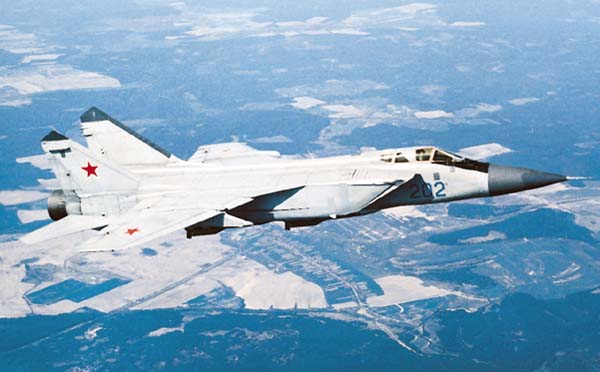

the Su-27 transformation into the Su-34 also offers a good example of how difficult is create a new design from a proven aircraft concept in fact it requieres too much money and at the end the result is evolutionary and not revolutionary
if it is true you can make the MiG-25 a MiG-31, you can not make of the F-15 an F-22, and it is easy to see it with the F-18E, yeah it is a stealthy F-18C however it does not achieve the stealth of the F-22 simple because you can not facet and apply planforming alignment to the entire F-18C fuselage
In fact the F-15 and F-22 do share a similar configuration however one has faceting and planform alignment and the other it has not. It is imposible to modify the F-15 with planform alignment and faceting without needing to create a new aircraft from scratch

Same is the Su-34 it only has some parts of the fuselage with some degree of stealthy treatment however like the F-18E it is not a stealthy design like the F-22 too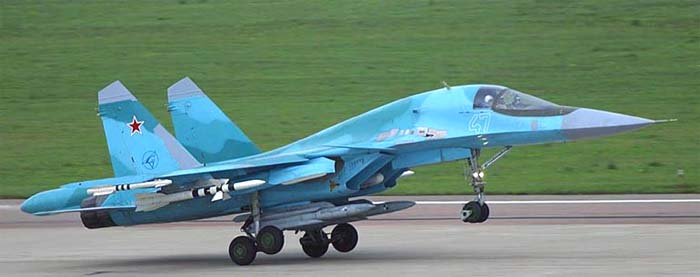
MiG-23MLDI didn’t mention the F-86.
What range radar does a 4th gen fighter need? An AESA radar small enough to fit in the nose of a Mig-21 would certainly be able to detect and track targets beyond the normal launch range of most in service medium range BVR AAMs. Having radar blasting energy all over the place is becoming counterproductive anyway. Obviously upgrading a Mig-15 to be comparable in performance to a modern fourth gen fighter would probably cost more and be more risky than simply upgrading a Mig-23 or Mig-29 or Mig-21 due to the fact that the mig-15 is subsonic. That however doesn’t mean it is not possible, but the fact remains if you define the generations by capabilities therefore a plane should be able to move from one generation to another simply by adding a new capability. If stealth is a requirement of 5th gen then add a fully operational Keldesh Plasma stealth system to make it stealthy. 5th gen stealth is not defined by the method of stealthyness, but rather the effectiveness of the stealth.
Actually the Mig-9 was a Mig-3 with a jet engine replacing the piston engine and could be considered a hybrid of propeller design with jet propulsion.
Why? Replacing the wings and horizontal tail surfaces with a related plane able to fly supersonically and put in an engine several times more powerful than the original engine, with wing mounted radar our Mig-15BS ( :diablo: ) would have the ability to fly supersonically and carry BVR missiles. Blended fuselage is not a requirement of being a particular generation as the F-15 does not use blended design. The F-18 is a mach 1.8 plane so mach 2 is not required either. In fact early service F-16s had sidewinders only so BVR requirement is questionable too. It was later upgraded to have AMRAAMs but by what you are saying upgrades don’t effect the generation of the aircraft…
come on man you won`t tell me that the Russians are actually making MiG-15 upgrades like that or are they?
Can the MiG-15 carry an pod radar, well yes it can, can it carry two R-77? probably yes it can
Now its fuselage aerodynamics will be badly affected so it will impact negatively its aerodynamics.
It won`t fit an AL-41 to make it fly at supercruise it is too small and narrow, so basicly with all the upgrades you are making to a MiG-15, it will become a very subsonic short range aircraft, much much less agile aircraft, it is not faceted niether it has planform alignment and much less Plasma will make it a fifth generation,. in few words Russia won`t make from the MiG-15 a PAK FA.

try to fit this into this

MiG-23MLDHere is a thread about Zhukovsky in airforce.ru excellent pictures
MiG-23MLDThe concept of 0.5 generations is so silly that it has to have been born at a marketing department.
My view of it is that a generation is about something from about the same time frame that use the technology of that time. A fighter could be classified by the technology in it’s basic construction that is not easily upgraded. A 3rd generation fighter can get 4th generatio avionics, but it will still be a 3rd generation fighter.
As I see it Super Hornet, F-22, F-35, Gripen, Rafale and Eurofighter are from the same time and has some common technology.
1 Significant and successful use of new materials as composites.
2 Designed with the help of modern super computers.
3 Totally computerised, programmable and highly automated.These technologies can be used with different success and with different priorities, but they are still in the same basic generation.
When the Russians started using the 4.5 generation classification they did not mean it was a new generation simply that a 4 generation fighter got some technologies used in the fifth generation.
The Americans followed suit with the F-18E, this aircraft got inlets and tailplanes like the F-22, it has some stealth treatment.
The Su-35BM and F-18E/F are aircraft that have technologies designed exclusively for the fifth generation, however their airframes can not be modify to the degree of making them fifth generation aircraft.
The F-18E has only faceting and planform alignment in the inlet and horizontal tailplanes, other parts of the design have not faceting or planform alignment, it also has an inlet tunnel grid that like in the F-117 inlet reduces the reflections of the jet engine blades to a minimun and allowing the F-18E to concel a main source of radar reflections.
The F-18E/F also uses an inclined radar antenna to reduced the radar reflection its own radar produces
The Su-35BM has some RAM, supercruise, supermaneuvrability and an advanced radar, however the whole airframe shows no planform alignement or faceting so still it emits large amounts of radiation it is not a fifth generation aircraft
The Eurofighter and Rafale are the same they are still fourth generation aircraft without any real advancement of RCS beyond what a fourth gneneration airframe can achieve.
in few words when a 0.5 fraction is used for example 3.5 or 4.5 generation it only means the aircraft has technologies used in a more advanced generation but still the aircraft belongs to its original generation
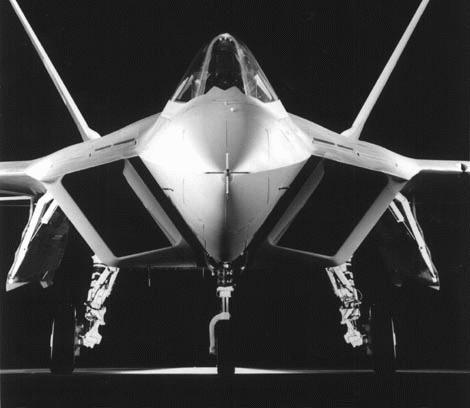

MiG-23MLDGive the Mig-15 a Mig-19s wing, all moving tailplane of course, and a modern 10-12 ton thrust engine and it could probably supercruise.
With the new wing leading edge AESA type radar being developed for the PAK-FA it could certainly detect targets at BVR and even without that it could carry R-27ETs and R-27EPs for BVR engagements in the passive role.Might need to drastically increase fuel fraction, but then considering the power of the original engines removing the afterburner and only using them in dry thrust should make range reasonable.
BTW if Mach 2.4 is the required speed to be a 4th gen fighter then no model F-16 or F-18 qualifies.
The real problem with putting planes into generations is that if you make the criteria too specific then many that should qualify wont and many that do qualify shouldn’t.
Personally I think that calling it generations is misleading. Each class of fighters should have something that clearly seperates it from previous aircraft, like all weather radar, supersonic capability in level flight, stealth, sensor fusion etc… but the problem is that different aircraft manufacturers adopt different technologies at different times. Fly by wire for example makes a plane lighter but such systems were not adopted uniformly. Equally sensor fusion was achieved by the Soviets with the Mig-29 and Su-27s having HMS, Radar and IRST all joined in a system that allowed the IRST or HMS to direct weapon sensors for a lock, or aim the radar at a target without scanning for it with the radar for a ranging pulse.
Modifying the MiG-15 to make it a fourth generation is first an impracticality, second it will become another aircraft, if you followed the history of the MiG-23 or J-8 or even Su-15 you know that bigger radars meant new inlets for the MiG-21, Su-11 or J-8, the MiG-15 also is too small to fit a bigger engine, basicly you can follow from the MiG-15 to the MiG-29 all the modifications needed to created a fourth generation fighter
here is the MiG-9 it still had piston engined fighter style tail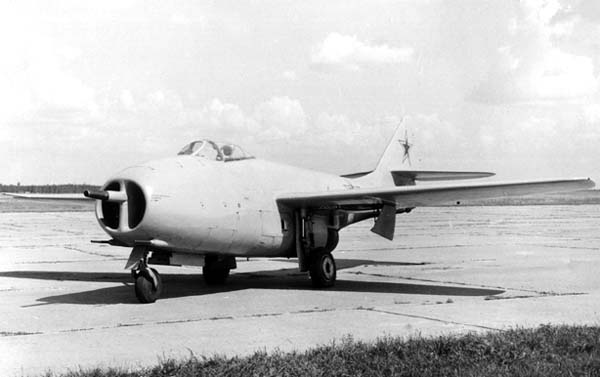
The MiG-15 elimnated the piston style empenage tail and make it a swept wing aircraft, however , the MiG-15 needed an all moving tail therefore it was still a first generation fighter, it was uncapable of flying supersonically
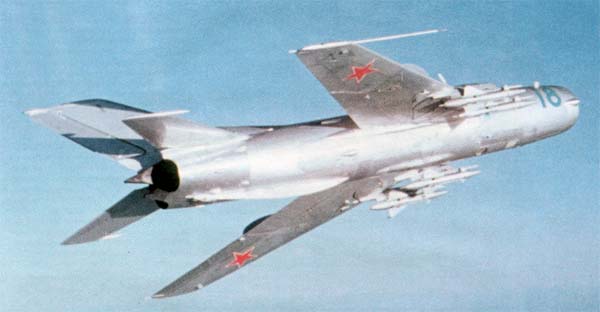
The MiG-19 did better but barely it was already a supersonic aircraft, it had already an all moving tailplane and short range missiles
The MiG-21 was a refinement of the MiG-19 but they tried to house a bigger radar in a small inlet multishock radome, it also had a low aspect ratio wing to increase lift
They tried to fix the MiG-21 short comings with a diferent arrangement in the Ye-8
and later in the MiG-23PD, a nose radome and side inlets were needed
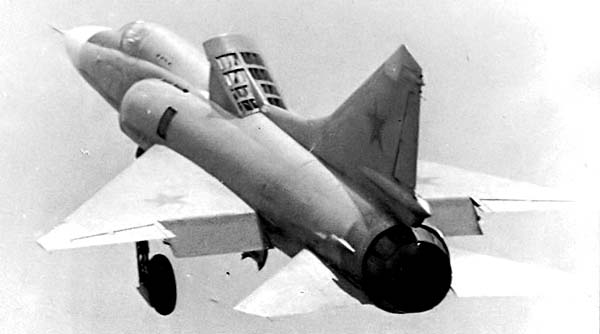
this ended up in third generation MiG-23, this was already an aircraft that could fire 50km range air to air missiles and the third generation MiG-25

The MiG-25 had powerful engines so it needed large side inlets and needed a large radome to house a large radar and carry heavy long range air to air missiles at fast supersonic speeds , it already had all moving tail planes and low aspect wings a feature learned from the second generation MiG-21
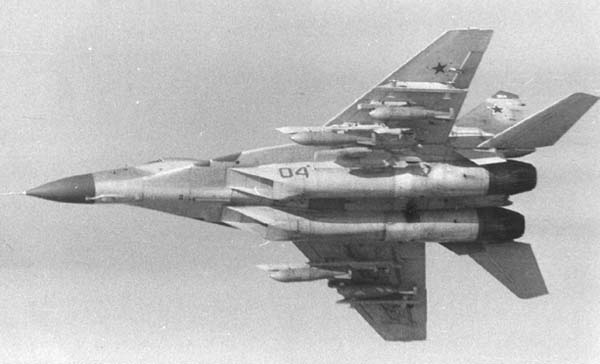
In the MiG-29 it was basicly a MiG-25 derivative in many ways but with an increase in fuselage blending, thrust to weight ratio and better visibility so as you can see make a MiG-15 a fourth generation is impossible and impractical.
The MiG-29 included LERXes to cure the dogtooth and wing glove notch limitations of the early MiG-23MLDs.
The LERXes are in many way a VG wing at 45 degrees swept with a enlarged wing glove and a low aspect ratio outer wing
The inlet arragement was to improve also AoA handling and engine inlet interaction at high AoA, so they opted for ventral inlets instead of the side inlets of the MiG-25 and MiG-23
MiG-23MLDWell look at the early F-15, F-16, MiG-29 and Su-27 and then compare them with the early Rafale or Eurofighter. The latter feature significantly breakthroughs in technology such as comprehensive use of composites and metals, new construction methods. More advanced aerodynamics with some LO treatments, more powerful engines with FADEC, full electronic active control technology FCS with carefree handling, NVG compatible full glass cockpits and vastly superior MMI, fully integrated and widely automated avionics, NCW capabilities, fully integrated and automated EW systems and more advanced or new generation radar systems, new kind of EO systems, HMD etc..
Of course you can find many of these technologies in the latest derivates of the teen and teenski series as well, but these are latest derivates with significantly increased weight in most cases due to the addition of a lot stuff. While aircraft like Typhoon and Rafale feature all this in their basic designs.Some old 3rd generation fighters such as the MiG-21 or F-4 had been upgraded with a lot of technologies which can be found on the 4th generation examples like F-16 or MiG-29 does it make them 4th generation fighters now? No it doesn’t.
Interestingly these facts are simply ignored and so some (or should I say many) people put Typhoon & Rafale & Gripen into the same generation as the
F-15, F-16 & MiG-29. So tell me what is contradicting about that?;)
The MiG-21 is not considered a third generation fighter but a second generation aircraft here is the source
Первое поколение МиГ-15, МиГ-17, F-86, Ouragan, Mistere Дозвуковая скорость, отсутствие радаров Корейская война (1950-1953), Суэцкий кризис (1956)
First generation MiG-15, MiG-17, F-86, Orugan they had subsonic speed and fought in the Korean war and the Suez crisis
Второе поколение МиГ-21, F-104, Mirage III, Draken Сверхзвуковая скорость Вьетнамская война (1964-1973), шестидневная война (1967), индо-пакистанская война (1971), война Судного дня (1973)
Second generation, MiG-21, F-104, Mirage III, Draken, supersonic speed, used in the Vietnam war, Six day war, Indo pakistani war and the yom kippur war
Третье поколение МиГ-23, F-4 Phantom, Mirage F1, Viggen Использование радаров повышенной мощности, ракеты с радиолокационным наведением средней и большой дальности Ирано-иракская война (1980-1988)
third generation MiG-23, F-4 Phantom, Mirage F1 and Viggen, they used long range radars and air to air missiles, radar and missiels of long range and medium range.
Employed during the Iran iraq war
Четвертое поколение Су-27, МиГ-29, F-16, F-15, Mirage 2000, Gripen Отличные маневренные характеристики, большая тяговооруженность Операции “Мир Галилее” (1982), “Буря в пустыне” (1991), эфиопо-эритрейская война (1999-2000)
Fourth generation Su-27, MiG-29, Gripen, F-16, Mirage 2000, Gripen highly agile fighters with better thrust to weight ratio.
Employed during peace for Galilee in 1982, gulf war I and the Ethiopian Erithrean war
Поколение 4+ Су-30МКИ, Су-35, МиГ-29СМТ, МиГ-35, Rafale, Typhoon, F-18E/F, F-16E/F Сверхманевренность, радары с пассивной щелевой или фазированной решеткой, сниженная стоимость эксплуатации, многофункциональность, “стеклянная” кабина Агрессия против Югославии (1999), вторая иракская война (2003)
Generation 4.5 Su-35, Su-30MKI, MiG-29SMT, Rafale, Typhoon, F-18E/F, F-16E/F supermanuevrability, phased array antena radars. lower operational cost and multifunctionality
employed during the war in Yugoslavia and second gulf war
Пятое поколение F-22, F-35, T-50 Малая заметность в различных физических полях, крейсерский сверхзвук, высокоинтегрированные системы управления самолетом и оружием, истребитель-элемент “системы систем”, радар с активной решеткой
Fifth genration fighters F-22, F-35 and T-50, low radar emission from all angles (stealth), supercruise and sensor fusion with all the tactical systems Active Electronically Scanned Array (AESA) Radars
sourcehttp://legion.wplus.net/others/pokol.shtml
To make the MiG-21 a true fourth generation you have to do what the Chinese have done modify it until it becomes some thing else
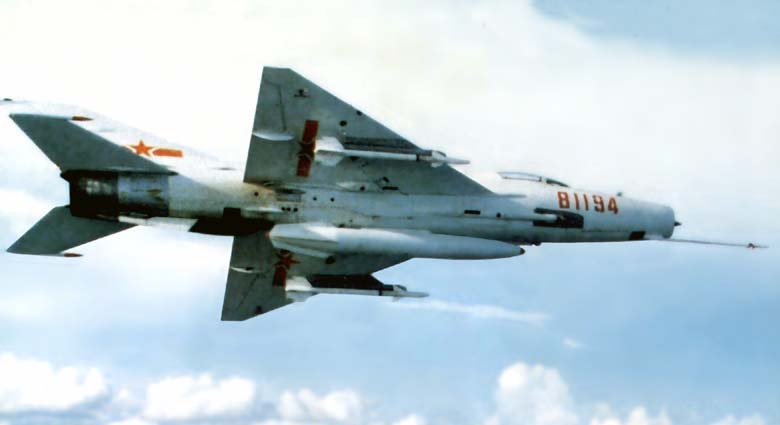

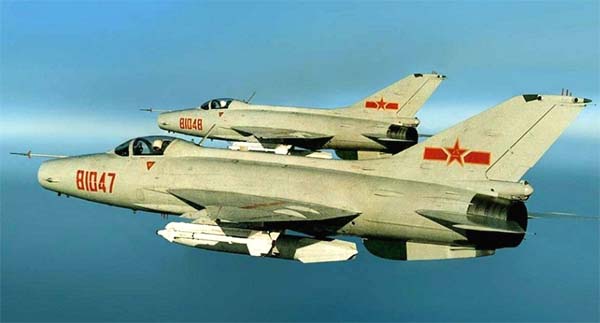

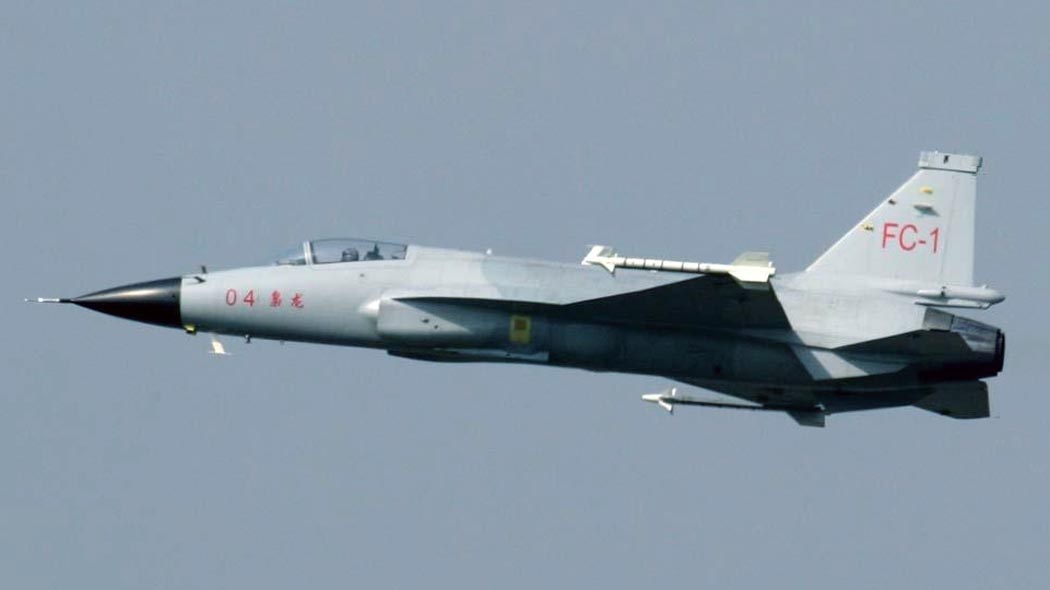
a new radar or a few improvements does not make a MiG-21-93 or a MiG-21-2000 a fourth generation fighter only an upgraded second generation fighter
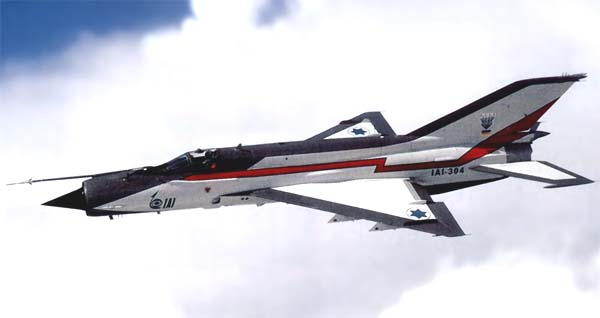
same the MiG-23-98 it does not become a fourth generation just an upgraded third generation.
The reasons are simple to turn them into fourth generation there are many features to modify and at the end will become either another aircraft or a too expensive modification that no one is going to purchase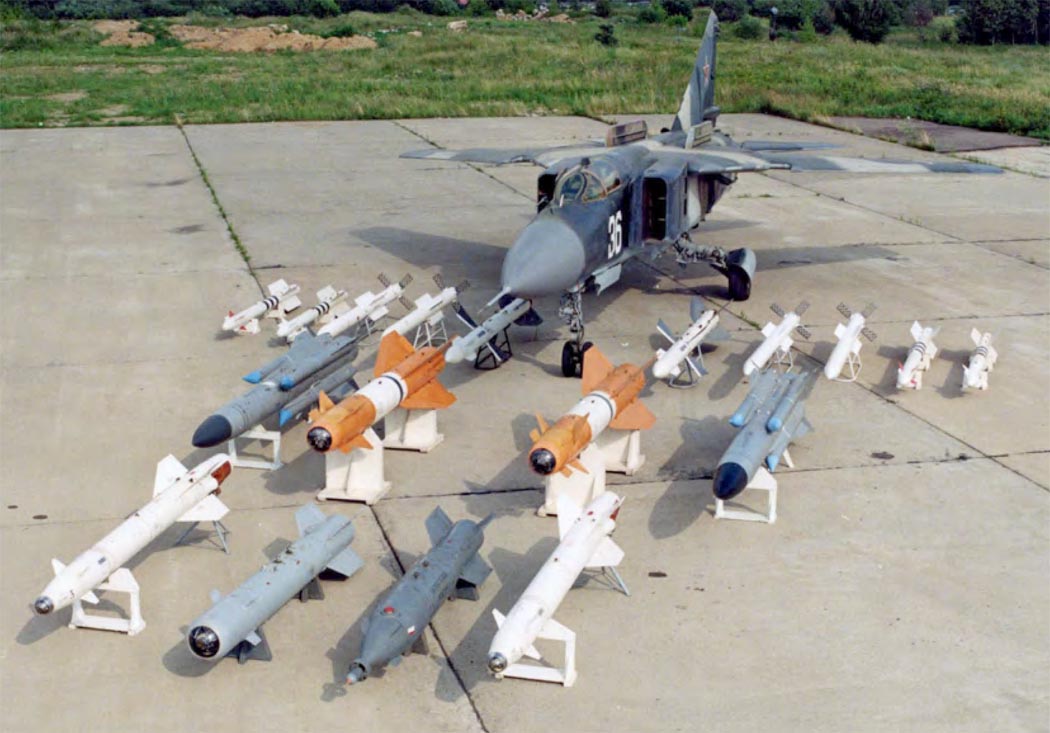


 Sign In







