 MiG-23MLD
MiG-25P was a bomber interceptor. The weapons system was incapable of engaging low altitude targets. Agility was 5G at light weights or 2.2G with fuel in the wing tanks -forget about dogfighting.
Radar range was 100 km vs 16m2 (F-15ish sized tgt), missiles are R-40R and R-40T. The missiles were only rated against 2G targets.
It entered service in June 1972; the Smerch-A3 could detect targets above 500 m. A GCI datalink was also fitted.
Pretty telling they were converted to MiG-25PDS between 1982 and 1984 (part of this was the defection).
MiG-25PD entered service in 1978 and had a LD/SD radar with range increased to 115 km. The R-40RD was capable of LD engagements with the R-24R seeker, although the missile was rated against 4G targets.
Peter G
No one has suggested the MiG-25 will dogfight a F-4, the MiG-23 and MiG-21 were in charge of low and medium altitude intruders, the MiG-25 was an interceptor and bomber, and interceptors will do as they need in order to kill enemies.
If the F-4 was going to intercept let us say MiG-25RBs armed with bombs, the duty of the F-4 is kill the enemy, a nuke for example is a weapon that it can be dangerous, but even conventional weapons are dangerous, the F-4 did not intercept recce versions and a recce version armed with bombs is equally dangerous.
The MiG-25P was not designed to kill cruise missiles, however it was designed to intercept bombers and their scort fighters, in 1974 only two aircraft had terrain following radar and SAMs would had forced many aircraft to fly at higher altitudes, so the MiG-21, MiG-23 and SAMs would had intercepted the main enemy force but any fighter or bomber climbing at higher altitudes was supposed to be destroyed by MiG-25s and there is where the F-4 would had faced the MiG-25 and would had been destroyed as some were in the 1980-1988 war between Iran and Iraq
MiG-23MLDThe first MiG-29s did appear in 1986 (Wittstock/GDR).
The first MiG-25Ps did enter service with the VVS in 1973. (High altitude interceptor only and no look-down capability!)
The first Su-27s did enter service in 1987.
The first MiG-31 equipped regiments were operational by 1982. (Interceptor role only with PVO!)
The F1 did carry R-530 like the Mirage III before! From 1979 it was the R-530D.
The AJ-37 did carry SARH AAMs from the start.
The first MiG-23M with R-23 did deploy from mid 1975, but still with limited look-down capabilities. (The Saphir had still to catch-up!)All wellkown details, but still ignored for a personal “reality”!
The MiG-29 apeared in 1983 as operational aircraft not 1986 however you seem to think it was an east german fighter.
The R-530 has less range than the R-23R that is a known fact.
The AJ-37 did not carry any Skyflash in 1971, it was much later that it was used on the JA-37 in fact it entered UK RAF service in 1978 and in Sweden in 1979
The AA-9 can kill fighters or in your famous AGCI they do not claim the AIM-54 killed fighter aircraft?
MiG-23MLDI’d disagree.
Mig-23M were in production 1972-78, delivered to VVS and PVO in 1973 and entered service 4 Jan 1974 when the R-23 msls were available: R-60 were available the same year replacing the R-13M.
Early MiG-23M were fitted with Sapfir-23L which could not detect tgts below 1000 m (no look-down) and were limited to 5G by weak fuselage and wing pivot restrictions.
Sapfir-23D were fitted from 1975 – these could detect low altitude tgts if the aircraft were at low altitude over relatively flat terrain. LD/SD range was only 10-20 km.
Improved manufacturing from 1977 meant the MiG-23M could use its full agility. Agility worse than MiG-21M, F-5E and slighly less than F-4. Close to MIG-21MF/bis agility. Soviet fighter pilots could begin to seriously train for WVR fights. So much so that an angle of attack limitation stick pusher was fitted from 1978
By 1975 there were no restrictions of 5Gs as you comment, the MiG-23 edition 71 was restricted in 1971 to only a mere 3Gs however by 1975 the MiG-23M had no that restriction. The F-5 was not capable of outaccelerating the MiG-23 a critic flaw if you are not armed with AIM-7 Sparrows.
LD/SD is a must in modern fighters but was a luxury few aircraft had in 1975 among them the MiG-23, niether the F-5 or MiG-21 had such luxuries.
The F-4 from 1000 to 5000 meters does not show any advantage versus the MiG-23ML and it is hard to argument the MiG-23M will be less capable.
Why? because at 35000 feet and Mach 0.9 it has a turn radius in the range of a nautical mile something in the range of 1852 meters, and at sea level the data given by the F-4E manual is below 600 meters.
Another fact is acceleration, the F-4 manual shows that the F-4E will accelarate slightly slower than the MiG-23ML, so the MiG-23M probably was more or less an equivalent of the F-4E, for example at 4000 feet the F-4E will accelerate in a little bit more than 13.4 sec from mach 0.5 to mach 0.75, while the MiG-23 taking Mach as 1200km/h at 1000 meters and from 600km to mach 0.75 or 900km/h in 12 seconds consider that Mach 0.5 at 1000 meters equals 600km/h so very likely the MiG-23ML with 2000 liters of fuel and two R-23s will beat the F-4E with four AIM-7s at 40000 pounds
Note 0.22 minute equals 13.2 seconds however the drag ratio of the F-4 with for AIM-7s is 5.2
MiG-23MLDI have the JA 37 operational with F13 in 1980.
F-15A was delivered to 36th TFW (Bitburg, Germany) in April 1977.
F-15C went to 32nd TFS (Soesterberg, Netherlands) from late 1979(?)F-15 would be more agile – Viggen has that draggy delta wing. F-15 would have more thrust?
In 1980 F-15 had 4 AIM-9L as standard, Viggen had 4 Rb 24J (AIM-9J)
F-15 had 4 AIM-7F; Viggen had 2 Sky Flash (similar performance). These had poor Pk so an additional 2 medium range missiles would be useful.
F-15s have internal ALQ-135 jammer and decoys; JA 37 initially had nothing with BOP/A flare decoys in 1987, BOL 300 chaff in 1995.
JA-37 PS-46 radar range was 27 nm look down against a small fighter – say 36-40 nm look up?; the APG-63 was rated at 40 nm+ vs a Mirage III, with 48 nm also mentioned (radars were similar)
The JA 37 had a GCI datalink (fighter link operational in 1985); the E-3 Sentry entered service in 1978 although comms are non-secure voice radio.
The JA 37D (1997) could carry 3 RB99 (AIM-120B), U-95 jammer pod and 2 Rb 74 (AIM-9L); whereas the MSIP F-15 (same period) would typically carry 6 AMRAAM, 2 AIM-9M.
Viggen would have the edge in situation awareness in home defence, and had a survivable air basing system. Radar performance would be similar, although F-15 would be more survivable due to EW fit and improved agility.
I do agree with your assesment however by 1987 the Su-27 was far superior to the Viggen and slightly better than the F-15.
Since 1983 when the first MiG-29 started entering service the F-15 kind of lost its superiority even by its own stable mate the F-18 since basicly it was only marginally better in BVR and inferior in WVR combat to the MiG-29, by 1985 the MiG-31 and Su-27 assured the F-15 was not the king of fighters in an one on one engagement.
However the AJ-37 is more or less an equivalent of the MiG-23MS and IAI Kfir because it has no BVR weapons unlike the JA-37 so in a timeframe of 1972-1976 it was not the best air to air fighter and like the Mirage F1 it only gained BVR missiles in 1979, so the only tactical fighters that carried BVR Air to Air missiles in 1975 were the MiG-23M and F-4E, nevertheless the MiG-25 did carry BVR missiles since 1972 and was more than what an F-4E could swallow.

MiG-23MLDIn swedish books and magazines I often read that JA-37 Viggen was the best fighter in europe until US F-15s were based here.
I don´t know when the first JA-37s became operational (1980/81?) or when the F-15 started getting based in europe, but can this claim be true?
Well certainly the AJ-37 would had been the most advanced aircraft in Europe when it started its deliveries in 1971, but the JA-37 is a 1980s fighter, certainly the Mirage 2000 by that time was ahead in terms of agility.
The JA-37 and Panavia Tornado ADV filled up more or less the same niche and were more or less armed with the same weapons.
Since the Viggen JA-37 was delivered in 1979 and it took some time for the Mirage 2000 and Panavia Tornado to enter service and they did it after the JA-37 we can say the Viggen was the most advanced fighter in Europe, however the first F-15s were deployed in Europe in 1978, so if it is true the AJ-37 was the most advanced fighter Europe ever produced in the early 1970s, by 1978 the F-15 was deployed in Europe
MiG-23MLDViggent has a lot more in common with late sixties to seventies type of fighter (gen 3.5) like in the use of turbofans. Using a civil engine with high bypass ratio means the engine is economical, however, it is not efficient at high speed, and therefore the plane suffers at higher speed. Because of the engine’s wide diameter, the plane also suffers from a bulky and thick airframe cross section. That means drag and less speed compounded with being a high bypass turbofan. That airframe also meant a high empty weight—as much as an F-15 which has TWO engines.
The aircraft is not perfect, but no other country in the world had a such advanced aircraft in terms of aerodynamics potential, in 1967 the F-4 was basicly a 1950s design upgraded with 1960s tech, the MiG-23 even revolutionary in terms of VG wing it was not a superfighter, it was more or less a conventional design, few aircraft imprint their basic layout as the Viggen did, now it is easy to see canarded jet aircraft however by 1967s standards the Viggen was ultra revolutionary even futuristic, the Chinese J-8I was still years behind in aerodynamics and concept, the French Mirage F1 was not very unorthodox.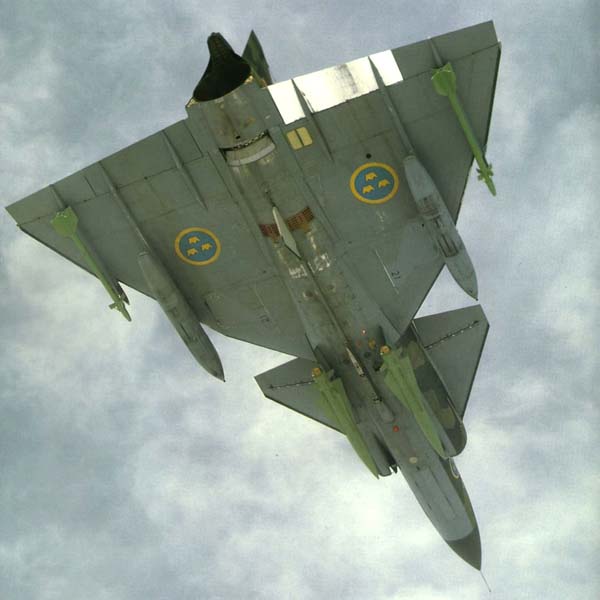
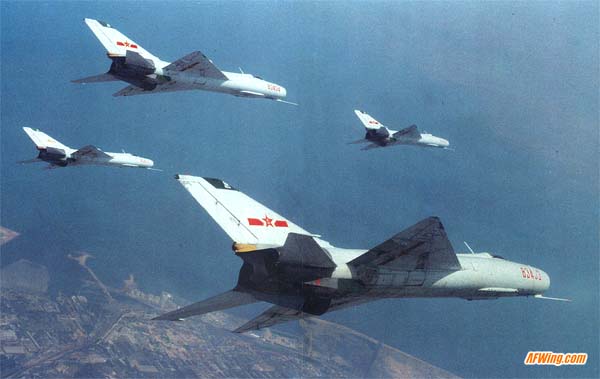
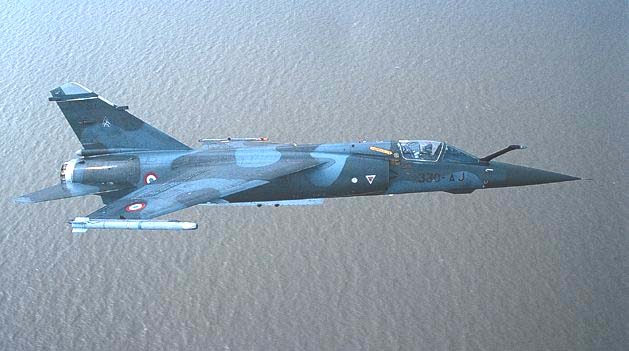
The future F-15 and F-14 even despite unothodox were not as revolutionary in design only the Kfir by the 1970s showed what the Viggen did in the late 1960s, the more unorthodox shape since the late 1940s.
The F-15, MiG-25 and F-14 basicly spawned form the F-111 and A-5 Vigilante,so their shape was not really very revolutionary in 1973

however crobato the Viggen is not as heavy as you claim its empty weight is far more lighter than a F-15
MiG-23MLDThe Viggen is afflicted with an engine with a low thrust to weight ratio and long spooling times. That’s its main weakness, using a modified civil airliner engine.
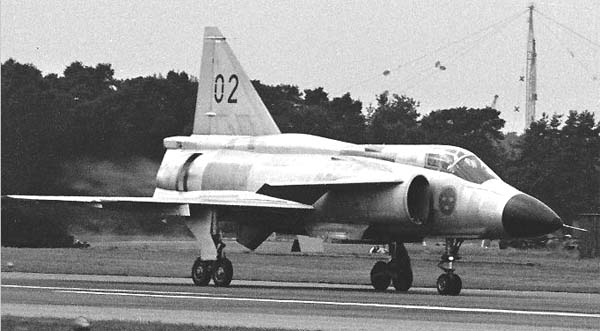
come on Crobato the Viggen is a 1960s design, still it was one of the best fighters in 1974, the aircraft has canards as a STOL requirement and it is quit stable only can hold a max G load of 7.5Gs, the design was not created to be a super agile fighter, it was created to be a good STOL aircraft with good cruise speed, but as the supersonic center of lift moved backwards it became quit stable, the Gripen wings are therefore moved forward with respect the center of Gravity.
Like the MiG-23 at high speed and wings set at 72 deg, the Viggen suffers from excessive stability at high speed.
MiG-23MLDSaab Viggen, what are the forums views on this as a fighter, was it any good back in the 70s and 80s when compared with other (ground attack) fighters of the time?
The Viggen was one of the best aircraft of the 1970s, i do not know if the best because contrary to the MiG-25 it was from a neutral country and no aircraft was designed directly as a response to it as the MiG-25 was.
Nevertheless this aircraft despite of being very stable, represented new technologies and design philosophies, as a theat it was more or less as good as any other major tactical fighter like the MiG-23 or Mirage F1 against a F-4E threat yardstick.
As a fighter bomber was also to some degree close to the F-4E.
MiG-23MLDSo one of your sources is lying!
Not necesarily, the vast majority of kill records are reports that do not present any picture, and if they do they never present all the evidence, just a few proofs, any way Sens your point of the F-4 killing MiG-25s in the time frame of 1972-1976 is not a fact, the MiG-25s did kill F-4s according to many reports in the 1980s though and the Mirage III and F-4 never killed a single MiG-25 in 1971 despite they did fire missiles at Foxbats, so even you do not want to see it by 1974 the Foxbat was the most powerful opponent the western aviation had.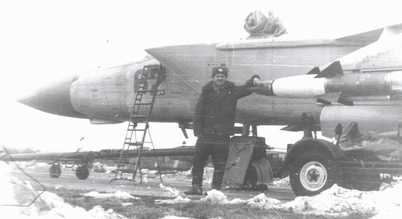
Did Iraq suffer MiG-25 losses during the 1980-1988 war? yes they did, were they many? at least 3 maybe more but most likely they were MiG-25RBs
So from 1972-1976 the MiG-25 was the bogie man of the F-4 and western aviation until the F-15 and F-14 were deployed in numbers by 1978
MiG-23MLDUnable to read properly, what is given by yourself. Zhirokhov gives 6 combat losses at least. Two of that by F-5s. I did try nothing. You are the one to distract from unpleasent facts. When that russian source did not “held the water”, you do switch to another one. I will not go into the special view of Gordon, despite having his books from Airlife.
man please, relax i feel i can understand why you say unable to read properly i think that is you, he comments two reports, where he mentions that the initial reported kills and later the final list of kills, first he mention kills by F-14s no F-4s, and later he coments a Me-262 style kill by P-51s when at low altitude and speed and F-5 shoots down a MiG-25s.
In the final list he mentions that there were no MiG-25PD and MiG-25PDS shot down but only MiG-25RBs so your problem is he reports two versions of kills and he does acknowledge several MiG-25s were shot down but at the end he says the last list only mentions recce/bomber versions no fighter versions
You also can say he is talking about two moments in the conflict the initial phase and the last phase and it is only one list however there are more reports coming out from Russia which say few aircraft were shot down and only MiG-25RBs, any way it does not prove your point the F-4 was good enough to shot down the MiG-25 with the exception when it was goind to land as the P-51 was when it fought the Me-262
По оценкам иракских летчиков, МиГ проявил себя в войне как надежная, высокоавтоматизированная машина, практически неуязвимая для истребителей и наземных средств ПВО, имеющихся у Ирана (F-14A, F-4E, F-5E и ЗРК «Hawk»).
The MiG-25 was highly regarded bythe Iraqi pilots in the war for their reliability, this highly automated machine, virtually immune to fighter aircraft and ground-based air defense available to Iran (F-14A, F-4E, F-5E and ZRK “Hawk”).
sourcehttp://airbase.ru/hangar/russia/mikoyan/mig/25/
Во время ирано-иракской войны 1980-1988 гг перехватчики потерь не имели
During the Iran-Iraq War, 1980-1988 period there were not any (MiG-25PD and MiG-25PDS) interceptors losses
http://www.testpilot.ru/russia/mikoyan/mig/25/pd/mig25pd.htm
Gordon does acknowledge losses too but he is not like your loved ACGI reports in that respects where they claim even a three simultaneous kills of MiG-23BNs or that the F-14 killed around 150 iraqi aircraft.
Во время ирано-иракской войны 1980-1988 гг. восемь МиГ-25РБ ВВС Ирака выполняли не только разведывательные полеты, но и наносили бомбовые удары по объектам в тылу противника. В частности, они выполнили успешные бомбометания по нефтяным терминалам в Персидском заливе, а также подвергали бомбардировке аэродром в Тегеране. В ходе боевых действий было потеряно два самолета этого типа (один потерян в 1985 году из-за разрушения двигателя, другой в 1987 году разбился при заходе на посадку). Боевых потерь иракские МиГ-25РБ не имели. Советские МиГ-25РБ использовались для ведения воздушной разведки на территории Афганистана (также без боевых потерь).
During the Iran-Iraq War, 1980-1988 period. eight MiG-25RB Air Force served not only Iraq intelligence flights, but also did bomb enemy facilities in enemy territory. In particular, they did perform successful bombings on oil terminals in the Persian Gulf, as well as the bombing an airfield in Tehran. During combat operations two planes of this type were lost (one lost in 1985 because of the destruction of the engine, the other in 1987, crashed while landing at the base). Battle losses Iraqi MiG-25RB not have. The Soviet MiG-25RB used to conduct aerial surveillance of the territory of Afghanistan (without loss of combat).
http://avia.ak22.net/RU/MIG25RBS.html
Gordon says the Iraqi did have MiG-25 losses from 1980-1988 but not like other western sources claim, he acknowledges 3 MiG-25 losses only and one is an accident and not a single MiG-25PD loss
MiG-23MLDMikhail [Zhirokhov] did wrote “claim too a few victories” after several setbacks and Russian experts efforts. A successfull fighter looks different.
The single F-18C kill from 1991 was at subsonic speed and medium height. Bad luck for the F-18C and good luck for the MiG-25, when getting that firing opportunity unnoticed.“However, combat debut proved to be unsuccessful – the pilots of Iranian F -14 in 1982 brought down at least four such aircraft. One additional aircraft (MiG-25[PD]) was biased by joint efforts F -14 and F -5 in 1983. But in July 1986 in the cab MiG-25 perished Iraqi ace – [Mokhkhamed] Of [rayyan]. On the return from the task his aircraft they were on the watch pair F -5 and it brought down by cannon fire.”
Mikhail does not have a high opinion about his readers and their reading ability. When the recce birds are hard to intercept, because that are high and fast, the interceptors are not so, because they have to stay low and at subsonic speeds to deal with the Iranian fighters there. No real snap-down or snap-up capability compared to the F-14A.
It seems, that you got the source you deserve. Just for the others, who may be intrested really, the writers at that source did stick to western sources mainly (like ACIG in that case), when he/they drew different conclusions without giving sources or details to proof it. Just a typical mix of facts and fiction. Maybe a good read for someone, but in no way a real source to stick too!
When someone is intrested, we can go into the details related to that.
Credibility is also a bias thing for example in the latest Yefim Gordon book, MiG-25 Soviet interceptor he never gives credit to ACGI, he goes along with most of russian reports, so even if few perhaps 3 MiG-25 were shot down it does not meant F-4 did shoot them down.
Now you are trying to say an F-4 is comparable to an F-14, no Sens it is not, the F-4 is a type of fighter that is not a very capable fighter when they try to shot down the MiG-25 and Israel never shoot it down with F-4s.
MiG-23MLDHere is the Ehecatl
sourcehttp://worldtrends.blogspot.com/2007/06/primer-uav-mexicano.html
here is the Lipan an UAv from Argentina
sourcehttp://www.militar.org.ua/foro/uav-s-latinoamericanos-t14870.html

MiG-23MLDI see it similar. The F-15 pilot had lost his way and is close to the arctic circle and worried by other considerations then.
The disappointed F-4 crew had no chance to be hit by the MiG-25 nor to hit that either.
To reach that speed, the MiG-25 has to stay at ~ 20 km height.
A F-4 below 10 km height is out of reach for the AA-6. Within a minute a MiG-25 had passed the area of intrest by 50 km and was unable to turn at that speed and height to change the mind about that. By the way I am still intrested to learn how the Smerch may have guided the four AA-6 to the F-4, the other details related to that aside.
So the F-18 shot down by the MiG-25 in 1991 was flying at 25km of altitude Sens?
In 1991 in terms of BVR a F-18 is basicly equivalent to an F-4, by the way Sens the Iraqies did shoot down F-4s with MiG-25s
На последнем этапе было отмечено потеря нескольких МиГ-25РБ (причем в списках потерь не фигурируют ни МиГ-25ПД, ни -ПДС). С другой стороны стоит отметить, что летчики “двадцать пятых” претендуют на несколько побед, по крайней мере ими был сбит алжирский Grumman Gulfstream, по крайней мере один F-4D и самолет РЭБ (E)C-130E Khofaash.
At the last stage of the Iran-Iraq war, it was noted the loss of several MiG-25RBs (the losses in the lists do not show any MiG-25PD nor-PDS). On the other hand is worth noting that the pilots of MiG-25s “claim too a few victories, at least they shot down an Algerian Grumman Gulfstream and at least one F-4D and a C-130E Khofaash.
sourcehttp://www.airwar.ru/history/locwar/bv/mig25iraq/mig25_iraq.html
MiG-23MLDThat way you will prove nothing. The World’s best fighters does mean claim does mean, what weapon-system does offer the most for air superiority in a given time frame. Such fighter and related systems are a compromise of technologies available. Our topic does not even reveal if the judgement is limited to the A2A or the best mix of all roles. The interceptor-role is just a part of the A2A role. Since the 70s no dedicated interceptors are in need. That role is taken by the advanced AAM of the weapon-system and since the 90s the AAMs do out-performe the agility of fighters too.
When in the 50s the planners were ahead of the technology at hand, it is the other way around since the 80s. Upgraded with new technology former outdated fighters did become deadly opponents again. Most AFs did go for system-upgrades at first and the number of new built fighters did drop.I will not waste my time to show you the lack of knowledge related to your listing. Such general claims are wrong and misleading. You do feel and do guess without the related details.
No important detail will change you mind about that really. So stick to your opinions.
Sens
It is quit funny how you try to mislead your self about the real facts that Russia has produced very good aircraft that can fight in air to air combat and win battles the topic is not multirole fighters, but fighters able to kill enemy airplanes not drop bombs, to fight an enemy either you use missiles or guns or in the worst cases ramming the other aircraft or out maneuvre them, generally speaking the MiG-25s and MiG-31 can kill aircraft, now you want to change the category to multirole and say the best multirole fighter sadly you like it or not the MiG-31 is also designed to attack other aircraft it is not designed to dogfight but certainly the AA-9s can kill aircraft and if the AIM-54 can kill fighters the AA-6s and AA-9 can do it too
MiG-23MLD😀 😀 😀 😀 😀 😀 😀 😀
just funnyequally funny
Is that with or without support by ground radar?
With AA-9s the MiG-31 won`t be funny to an F-15 pilot.
http://www.avia-mig.ru/images/mig_e155mp/e155mp-3.jpg
MiG-23M with R-23s will be equally good to an F-4E armed with AIM-7E
and at Mach 2.8 and with four AA-6s the F-4 won`t fight the MiG-25 on equal terms.


 Sign In







