 Bager1968
Hmm unless they are making a composite hull like some mine sweepers or to avoid magnetic detection etc etc dont know. Subs dont really have an radar that can detect the ships top half.
Yes, most modern subs, from many nations, do have a surface-search radar mounted in one of the masts in the conning tower… and a number have air-search radar as well.
Sperry Marine, a Charlottesville, VA-based unit of Northrop Grumman, received a $20.9 million firm-fixed-price contract (N00024-09-C-5304) to supply AN/BPS-16(v)5 navigation radar systems for 8 US Navy Virginia-class Block III nuclear attack submarines.
The AN/BPS-16(v)5 is an X-band submarine navigation radar and electronic navigation system that provides navigation surface surveillance. The radar includes a naval electronic chart display and information system (ECDIS-N) which runs on Sperry Marine’s voyage management system (VMS) software.
note that “(v)5” means the fifth version of this particular radar.
http://www.naval-technology.com/projects/la/
The Los Angeles class submarines are equipped with a comprehensive suite of sonars:
…..
The surface search, navigation and fire control radar is the Sperry Marine BPS 15 A/16. The system incorporates a video processor, touchscreen radar controls and an hydraulically driven raise and rotate mechanism.
Radar, both surface-search and air-search, started being installed on submarines in World War II!
http://www.nrl.navy.mil/content.php?P=NAVALRADAR
In 1940, NRL developed submarine radar. This radar enabled a submarine to rise to periscope depth and search for hostile aircraft before surfacing. Aircraft could be detected by the radar out to a range of 20 miles. At that time, this was considered adequate to allow the submarine to submerge before becoming vulnerable to the aircraft’s weapons. This radar became popular with submarine skippers during World War II; units were installed in submarines as quickly as they became available-more than 400 were produced. The Laboratory later perfected a directional radar antenna for use with the Western Electric Radar System. It was effective enough to be used as a fire-control instrument, allowing several enemy ships to be torpedoed without the submarine being seen.
Here is a British surface-search radar installed on a Dutch sub in WW2:
http://www.dutchsubmarines.com/pictures/pictures_mystery.htm (near the bottom of the page)
May 2004: The conclusions of T. Digiulian are confirmed by some notes in an O 19 officers notebook. This notebook list a type 291 RDF.
In June 2003 T. Digiulian provided information, from N. Friedman’s book “Naval Radar”, that identifies this radar as a Type 291-W:
“Type 291: The final British 214mc/s (P-band) small-ship search radar, introduced in 1942. The earliest version required separate transmitting and receiving antennas, but a TR box was soon developed. The antenna was similar in concept to that of Type 281, but the dipoles were supported by an X-shaped structure; by 1944 Type 291 was fitted to nearly all British destroyers and lesser escorts, and one version was employed in submarines. Design was relatively simple, installation requiring 7 days.
Type 291W was designed for submarines, with a rotating aerial designed for watertightness under great pressure. Range, with the antenna at 30ft (4ft) was 5.5nm (2nm) on a battleship, 3.5 (1) on a destroyer, 2 (0.5) on a submarine, 30 (17) on an airplane at 10,000ft, 25 (12) on one at 5000ft and 15 (4) on one at 1000ft. Types 291U and 291W were limited to A-scopes. Type 291W was replaced in service by Type 267W.


Bager1968To reverse the question, take armour. The American’s ‘best’ tank was the Sherman, which was outclassed, but performed for the allies. Had, say, the Pershing or Centurion been available in 1943, maybe we’d be asking how they’d have coped without them.
Regards
Or the British Comet tank in mid-1942?
Thus in time for initial combat deployment in North Africa with Operation Torch?
Bager1968Just like how the US sold Russian helicopters to the new Iraq military.
Bager1968To go one further what about the P40 with Merlin or Griffon?? it would seem the logical thing with out the Stang………….
They did that… and it wasn’t much better.
P-40F (1,200+ built), and later P-40L (about 600).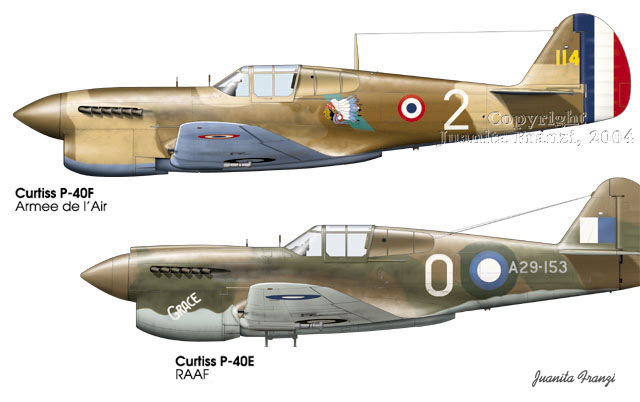
The P-40 was always at a disadvantage due to the altitude performance restrictions of the non-supercharged Allison engine. In 1941, as Packard began producing the Merlin 28 with a single-stage supercharger, Curtiss decided to change power plants from the Allison to the Merlin. The result was the P-40F and P-40L (lightened P-40F).
The main visual difference between these two sub-types and others was the lack of the carburetor intake on the upper cowling, and an overall more “squarish” look to the cowl. The P-40F-1 was produced with the short fuselage, which was changed from the P-40F-5 onwards to the extended fuselage which was designed to deal with a lack of directional stability associated with the shorter fuselage.
The P-40F entered production just prior to the attack on Pearl Harbor. The 57th Fighter Group – equipped with “short-tail” P-40F-1s – was sent to Egypt in the Summer of 1942 to reinforce the RAF and allow the American pilots to gain valuable combat experience. Operationally, it was found that the single-stage supercharger did not provide the P-40F with a major increase in high-altitude performance, though best altitude was increased from 10,000 ft to 15,000 ft. Given the altitudes at which combat took place in North Africa, the airplane was not at a disadvantage so long as there were Spitfire escorts around. Otherwise, the P-40F pilots – like their Commonwealth counterparts in Allison-powered P-40s – invariably found the enemy above them.
The 57th Fighter Group was primarily tasked with ground support of the 8th Army during the westward advance from Egypt following the Battle of El-Alamein in November 1942. On April 17, 1943, the unit took part in “Bloody Sunday”, the massacre of a large formation of Ju-52s carrying supplies from Sicily to Rommel’s forces in Tunisia. The unit carried on in the ground support assignment through the invasion of Sicily and Italy, until their Merlin P-40s were replaced with far more capable P-47 Thunderbolts in the spring of 1944.
The Merlin P-40s only saw combat in the Mediterranean Theater where they gave good account of themselves regardless of their assignment.
The main reasons for the marginal performance improvement were the better supercharger* and the fact that the Packard Merlin V-1650-1 was rated at 1,300 hp, while the Allison V-1710-39 in the P-40E was rated at 1,150 hp.
The P-40K got the Allison V-1710-73, rated at 1,325 hp. This virtually duplicated the performance of the P-40F, except for higher-altitude power.
*The Allison V-1710 in the P-40 had an integral single stage, single-speed supercharger, while the Merlin V-1650-1 had a single-stage, two-speed supercharger.
Bager1968No, its a base-line Halifax Mk II Series I… the Mk I had no dorsal turret. The Mk II Series I (Special) and Mk II Series IA were the ones without the nose turret.
http://www.historyofwar.org/articles/weapons_halifax_mkII.html
B Mk II Series 1 (HP 59)
The main change made to the Mk II Halifax was the use of the 1,280 hp Merlin XX engine, giving a significant performance boost over the Mk I. Amongst the improvements was a 3,000 feet increase in the service ceiling, bringing it up to 21,000 feet. The majority of Mk II Series I aircraft also had a new dorsal turret, the Boulton Paul C, in place of the beam guns that could be carried on the Mk I. The Mk II entered service in October 1941.
B Mk II Series 1 (Special)
The Mk II Series 1 Special was the result of concerted efforts at Boscombe Down to reduce the weight and drag of the Halifax, to improve performance. The most obvious visual change was the removal of the front gun turret, and its replacement by a smooth fairing, known as the “Z Fairing” due to the shape of the framework used to attach it to the aircraft. This was often combined with the removal of the dorsal turret, and increased the speed of the Halifax by 16 mph. As a indication of how significant small changes could be, the removal of one layer of rough finish paint (RDM2 black) from the Halifax increased the top speed by another 5 mph! The Mk II (Special) entered squadron service in the autumn of 1942. The Mk II (Special) was produced in parallel with the Mk V Series 1 (Special), which was identical apart from its undercarriage.
B Mk II Series 1a
The Mk II Series 1a entered service during June 1943. It saw a final refinement of the Halifax’s nose. The Z-fairing of the Series 1 Special was replaced by a clear plastic one piece nose cone. This gave the bomb aimer much more space. It also allowed the fitting of a single Vickers .303 K gun, mostly for morale purposes. The Boulton Paul C turret was also replaced by the Boulton Paul A Mk VIII turret, which was rather more streamlined. The Mk II Series 1a also saw another new engine appear, this time the Merlin 22, capable of providing 1,480 hp at 12,500 ft.
A final significant change came during the production run of the Mk II Series 1a. Earlier versions of the Halifax had demonstrated a dangerous tendency to spin at low speeds. This was tracked down to the design of the rudder and the entire tail. The response was to replace the original tail design with a new “D” shaped fin, increasing the size of the control surfaces and reducing the danger. The Mk II Series 1a also had an equivalent Mk V Series 1a.
http://www.warbirdsresourcegroup.org/BARC/halifax.html
Armament:
Halifax Mk. I:
Two .303 in. Brownings in nose turret.
Four .303 in. Brownings in tail turret.
Two .303 in. Brownings manually aimed from beam positions.Halifax Mk. II:
Two .303 in. Brownings in nose turret.
Four .303 in. Brownings in tail turret.
Two .303 in. Brownings in Hudson type dorsal turret.Halifax Mk. II Srs 1 Special:
One .303 in. Vickers K manually in nose.
Four .303 in. Brownings in tail turret.
Four .303 in. Brownings in Defiant type dorsal turret.Halifax GR.II Srs 1A:
One .50 in. Browning manually in nose.
Four .303 in. Brownings in tail turret.
Four .303 in. Brownings in Defiant type dorsal turret.
Bager1968The B-29 did not need escort over Japan.
Hmmm… then the USN/USMC sure suffered a lot of casualties capturing Iwo Jima for nothing, then.
Iwo was taken specifically to provide a fighter base within escort range of Japan, so the B-29 loss rate over Japan could be reduced.
Its use as an emergency field for damaged B-29s returning from Japan was definitely its secondary mission.
Bager1968F0014.….VF-11 Red Rippers, Boar’s head above blue & red shield with red balls & lightning bolt on white disc. Current design
“Current design”… sounds accurate to me.
Incomplete, yes… no mention of the earlier name/emblem… but accurate.
That site covers all eras, not just WW2.
Bager1968http://www.vectorsite.net/avwcat.html#m3
The USN obtained 1,169 F4F-4s. The FAA obtained 220 “Martlet IVs” that were based on the F4F-4 but had substantial differences, most particularly the fit of a Wright R-1820-40B Cyclone in a distinctly more rounded and compact cowling, with a single double-wide flap on each side of the rear and no lip intake. These machines were also referred to as “F4F-4Bs” for contractual purposes.
The USN F4Fs (Grumman) were all powered by a Pratt & Whitney Twin Wasp, as were the FM-1s (General Motors).
The FM-2s from GM had the Wright Cyclone.
Martlet I [ex-French order]: Wright R-1820 Cyclone; fixed wings; 4 guns; 81 delivered to UK (+10 lost en-route); Note that these aircraft were in RN service (deliveries from July 1940, and shooting down a Ju-88 over Scapa Flow 25 December 1940) before the USN formally accepted their first F4F-3 Wildcat (January 1941)
Martlet II [RN order]: P&W R1830 Twin Wasp; folding wings; 6 guns; 90 delivered to UK from August 1941
Martlet III(A) [RN order]: P&W R1830 Twin Wasp, fixed wings (refitted with folding); 4 guns; 10 delivered to UK from April 1941
F4F-3/F4F-3A/Martlet III(B) [ex-Greek order]: P&W R1830 Twin Wasp, fixed wings; 6 guns; 30 delivered to UK (taken over in Gibraltar April 1941)
Martlet IV [RN order]: Wright R-1820 Cyclone, folding wings; 6 guns; 220 delivered to UK
F4F-4: P&W R1830 Twin Wasp; folding wings; 6 guns
FM-1/Martlet V [RN order]: P&W R1830 Twin Wasp; folding wings; 4 guns; 312 delivered to UK
FM-2/Wildcat VI [RN order]:Wright R-1820 Cyclone, folding wings; 4 guns; 370 delivered to UK (RN accepted the US name for these)
Bager1968My vote would be for the CAC Sabre.
It gave the RAAF a modern, effective aircraft, and re-designing it to take the Avon instead of the J47 really pushed the capabilities of Australian aircraft design.
Too bad they then wasted this by retreating into license-building other designs with virtually no changes.
Bager1968Hmmm… this site http://www.ffmpartners.com/goldenwings/navypg1.htm
lists
F0031R….VF-38, Figure of black game fighting rooster on 6 In. light blue felt disc. 1943/1944 design
It would seem this was either used in 1945 only, or was an informal or individual one.
VF-38: Established as VF-38 20 Jun 1943; Disestablished 31 Jan 1946
Bager1968Quite a few years ago I was incarcerated in hospital, and ‘Happy Landings’ was a very welcome distraction. A close up picture of that glider was on ther rear cover.
I was most grateful when a rather attractive young nurse came past one afternoon, and sat, passing a few minutes chatting about this and that. She spotted the book, lying face down, and after a pause remarked
”Quite unusual to see a man reading a Barbera Cartland book!” and with that she rose and dissapeared, never to be seen again….:confused:
Check the photo… Barbara, not Barbera.
That nurse thought your book was about gals & guys, not gliders.
Dame Mary Barbara Hamilton Cartland, DBE, CStJ, (9 July 1901 – 21 May 2000) was an English author, known for her numerous romance novels.
After a year as a gossip columnist for the Daily Express, Cartland published her first novel, Jigsaw (1923), a slightly risque society thriller that became a bestseller. She also began writing and producing somewhat racy plays, one of which, Blood Money (1926), was banned by the Lord Chamberlain’s Office.
Her publishers estimated that since her writing career began in 1923, Dame Barbara Cartland had produced a total of 723 titles.
In the mid-1990s, by which time she had sold over a billion books, Vogue magazine called her “the true Queen of Romance”.
Privately, Cartland took an interest in the early gliding movement. Although aerotowing for launching gliders first occurred in Germany, she thought of long distance tows in 1931 and did a 200 mile tow in a two-seater glider. The idea led to troop-carrying gliders. In 1984, she was awarded the Bishop Wright Air Industry Award for this contribution.
She regularly attended Brooklands aerodrome and motor racing circuit during the 1920s and 1930s, and the Brooklands Museum has preserved a sitting room from that era and named it after her.
http://en.wikipedia.org/wiki/List_of_books_by_Barbara_Cartland.
Bager1968The earliest identified use of the exact phrase dates from 1942, in the Investigation of the National Defense Program: Hearings Before a Special Committee Investigating the National Defense Program,[1] by Admiral Emory Scott Land, who said “You have to increase from 7.72 to 12 for the average at the bottom of that fifth column, for the whole nine yards”. This use refers to the total output statistics for the nine new shipyards that produced “Liberty Ships” with unprecedented speed, crucial to the course of World War II. It is thus far undetermined whether this literal use gave rise to the transferred, metaphorical, figurative sense.
[1] http://listserv.linguistlist.org/cgi-bin/wa?A2=ind0707B&L=ADS-L&P=R7303&D=0&I=-3
Subject: Re: “the whole nine yards” 1942
From: Stephen Goranson <[log in to unmask]>
Reply-To: American Dialect Society <[log in to unmask]>
Date: Wed, 11 Jul 2007 06:39:47 -0400
Content-Type: text/plain
Parts/Attachments: text/plain (93 lines)Admiral Emory Scott Land was appointed by FDR soon after the Pearl
Harbor attack to oversee a massive increase in U.S. shipbuilding. In his long
life (1879-1971) Land was, among other things, a naval architect and
administrator, a submarine builder, a pilot and president of the Air Transport
Association of America, and a director and consultant to General Dynamics, a
defense contractor and a supplier to NASA (where a 1964 usage of “the whole
nine yards” was recently announced). The Library of Congress published in 1958
a “Register of His Papers” deposited there. Land was on the cover of Time
magazine on March 31, 1941, before Pearl Harbor and before his April, 1942
Senate testimony in which he spoke the words “the whole nine yards.”Three of the options regarding those latter words, ending a sentence or
list, as they often do, are the following: (1) the words are a coincidental
collocation, having nothing whatever to do with the later popular quotation;
(2) he was quoting popular words; and (3) the words gave rise to the saying.(1) These words, despite many and sustained searches, have not been
found (to my knowledge) earlier than 1942. So they are a fairly rare combination
of words. All other (known) uses of these words appear to be related to one
another. Note that these words appear in Defense appropriation hearings, in the
U.S. Senate, where they would reappear, though years later, at least possibly
sustained in memory there by slang oral tradition. Recall that many, for some
reason, insist that the phrase goes back to World War II times.(2) In context, the dialog appears as quite serious business and devoid of
word-play or double meanings. And, again, the phrase is not (yet) known beforw
1942, to be quoted, anyway. Note that the huge increase in shipbuilding,
including at new yards set up by Kaiser on the west coast, was quite an
ambitious goal, and to achieve that goal at “the whole nine yards” would be a
remarkable achievement, seen as urgent to the war effort.(3) The words in 1942 are a straightforward response to a question.
They do not seem to be intended to be artful, but they were emphatic, and spoken
by a much-respected authority. They report that if several items are achieved,
the ensemble whould require the full compliment of extraordinary contributions
by “the whole nine yards.” This sets up the pattern: item, item, item–the
whole nine yards. Even by speakers, later, who were unaware what type of
“yards” were originally intended. I suggest that the possibility that April 23,
1942 was the birth of “the whole nine yards” is well worth considering and
testing by further research.Stephen Goranson
> Investigation of the National Defense Program: Hearings Before a Special
> Committee Investigating the National Defense Program, By United
> States Congress.
> Senate. Special Committee Investigating the National Defense Program,
> part 12,
> U.S. Government Printing Office, Washington,1942, page 5192.
> (Google Books provided the title and page number but gave no text; WorldCat
> indicated the page was in pt. 12; the rest is from the paper publication.)
>
> Senators and Admirals on Thursday April 23, 1942 were discussing a rapid
> increase in construction of Liberty ships. Senator Harry S. Truman was
> chairman.
>
> [page 5191]
> ….
> Senator [Harold H.] BURTON….therefore you see a possibility of actually
> increasing the
> percentage of gain by 50 percent in these yards as a whole.
> Admiral [Howard L.] VICKERY. In the yards as a whole.
> Senator BURTON. And the yards that are below 12 percent now there
> would be more
> than a 50-percent gain because they are below that average at this time?
> [page 5292]
> Admiral VICKERY. Yes, sir.
> Senator BURTON. So that you have involved here a tremendous expansion in
> production, and you are shooting for a 50-percent increase or more than a
> 50-percent increase in seven out of nine plants.
> Admiral VICKERY. That is right, and they have got to make that to hit the
> schedules.
> Admiral [Emory S.] LAND. You have to increase from 7.72 to 12 for the
> average at
> the bottom of that fifth column, for the whole nine yards.
> Senator BURTON. That is pretty nearly twice.
> Admiral VICKERY. That is what we have got to do.
> Admiral LAND. That is what we are up against here, and they aren’t up against
> anything that the rest of the United States and all its armed forces are up
> against.
Of course, the next known use in print is in 1962*, after which it appears frequently in the US military and NASA.
The prevalence of stories of individuals having heard it used before 1962 does indicate that the documented 1942 use of the term in a serious, non-metaphorical context may have been the genesis of the double-meaning.
*These are a short story in the literary magazine Michigan’s Voices; and (as “all nine yards of goodies”) in a letter in the auto magazine Car Life.
Bager1968Which is exactly what stealth is designed for.
“Invisibility” was never part of the equation, survival was, and these 2 aircraft performed properly… it was the pilots who pushed their luck (and their aircraft) way too far.
Bager1968Apparently, Andy in Beds, you have decided that the group who were proposing the recovery are nasty, unprincipled, filthy money-chasers who didn’t give a d@mn about any remains… and refuse to accept the facts that disprove your view.
Fair enough… but you also seem to be nearly as derisive towards the servicemen and their families.
Ruyard Kipling would be quite familiar with your and the MOD’s attitude towards deceased servicemen… he expressed it quite well in his 1892 poem Tommy.
Bager1968In the negated competition, both NG/Ab and Boeing had threatened to pull out if certain things weren’t changed… they were and the GAO said that wasn’t allowed.
Therefore nothing can be significantly changed this time.
However, NG/Ab is correct… the USAF was told to write the specs so Boeing would be favored, and they did.
The reality is that the KC-767 & KC-45 are too different for one competition to reasonably compare them in a non-biased manner.
The USAF & Congress should accept reality and do the following:
1. award Boeing a sole-source contract for KC-X (179 aircraft to replace the KC-135E).
2. award NG/Ab a sole-source contract for KC-Y (300+ aircraft to replace the KC-135R), but split the contract, moving ~120 aircraft to KC-Z.
3a. open a genuine competition for the remaining 120 or so “KC-Y” and the original KC-Z buy (59 aircraft to replace the KC-10), making this round not limited to “developments of existing aircraft”.
3b. issue a definite group of “set in stone” requirements for KC-Z by 2012 (10+ years before production is expected to begin, and some 6+ years before the award is made), to give plenty of time for a really “21st-century” solution.
This would give both companies a 179/180 aircraft production order and a fair shot at the remaining ~180.


 Sign In







