hopsalot
no, t’is only fantasies as of now
Like the Gripen NG?
hopsalotBase acceleration factor of an F-16C.50 is about 29 seconds. If you add tip weapons, this goes down to roughly equal value with the F-35’s ‘+8’ shortfall, it is true. But whereas an F-16 can drop 2X 370 gallon tanks and 4,000lbs of A2G and thus approximately 10,000lbs of gross weight to go from a ca 45K platform to a 27K equivalent; the F-35 cannot and indeed _must not_ due to it’s enhanced radius requirements (300 vs. 584nm).
As a result it as a weight and thus Ps cripple, despite having nominally as much IRT as the Viper does in full burner.
It is further compromised by a 50″ F135 carcass diameter, closer to that of the 55″ F101 on a B-1B than the 46″ of the F110 on the Viper. This is the true ‘STOVL penalty’ in action as the F135 fan is sized to a zero airspeed (no ram augment) requirement to sustain 18 out the back and while still retaining enough residual torque to spin up another 18Klbf out of the SDLF up front. Big fans need big compressor sections with massive pressure rise and from that equally powerful LPTs to keep all the spools turning. The Stochios required to keep all this in balance in turn require enormous core temps (3,600`F) as FUEL. Which is why the engine has a .889pph TSFC. And all this leads to more gas, more wingloading and _much more_ frontal area. Which never would have happened if the STOVL metric and the selfish motives of the UKRN and USMC were _stripped_ from the program. Because we would have had a twin and probably low end supercruise, with FOUR 2,000lb class weapons (16 GBU-53/SPEAR-3), totally changing up the hours-to-nm radius factor which currently puts the F-35 in a 10-12hr mission window to 700-800nm, with at least three tankings and only 2-3hrs in the combat area. Limiting the utility of all that ISR suite which should be MEP’d into a PERSISTENT platform (10-15hrs = drone) instead.
The U.S. doesn’t need a third air force, especially when the LHA-6 is just as obvious a target as any CVN-78, and ‘hardening’ doesn’t matter vs. DF-21/26. The UK are not even buying their original 138 jets and may stick with just 40 or so which means we have a gold plate solution whereby the least useful variant has debased the program by driving up costs and depressing capability so that the SMALLEST PERCENTAGE USER INVENTORY can have a capability which even they do use in peacetime because it is hard on runways and spikes’ the jet’s CPFH enormously.
Now look at the weapons delivery method: 12nm lay down of GBU-31/32 is about 6nm better than the GBU-27 on the Roach but is still utterly worthless in a netcentric GBAD condition where you have NEBO or Skywatch cueing very high power EPARs like Gravestone which can easily acquire the F-35 from 20-25nm out, using pencil beam search. And don’t tell me about how bad longwave is. The Russians have digital waveform processing (i.e. front and back end) which gives them perfectly useful, 3D, air search out to 200nm or more.
Compare this to an F-16 which has options on 40nm JSOW, 50nm SDB-I/II and 360nm JASSM-ER as well as advanced tail and expendible GaNi decoys and massive standoff support jam which _will not be able to accompany_ an F-35 force going to full depth. Growlers just don’t have the gas or the low-drag inherent to all the jammer pod parasitics.
Indeed, let’s look at the F-35 radius shall we? If you take IRT as 27Klbf and Flight Idle as 60% of that or 16.2Klbf, and assume you tank before crossing the fence, you are functionally talking about .889 X 16.2 or 14.4Klbs of fuel burn to crawl along at 300 knots. Remove 2,000lbs from the total fuel load as unuseable fuel coolant and another 3,000lbs as combat reserve for 550 knot transit of the last 50nm to the target and you are talking with an 800lb ullage swing, you are talking about exactly 1hrs flight time or 150nm, in and out.
This is why the (Australian Program Award announcement) ‘700nm combat radius’ was a lie. And the currently stated 584nm combat radius is ALSO a lie.
Why is this important, relative to ‘fighter performance’? Because, when added to the low shot counts and the very poor acceleration performance (closer to Hornet than Viper), it means you cannot go into a fight, supersonic, but must _sprint to pole_ to move from a 10-12nm, .5SSPK to a 15-20nm .3 SSPK. And given the massive heat of that hot core (second only to the DF30-6) you are going to be visible and NCTR ID’d, the instant you light the blower. Because QWIP level IRST can see the burner plume out to 50nm FQ and 80nm RQ and will see you, even in military, by 15nm at the latest. If they get a hot track with no RF, they can cue their IRBIS into pencil mode and use it to MCG (much bigger) ARH weapons (Izdeliya 810 etc.) into parameters from roughly twice the distance you can expect an AIM-120C7 to go in. And if they use Shooter:Illuminator, with a trailing honcho, the lead missileers (who can be at 650+ and not worry since they have the power and the gas and everyone sees them on radar anyway) will not only get dominante pole control but be able to pump out the sides of the fight so that your long range shots PK completely tanks.
Whoot!
Now let’s look at close combat as the wings. Instead of the clipped/modified deltas of the F-15/16/22 which have superb stall resistance, they are basically F-5/F-18 tapered trapezoids, shoved as far back as possible to keep transonic drag rise under control and reliant upon forebody lift off the weapons bay area to compensate. The problem with this is that you have a staggerwing effect. Even without opening the weapons bays to completely destroy the high-pressure aeros while prepping quickdraw missiles, as the forebody rises, it’s effective AOA goes up faster than the trailing primary airfoil’s does. Added to which is the close coupling between the F-35 tails and the wings which denies the option of (2` up LEF) ‘trimming in the tails’ to set the turn and (on the F-16) gain rather than lose 100sqft or so of effective lift as a genuine 9G capability.
Which is why the F-16, 40 years old, can do this-
https://www.youtube.com/watch?v=HBlP4cCRVmk
Despite having the lowest (27.5, without chin pods) alpha regime of any in-service fighter. May not mean much in a HOBS environment you say, but then again F-35 doesn’t have a HOBS missile or the ability to add one without directly effecting it’s already incredibly limited internal strike mission payload. And its a long, long, ways from your 6nm NEZ last-AMRAAM to the 4,000ft of 25mm gunzo followup.
On the F-35, the effective lift differential and lack of vectoring to trim the jet in results in a split lift curve as the reason why the jet is running at ‘transitional’ alpha limits around 20-23 units, when most jets are only entering this regime at 27 and it has a direct effect upon FLCS authority to continue pitch rates as the jet nears TRO territory and the flight controls have to start limitering thrown to keep the ‘carefree’ handling.
It is the reason why, despite having a nominal 60-70 absolute Alpha regime, the F-35 is in fact functionally on a monorail above 30` with ZERO ability to bring the nose across as the threat reverses and tucks under in the most basic of BFM snakes and rolling scissors. Because both the verticals and the stabs are having to _fight_ to keep the nose up and the jet is bleeding down, unable to generate lift to sustain even a 6G turn as the F-16 did against the F-4E shown here-
https://s-media-cache-ak0.pinimg.com/736x/a3/13/f3/a313f3cfcfae12eac21ebe0c3821bc8c.jpg
So…
We have a jet that is dedicated to BVR with only two internal missiles in a typical strike role and those missiles having inferior performance compared to the R-77MD or the Meteor or the PL-15 _despite_ the fact that SSPK drops alinearly with range _before_ you add (SAP-514/518, GaNi) EW effects.
We have a jet which, at 60% internal fuel (7G max turn) and _zero_ bay weight (5,000lbs off the front end) cannot beat an F-16D for pitch rate or stabilized loaded roll, despite the latter having two bags and a -100 engine.
And we have an interdictor class mission weight and particularly fuel fraction penalty with pretenses of being a ‘fighter’ by jamming the biggest TSFC pig of an engine in it as possible, ruining it’s radius performance justification for being in a world where Hyper-SAM mean you cannot have tanker orbits malingering, just over the fence.
Did I mention it’s a 130 million dollar fighter which hasn’t met Lot-9 production cost reduction goals and NEVER WILL as we finally figure out we are bankrupt and cannot afford (and do not need) 2,400 of these engineering sandboxes?
And you call me ANGRY?!? I’m not angry. I’m _furious_. Because I have been looking at the numbers and making accurate predictions on this worthless beast since the mid-90s when I saw it start to threaten the F-22 which had true supremacy in all three primary areas of LO, EM and Weapons Load. I’ve seen it kill J-UCAS for nothing better than pilot egos and Hoffaesque ‘shop rules’ job security for the largest labor union on the planet. And now, just as I warned, we are looking at Hunting Weapons and SSL class DEWS that threaten to turn the entire world of Air Warfare on it’s ear interms of sustainable LERs in the first 2-3 days of banging out an operation bubble in which to FINALLY employ airpower to support ground forces in contact. Assuming we keep our Carriers and Airbases at least 1,500nm out on the radial because we cannot beat the Chinese on a 10 million dollar BASM vs. 10 million dollar SM-3IIa mechanical intercept capability.
So don’t tell me what this kluge is and isn’t. Because I know better than you why it’s so Klotzed (Yiddish: Dead Wood) up. I always have.
The F-35 is as much a ‘fighter’ as Roseanne Barr is an Olympic Sprinter.
Check your meds.
hopsalotWho cares? F-18E is a variant of the old design. Is it the product of 1983 or 1999?
No, it really isn’t.
True, then MiG-23 was brand new in 1970, and F-14 introduced in 1974. They aren’t exactly comperable too, aren’t they?
The dates don’t match perfectly, is that your point?
5th gen made stealth priority, while keeping dogfighting and BVR capability. F-22 is introduced in 2005, we are in 2016 and PAK-FA is years away from being operational. But I don’t think any sane man -irrelevant of his nationalism or bias- would compare F-15SA, Su-35 or Typhoon with F-22 on overall combat capability, just because they became operational few years apart. Just like that, I don’t find comparing MiG-21 with F-4/5 is also fair.
Again, you are comparing upgrades to existing types with all new designs. The F-22, Typhoon, and Rafale are all contemporaries and can certainly be compared. The F-22 has drawbacks, its cost in particular, but in an air to air scenario it is by far the most capable of those three. That is reality. It doesn’t do any good to say they can’t be compared simply because the F-22 is more advanced.
hopsalotHow they are contemporaries, really?
Contemporary
1. existing, occurring, or living at the same time; belonging to the same time:
2. of about the same age or date
That is what the word means. It means they were both designed, entered production, and entered service at almost the exact same time.
Different gen, different weight class. Even if you are ignoring the generation difference (which would reflect design goals), you can compare MiG-21 with F-5, not F-4, and F-4’s counterpart would still be Su-11.
Of course you can compare them if they are fighting each other in a war. They were both brand new jets at the time. Yes they had different design goals, and based on the results achieved (in Vietnam and elsewhere) the F-4 proved itself superior.
Then I still disagree about comparing them such way. Its very much like comparing F-5E with F-15A, based on the fact they are introduced with a few year intervals and finding F-5 to be inferior.
Upgrades complicate things as the F-5E was an updated version of an earlier design. That said, yes, the F-15A was a far superior fighter to the F-5E.
US built F-86, Soviet MiG-15 built same year was inferior, so response was MiG-17 2 years later.
US built F-100, Soviet responese was MiG-19 2 years later.
US built F-104 and Soviet response was MiG-21 2 years later.This is due to US generally led the technological advances, and Soviets merely countered that in their best abilities.
Yes, and that means what? That comparisons are unfair because the Soviets were generally behind?
hopsalotThis is the most distasteful combination of two particular traits; ignorance and arrogance;
MiG-21 is a 2nd gen light class aircraft. Its direct counterpart in west is F-104. F-4 is a 3rd gen heavy class of aircraft. While it has no direct counterpart in Soviets, its generation-vise counterparts is MiG-23, Su-15TM and MiG-25.
Unsuprisingly, F-4 is a better aircraft than MiG-21 in all circumstances; It has a radar that deserves the definition, has potent BVR capability, better WVR missiles. In terms of aerodynamics, F-4 actually has better sustained turn performance and climb rates, so it was actually a better dogfighter in trained hands, plus it was faster too.
Likewise F-15 and F-16 are 4th gen aircraft, their counterparts are Su-27 and MiG-29. Comparing them with previous generation of aircraft is nonsense, as those aircraft excel in all criteria.
So are you chestpounding because then cutting edge US fighters achived parity with a generation older Soviet aircraft?
Only relevant air-to-air victory comparisons would be encounters in similar generations. Only suprising aircraft in such encounters was MiG-25, which was pretty survivable because of its speed. It maybe worth mentioning that in all the encounters that an F-15 or a Su-27 faced MiG-29, heavy types prevailed. Actually, that is also an expected outcome as F-16 and MiG-29 were born as cheaper alternatives to fill the roles where more capable F-15 and Su-27 would be unnecessary. This definition alone says, they are by no suprise inferior to Su-27s or F-15s.
I have no idea what you can possibly mean here. What matters is that the F-4 and Mig-21 were absolutely contemporaries. Yes, the F-4 was the more advanced design in several key aspects, but that hardly means it can’t be compared to its chief adversary, especially given that both had only been in service a few years when they first met in combat.
hopsalotVOLK FIELD, WI. — The 33rd Fighter Wing wrapped up the largest F-35 deployment to date at this year’s Exercise Northern Lightning Aug. 31 at Volk Field, Wis.
Northern Lightning is a tactical-level, joint training exercise which serves as a combat rehearsal for both legacy and modern aerial and ground assets in a contested, degraded environment.
The 33rd FW deployed over 150 personnel and 14 F-35As for two weeks to train to a realistic threat level and develop how to deploy and sustain a squadron of F-35s.
The Air Force announced the fighter jet was initially capable of combat operations in August of this year. With the service’s shift in focus to full operational capability for the aircraft, the lessons learned from this exercise will shape future real-world deployments of F-35A squadrons.
“The aircraft and program still have maturing left to do, but that is a scary thought for our adversaries,” said Lt. Col. Brad Bashore, 58th Fighter Squadron commander. “The performance here proves this aircraft is combat-ready, even in its infancy.”
The 33rd FW scored over 110 kills against “enemy aircraft,” supported a surge of 138 sorties and dropped 24 GBU-12 bombs during Northern Lightning.
During the exercise, 33rd FW pilots were able to execute offensive counter-air, suppression of enemy air defenses, destruction of enemy air defenses, and employ GPS-guided munitions for close air support.
Another article… and another childish comment:
(EDITOR’S NOTE: Because of its habit of selectively releasing details and figures, the US Air Force makes it impossible to understand whether the F-35A’s performance during the deployment was as impressive as it sounds.
For example:
— a “surge” of 138 missions by 14 aircraft over two weeks may sound impressive, but it averages out to less than one (precisely, 0.7) mission per aircraft per day, which is rather pedestrian.
— The story does not say how many of those 138 missions were aborted.
— The story says the squadron scored 110 kills against “enemy” aircraft, but again that averages out to 0.56 kills per aircraft per day, which is not really impressive.
— how many of the “suppression of enemy air defenses, destruction of enemy air defenses” missions were assisted by EG-18F electronic attack aircraft?
— how many “offensive counter-air” missions were assisted by E-3 Sentry AWACS aircraft, and/or F-16 and F/A-18 Super Hornets fighters?
More details are needed to determine the F-35A’s real performance during this simulated deployment.)

I would like to see one single case of an air force releasing the exact sortie schedule, abort rate, etc, for a major exercise. Of course they aren’t releasing that sort of detailed information… and even if they did you can be sure Defense Aerospace lacks the expertise to make sense of it anyway.
The bottom line is that the F-35 is now participating in significant exercises with the USAF and performing a wide range of missions against simulated adversaries. It is a noteworthy milestone.
hopsalotF-35A combat radius?
In an air to air configuration the F-35 has essentially the same range as an Su-30MKI or a Typhoon with 3 tanks…
Should be more than enough for most users.
hopsalotSo, was it 4 kills with A2A missiles + 23 with cannon on this sortie? Theoretically possible if the cannon were operational but it’s not yet, is it? In other words, this does sound like bunk (at least to me). Can anyone offer any explanation as to how the claim of 27 kills in a sortie could possibly be true?
Read the article…
Bashore and his wingmen at the 58th FS have been employing the capabilities of the F-35A, scoring as many as 27 kills in a single sortie, at Northern Lightning, a large force exercise where fifth and fourth generation aircraft engage in a contested, degraded environment.
One of two things is happening here. Either the F-35s are regenerating their missiles as suggested by FBW, or the “27 kills” aren’t for a single F-35 but rather a flight of F-35s or potentially even a mixture of F-35s and other aircraft.
This isn’t some kind of conspiracy on the part of the USAF to claim the F-35 has “supernatural powers,” it is just a poorly written sentence that leaves its exact meaning unclear.
The comment is also factually incorrect when it says:
Contrary to what is claimed above, the F-35’s sensors do not yet have “the ability to process and share information with other players in the battle space” because of technical faults.
But, even if they did, the F-35 could not transmit sensor data to previous-generation aircraft because its Multifunction Advanced Data Link is not fully operational, and in any case is not compatible with datalinks used by legacy aircraft.
The F-35 can already share information with both other F-35s via MADL, and with 4th generation aircraft with link-16. The editor is just ignorant and trollish.
hopsalotVOLK FIELD AIR NATIONAL GUARD BASE, WI, UNITED STATES
08.30.2016
Story by Senior Airman Stormy Archer
33rd Fighter Wing/Public Affairs-Imagine yourself in the seat of a fighter jet, tearing through the air at the speed of sound, your own weight pressing against your chest as you fight to breathe against the increased force of gravity.
Sweat beads down your forehead as you scan you sensors and outside your canopy for any threats in the area. Next thing you know, you are tagged out by an enemy that is invisible to your sensors, and too far for your eyes to see.
You circle your jet around to regenerate, or “respawn”, into the battle space; only to make it back in time to be shot down by the same unseen adversary again… and again… and again.
A similar situation played out for Lt. Col. Brad Bashore, 58th Fighter Squadron commander, years ago when he flew against the F-22 Raptor as an F-15E Strike Eagle pilot.
Now as an F-35A pilot at this year’s exercise Northern Lightning, it’s his turn to deliver fire from the clouds.“It’s not a fair fight, and that’s exactly what we want for our adversaries,” Bashore said. “To be on the offensive side this time and getting a chance to employ (those capabilities), I couldn’t ask for anything better. It’s like fighting somebody with their hands tied behind their back. It’s not a fair fight and that’s how we like it.”
Bashore and his wingmen at the 58th FS have been employing the capabilities of the F-35A, scoring as many as 27 kills in a single sortie, at Northern Lightning, a large force exercise where fifth and fourth generation aircraft engage in a contested, degraded environment.
“I remember the first time I flew against (fifth-generation aircraft),” Bashore said. “It’s a change in mind set because you can’t target anything on your radar because it’s not there, and by the time you do potentially find something it’s too late and they have already shot you.
“It’s frustrating, but at the same time understanding that it’s our asset is invigorating and gives you a lot of hope for the future as far as how successful this platform is going to be.”
While sharing many similarities with the F-22, the F-35A’s main advantage is its robust suite of sensors that give it the ability to process and share information with other players in the battle space. These capabilities make the F-35A more lethal and survivable than any legacy aircraft, and eliminate any safe space for the enemy to hide.“We took off out of Madison (to join the fight),” said Lt. Col. Bart Van Roo, 176th FS commander. “We went to our simulated air field out in the far part of the air space. As the two ship from the Northern half of the air space we turned hot, drove for about 30 seconds and we were dead, just like that. We never even saw (the F-35A).”
Van Roo has been flying the F-16 since 2001 and as red air during Northern Lightning for 13 years. Red air is a formation of aircraft acting as the enemy for air-to-air tactics training.
“For us, as a capable fourth-generation fighter, we are used to being able to see and counter most adversaries that we have out there when we are playing red air,” Van Roo said. “Versus the F-35 it’s completely different. The most difficult thing is we just can’t see them like they can see us. It can feel like you are out there with a blindfold on trying to find someone in a huge space.“We have been reliant on visual pickups of the aircraft only, which is extremely difficult to do, and at those ranges we are already dead before we could shoot back.”
Fortunately the red air pilots at this year’s Northern Lightning can take solace that the F-35A is on their side for future combat deployments, and will help ensure their ability to fly, fight and win against possible near peer adversaries.“The significant increase in situational awareness that it gives us on the battle field, the information sharing between jets, radar capability and of course the capability that we will have with our opponents not being able to see us will be a game changer,” Van Roo said.
https://www.dvidshub.net/news/208489/vicious-cycle-f-35a-continues-5th-gen-tradition-bullying-legacy-aircraft
I love the butthurt comment from Defense Aerospace…
So are they just children or what?
hopsalotWho said can’t be built and what does that have to do with anything being said here?
This place would be a lot better if everyone would just ignore him.
hopsalotMainly due to Russian and SAA is bombing US allies and with that US personel in Syria.
That why the bombers and F-22 has a link.
A cost or range comparison? No…
And cost is always an interesting element. No matter what.
Interesting? Maybe, but given the disparities in resources we are talking about hardly meaningful.
If the communication is encrypted, then you can still track its position. Its a signal, and it get emited from somewhere.
That is incredibly simplistic. Everything depends… there are some awfully LPI satcom systems on the market for instance.
hopsalotMeh. Hype up the F-22.. it is stationed over at the Emirates or is it Saudi. Too few and too far away. Totally dependent on tanker support to enter Syrian airspace.
Where was it when those Su-34 did the strikes in North Syria..I bet the ELINT jet is listening at the communication between US ground and air forces. And all other ground communications.
The bierdies are using a lot of cell phones.The F-22 might be more costly to operate vs Tu-22M3 out of Iran. And which one makes the bigger footprint in Syria?
:very_drunk:
The F-22 is a relatively short-ranged fighter in a supercruise profile, but it can go from orbiting near its tankers outside of Syrian airspace to deep within Syrian airspace in a matter of minutes and without warning.
I guarantee you the prospect of F-22s showing up unexpectedly is not one Syrian pilots enjoy thinking about.
I really don’t know what your point in comparing a dedicated air superiority platform to a dedicated regional bomber is and I really don’t get why you think the US would be using unencrypted radios.
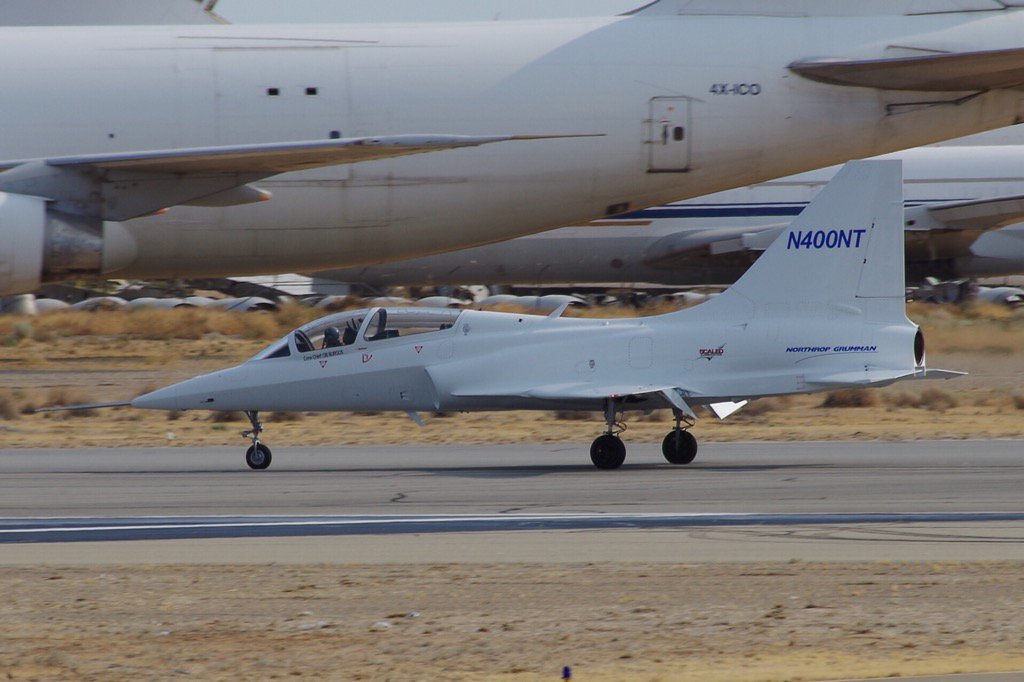
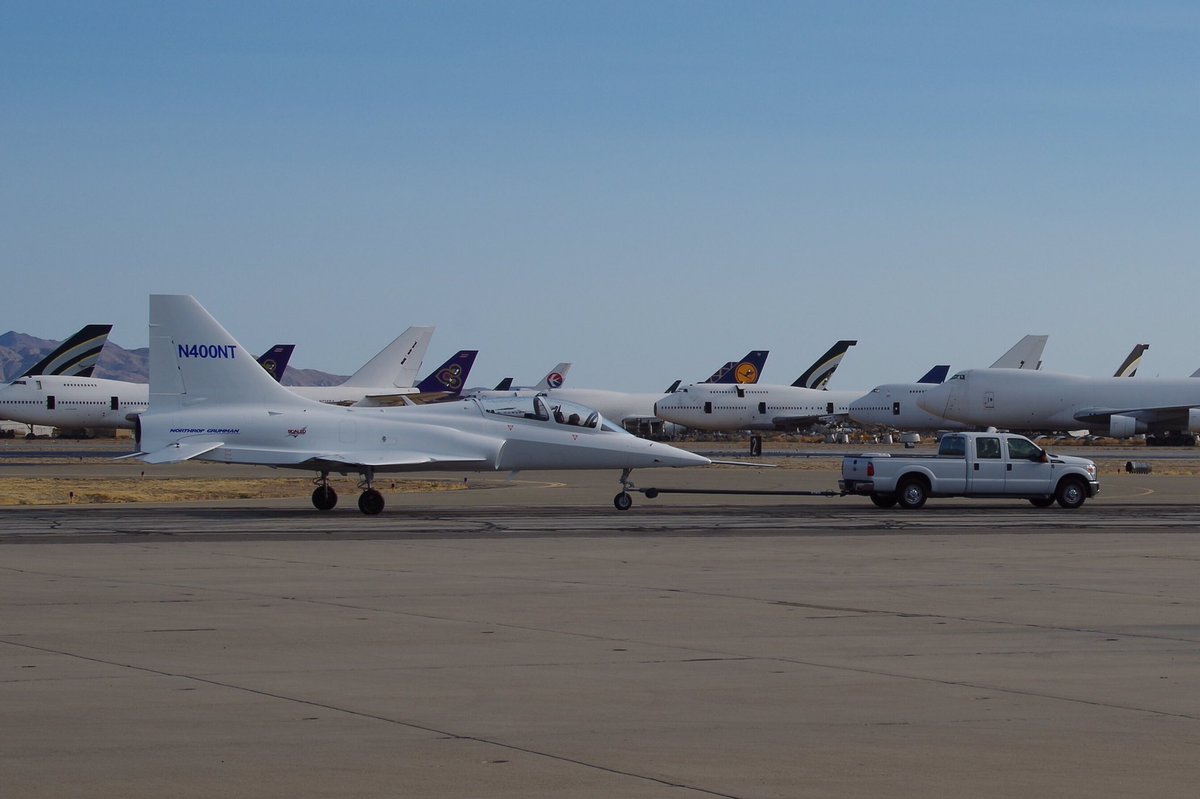
hopsalotAwfully sleak plane. I would like to see it from head on.
hopsalotCOD? call of duty? or do you refer to the fish?
https://news.usni.org/2016/02/05/navys-osprey-will-be-called-cmv-22b-procurement-to-begin-in-fy-2018
hopsalotnah..while nukes ended state on state wars, it didnt end proxy wars,
and eastern ukraine & crimea are proxy wars
Just because you took the insignia off your uniforms doesn’t make it a proxy war.
Using your military to seize your neighbor’s territory is pretty much the definition of “not a proxy war.”


 Sign In