TomcatViP
I could not find an English language news piece about this, but today in somewhat surprising twist, Saab announced that its response for Finnish bid includes two Globaleye AEW&C aircraft, in addition to 64 Gripens.
Being kicked out of the Swiss fighter competition was a direct consequence of their Peace and Love management attitude (why an extra long range Gripen for a Swiss size country?). They just missed the train by their own fault. So it’s nice to see that they are reacting with an aggressive offer: the duo is what brings the most to the Gripen concept as we know it for years (yes, yes, we read their endless marketing mat. :sleeping: ).
TomcatViPSCAF as of today
https://pbs.twimg.com/media/D9AojbUXsAAaGDF.jpg
to me there are some close looking points th the facet study (can’t find the photo)
another one. Finally looks like YF23
Miam Miam!*
Notice the strakes (on the nose) and… The verticals that are back!
*Yum Yum
TomcatViPEvery pound of weight added to that extra bulky WB is another pound of fuel that have to be carried… And at 11G, that’s a minimum of 11lb per extra lb added to the total. Then fighter cost is function of weight. And that’s is not linear: more weight, more parts, more working hours… And then, you are toasted.
I think seriously that someone should have a look at that contract. There is no way this would save any money. 10y ago, as I said before, I would have agreed. But now it’s too late, irrelevant and counter-efficient.
Get a Deliveroo credit and start bunkering yourself in a tunnel.*
IIRC, for the first AIM-120C versions, they had to add a ballast behind the guidance unit to keep the same weight & balance even though the new unit was much smaller/lighter. Then they designed a larger engine to take advantage of the extra space & weight.
Nice to know!
* A wind tunnel
TomcatViPAre you suggesting a Swiss airborne invasion of the Moscow’s red square?
TomcatViPif France start to think at defending their oversee territories with a fresh look then that would be the least difficult to achieve (but the more costly).
TomcatViPbut why a Mica body when you have at least a full decade of wind tunnel testing available in front of you?!
TomcatViPi wouldnt even dismiss the possibility of all the Western 4.5 getting into ~2030 still in production.
Sadly!
TomcatViPI have to say that this conversation is weird. and I am not sure Xena that the MIca has fins that are mounted before the missile being mated to the pylon’s airframe.
Anyhow, I will incline to the general opinion here as illustrated by Blue Apple. No fins/smaller footprint will be good. Hence why a NG when the programmed service entry date will be so close to the future NGF (to object of my remark)?
TomcatViPAny link with that story?
https://www.flightglobal.com/news/articles/collins-gps-outage-grounds-regional-flights-458819/
TomcatViPLow alt refueling
Reduced foot print
Commonality with other air forces
Or something that hasn’t surfaced yet (they are the user. They know).
But don’t take me wrong, the KC30 is a great airframe, especially for long range refueling and cross country deployment but tactically it remain less efficient.
TomcatViPThe 111 also had to go while still being exceptional. Sadly obsolescence of complex early surfacing systems and their inherent maintenance cost are an unavoidable wall in the face.
Man have to salute the new trend in US design to favor embedding existing technologies into open architecture.
TomcatViPFins and logistics (not our Nordic friends): If you need to airlift a box that has twice the volume and 10 to 20% more mass (think at the box material etc…) 200 times a week during war operation, this will impact directly your logistical train, cutting frontline units from needed supply etc… Logistics means choice: operational choices first and mainly.
So I am not joking. I am simply here taking into consideration the big picture beyond the marketing slides.
Super Alpha: I should have wrote Uber Alpha that you understand. The Mica, although having good performances is nothing beyond the market top 5 and those fins are for nothing into that of the achievement reached by their competitor. The trend for A2A long range missile is to lower their occupied volume. China has less restriction since, once again, they don’t see weight has a direct constraint impacting their cost. In high cost countries like France and Germany, airframe weight tend to skyrocket design cost. The less the better (hence the small size of the Rafale instead of the M4K). Having bulky missiles will directly induce an increase in cost that can be assumed greater than any benefits (in fact MDBA intend to run two missiles program nearly in parallel!).
Seriously. I’m having difficulty seeing whether your post is simply not well thought out or plain flaming.
Despicable… Especially when branding other has flaming trolls. Taking a bit of time to reflect on the above should not be something beyond your reach
TomcatViP[ATTACH=JSON]{“data-align”:”none”,”data-size”:”full”,”title”:”5432705.jpg”,”data-attachmentid”:3864878}[/ATTACH]
TomcatViPB-1 Lancer readiness is in the toilet, here’s why
The state of the U.S. Air Force’s B-1B Lancer fleet is bad — really bad — and lawmakers on the House Armed Services seapower and projection forces subcommittee want the service to come up with a plan to fix the problem.
The United States’ long-range strike capabilities “may be placed at increased risk by aging structural problems with the B-1,” according to the panel’s markup of HR 2500, the House’s version of the fiscal 2020 defense policy bill, released Monday. The Lancer isn’t getting the resources and attention necessary to improve its mission-capable rates.
The situation has gotten so bad, according to the subcommittee, that the number of B-1 aircraft that are fully mission-capable is now only in the single digits. What’s more, B-1 aircrew are being rerouted from flying the bomber to other aircraft, because there aren’t enough Lancers for their necessary training.
Source:
Airforce Times.com
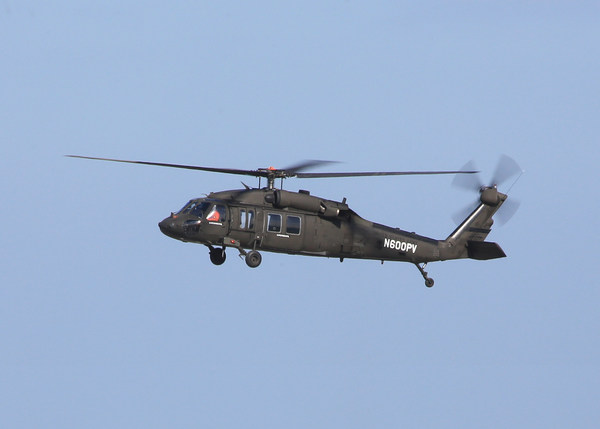
TomcatViPSikorsky test flies Black Hawk helicopter without a pilot
WEST PALM BEACH, Fla., June 6, 2019 /PRNewswire/ — A technology kit developed by Sikorsky, a Lockheed Martin company (NYSE: LMT), was used for the first time to operate a Black Hawk helicopter with full-authority, fly-by-wire flight controls. The May 29 flight marked the official start to the flight test program for the soon-to-be optionally piloted aircraft. Follow-on flight testing aims to include envelope expansion throughout the summer leading to fully autonomous flight (zero pilots) in 2020.
OPVBlackHawkFirstFlight2019-Sikorsky“This technology brings a whole new dimension of safety, reliability and capability to existing and future helicopters and to those who depend on them to complete their missions,” said Chris Van Buiten, Vice President, Sikorsky Innovations. “We’re excited to be transforming a once mechanically controlled aircraft into one with fly-by-wire controls. This flight demonstrates the next step in making optionally piloted – and optimally piloted – aircraft, a reality.”
This is the first full authority fly-by-wire retrofit kit developed by Sikorsky that has completely removed mechanical flight controls from the aircraft.*
Source:
UPI.com
https://news.lockheedmartin.com/2019…ogy#assets_all
*emphasizes are mine


 Sign In