TomcatViP
If the fuselage integrity have been breached by a fire lasting several hours, the plane might have sunk pretty fast.
The wings are paneled with composite -> glass like type of cracking at extreme load (crash) -> wing pieces are not insulated and are drowning pretty fast
A big hollowed airliner fuselage tend not to be really floatable also following a crash at sea.
Hence we should not be surprised if we detect nearly no big parts of the plane
What Boeing should do is to identify the parts of the wings that will float (fuel tanks for example), makes a 3D radar image of that and pipe it up into a SAR imagery data base for the Poseïdon and alikes. It might be the only way to discriminate floating objects quickly enough.
TomcatViPAltius-M is said to be ‘5 ton class’, but then you’re being very conservative in your estimate in many respects – for a start, low speed *loiter* should require nothing like max continuous power to sustain. This in turn may enable the engines to run at a more efficient operating point (though on the other hand 8000 feet ASL is unrealistically low for a MALE UAV really, and higher altitude might negatively impact BSFC?).
Assuming a weight of 5 tons (constant for simplicity’s sake), a speed of 70m/s, a L/D ratio of 25 and a BSFC of 220g/kWh (for lack of a more appropriate datum) I get a power requirement to sustain level flight of of 142.8kW which translates into some 1508kg of fuel for a duration of 48h. That’s a fuel fraction somewhere between the MQ-1 (comparable propulsion) and MQ-9 (similar size).
You’re probably right. I choose arbitrarily a conservartory value of 10t and without much looking at other modern similar design.
However for high alt, They will probably supercharge and the SFC drop won’t be that faraminous (ram -> super -> turbo). Hence fuel quantity will be more near 4000L to be realistic. Hence a light payload.
TomcatViP“future funding to cover cost growth”
What cost growth ?
For what I understand they are taking the initial projections as a reference.
Hence total cost growth: 107b$ from the 200+ in total required to still fully fund the program (see array page 21) and the reduction in units.
TomcatViPQuote:
Several experts quoted by the paper cautioned that the US company could potentially build a “backdoor” into the system
That does not seems really serious.
TomcatViP@CKing:
I do agree with you regarding the wheel fire. I just wanted to have another opinion since one poster pushed forward this possibility.
Regarding my remark on the Ipad and FreePaper program, it’s just part of the speculative and parallel hijacking scenario. Nothing linked to the in-cockpit fire hypo.
And definitively a wrong speculation (“connected to anything” – Thx 27Vet !)
TomcatViPApril Fool?
TomcatViPHi All,
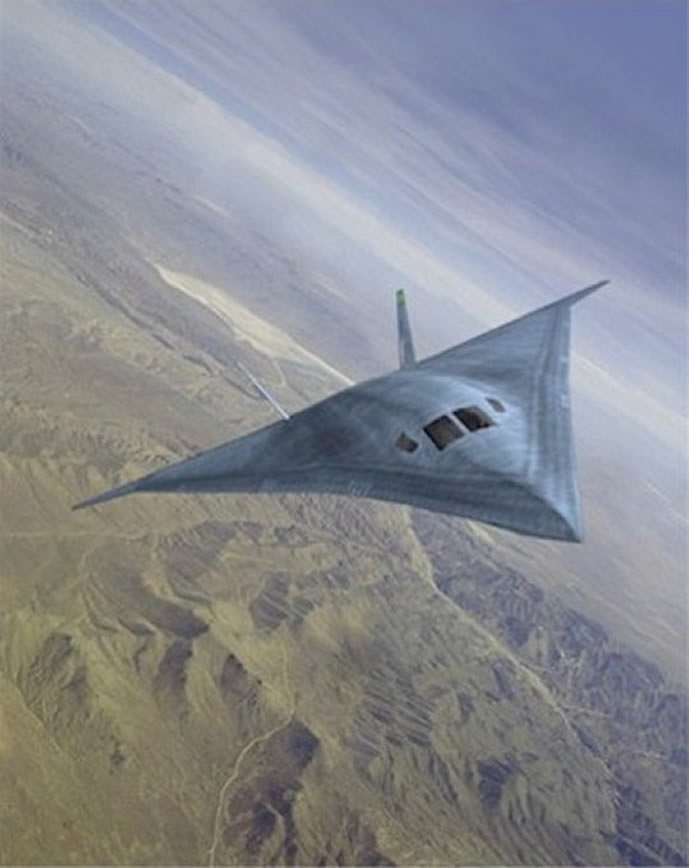
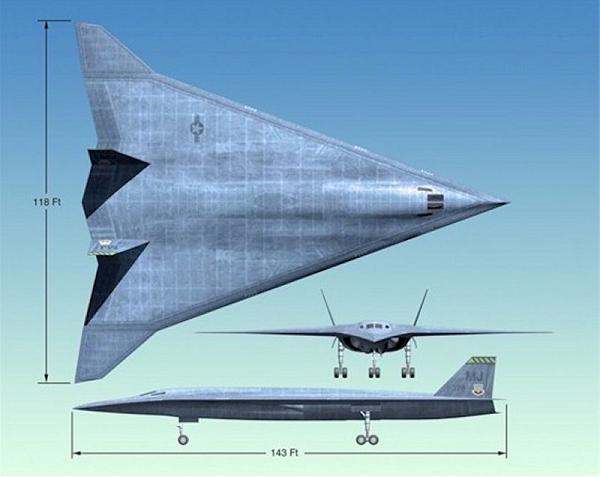
I have seen a couple of artist impressions of future bomber aircraft and this link was interesting, http://www.popularmechanics.com/technology/military/planes-uavs/how-the-next-gen-stealth-bomber-will-work-15438875 also this
Any of the above look promising as stated in the article to judge the size is quite hard but this reminds me of the grainy F-117 picture being released could there now be another similar release where this aircraft has been spotted ? Unless it’s the next gen Vulcan :highly_amused:Geoff.
Good to recall us those artist image. It’s true that it is permitted to speculate. But perso I don’t like blurry pictures and questionable-sourced information. Better to have nothing.
Otherwise, it could be anything since the b/w pic as been altered. Interesting however are the puff-puff of the condensation trails. But its really hard to speculate only with that.
Mr XCat
TomcatViPWhat do you mean? Not plausible or the other way ? It has been suggested here that a DC9 had a similar story.
Regarding the Hijacking scenario, I had in mind the PaperFree program
(reminder)
On a security basis it can been seen as a breach (especially if pads are not lockup after flight). There is also the concomitant facts that the Pilot was heavily committed to the web community.
TomcatViPFor what purpose 😉
TomcatViPTomcatViPFrom TimTyler on the same page (AW):
4:30 PM on 3/28/2014
Sweetman & Steve Douglas have a longtime symbiotic (or parasitic) relationship. Douglass magically sees & hears things which he attributes to being part of ‘black’ programs, and Sweetman eagerly publishes, speculates & pontificates on it. It still usually adds-up to nothing new factually.
Amazing how Douglas comes up with grainy photos, but his claims of associated radio traffic –often very specific dialog — isn’t backed-up by any recordings. Back in the day, he was affectionately know as ‘Dark Star Douglas’ due to the claim (published in AW&ST) that he intercepted some sort of ‘black’ aircraft using the Darkstar callsign (which in reality, was & is a standard E-3 AWACS back-end crew callsign prefix).
TomcatViPIf you are thinking at that:
When Boeing fixed the Ox house clamp, they might have not solve the root of the problem (surge in elec power from the battery -> heating -> gazes -> condensation -> corrosion -> integrity of fuel tank (or else)).
Regarding the scenario of catastrophic cockpit damages + pilots killed:
– Plane flew for hours with back crew and passenger fighting smoke and flames
– Flame propagated trough over head structure (Egypt Air 667) or bellow passenger deck (fuel line)
– Propagation of flames was delayed by the blowing up of front entry door (Egypt Air 667 + jet-way found at sea)
– Crew were unable to locate transponder 2 (inexperienced or unaware) or were unable to do it due to fire&smoke
– Flame could not be repelled anymore
– Panic ensued -> aft emergency door opened
– Some passenger jumping out to escape an horrific death (hence cell-phones)
– Fire intensity exacerbated
– Catastrophic explosion (or destruction ordered)I hope nobody linked to families will read the above. If so, this is only conjectural and have nearly no basis of truth.
See page 5/4 and subsequent. This has been discussed alrdy.
To make it short, there is the eq. bay bellow and aft of the cokpit with two high press bottle (green on picture), two low pressure bottle near the copilot wall and portable bottle available at pilot hand reach. The main system battery is in the eq. bay and the APU one is in the aft section bellow deck, near the cargo right aft door (which some picture might have shown at see near the last recorded position). Near the aft cargo door there is also some O2 bottle for the crew.
However there is no frwd trim tank as I suggested. So fire if electrical is only with Ox or Battery.
Suggestion for the cause of fire in front section have been turning so far around:
– we don’t know (most probability)
– reverse current flow and diode crack-up
– landing wheel fire or blowing-up (there is some case similar)
– static surge (in a pump … but there is no frwd tank 😉 )
Now you are briefed as much as we are 😉
I think that in page 3 or 2 I posted a sketch of main flammable components of the 777 used to train fire intervention team at airport.
~S!
TomcatViPGood sleuthing! Yes, that is definitely the power plant. It being a turbo-diesel has potentially very good implications for endurance and high altitude performance. Note how the latter is specifically mentioned in connection with the A03 on the site, as well as cooperation with Yakovlev for flight testing. There is definitely a strong Russian connection – Rakhlin is of Russian descent.
Weight could be a problem, but going by automotive standards, 320kg gross (mentioned by various web sources) for a 6 litre V12 Diesel is not too shabby at all. I am starting to like the Altius-M project very much indeed – maybe the claimed endurance of 48h is not that utopian after all!
BSFC at cruise regime for mission profile: 0.355lb/HPh
hence for 48h
Fuel consumtion FC/hp= 0.355*48
and total fuel consumption
FC=0.355*48*480= 8180lb = 3700kg =4300L
So we have a 7/8t aircraft with a half tonne of payload cruising at low speed
What seems grossly to fit the overall size and geo of the bird
Speed:
lets say at cruise lift=weight
and drag = 6% of lift (Cl/Cd = 15)
then drag 4kN
at cruise P=DragxSpeed -> Speed = 480*0.735k/4k) = 480*0.735/10 = 85 m/s = 300 kph OR MORE PROBABLY <300
TomcatViPThank you Jõ. Fantastic found.
Now we know that Ru master the Plasma(?) and electrostatic approach.
What the diagrams shows ?
The reduction in turbulent kinetic energy in the stream by an electroctatic/plasma interference (compare 0.39hi diag with the one at 0.64hi – point 1). The diff variable are describing the turbulent energy of the fluid and certainly refer to the driven CFD variables of the model.
DeltaT=0.02C represent the simulation time, her ethe overall time for a slice of air to go from one end to the other of the test section. This to ensure that we do not have a simulation of transient situation.
Interestingly, at Mach2.5, it makes a 9m long section.
As I have written before, the fluid, does not see the curves as his ability to go turbulent is (let’s say) negated (point 2)*
[ATTACH=CONFIG]226746[/ATTACH]
To go there you need a slight change to a normal fluid about to enter the inlet section of a normal engine.
When they are mentioning the word INTEGRATED talking of the propulsion system, it’s the way the plane shapes are creating the favorable conditions of such a fluid characteristics by some interactions. You’ll note also that the injection of the charged fluid is at throat of the inlet, hence the low pressure point. I’ll let user look at in-flight aircraft picture to understand what I mean.
This lead us to this :
[ATTACH=CONFIG]226747[/ATTACH]
as the core of the magic of the T50 (my guess).
But I would need someone to confirm that “hi” have an electrical meaning in Russian.
As a side note and a point of interest, pressure recovery (static pressure) is impressive in the inlet itself (a ratio of 10)
Also i am surprised they have discarded the 90 deg rotation plan of the inlet (a stealthy measure) in this study. Perhaps there is another one subsequent to this one ?
Any how, congratulations Jõ. I think you’ve have pretty much nailed the mystery of the T50 propulsion system today.
So, I would say that Asakurius duckius Rex will be a well deserved name. :applause:
TomcatViP9 Air Force commanders fired over nuclear missile test cheating
[…] a total of 100 lower-level officers were implicated in the scandal […] About 190 officers oversee the readiness of nuclear weapons systems in Montana, meaning the episode has tainted about half that force in some way.
Souce:


 Sign In