 Otaku
OtakuI remain a tad sceptical over the PAK-DA. Remember, at this stage it’s just @ RFP/design study and is being milked for political capital in the wake of the PAK-FA declassification.
Sooner or later the ‘Bulava’ will start behaving itself and in the medium term Russia will retain a formidable seaborne & land-based nuclear arsenal- a more than adequate deterrent. Why go through the expense of developing a new strategic (stealth) bomber? We’re not talking the nuclear triad’s numbers’ games of the USSR V. USA anymore. The Russian defence posture is totally different from the USSR. Costs of new warplanes, PAK-FA & UCAV development, warships, submarines, tanks etc. not to mention professionalising the services- will render PAK-DA largely ‘vapourware’ (imho).
Maybe the Russians will approach their closest buddy for ‘The Mother of All JVs’, (depending on Delhi’s strategic defence posture as a Superpower-in-waiting’). Hence stretch-out development, but if it does come to fruition, it’ll most likely resemble a scaled-up (manned) UCAV a la NGB.
Rejoice at how fantastic it looks……then cringe @ the cost.

OtakuI’d like to see the Argentine AF buy some, their pilots are reputedly baadaass.
They could buy them on credit, and pay for them with the sweet crude they helped secure in the South Atlantic!!
They’ll definitely be looking @ the Su-30MKX sales model as a template, a heavy 5G stealth-fighter, costing around the same as an F-35, but customised to the buyers preferences. Wow!!… I’d like OLED displays, a mahogany throttle lever and massaging seat please.
Nice front elevation comparison c/o Wil @ SecretProjects:

OtakuAW&ST update:
More Sukhoi T-50s To Fly In Next 12 Months
Mar 12, 2010
By Alexey Komarov
MoscowSukhoi intends to add three more T-50 development aircraft to the test program within the next 12 months, with further details of Russia’s next-generation fighter leaking out from a high-level gathering here.
Russian Prime Minister Vladimir Putin held a cabinet meeting last week on developing the aerospace and defense industry at Sukhoi’s Moscow headquarters. Putin was also shown the T-50-0 static test rig airframe along with a cockpit simulator for Russia’s fifth-generation fighter.
Putin and Sukhoi’s chief, Mikhail Pogosyan, maintain that the T-50 should be ready to enter service with the Russian air force during 2015, to meet its PAK FA fighter requirement. Putin says, however, that “before the jet goes into serial production, it should complete more than 2,000 test flights.”
Given what is already an highly demanding schedule, Pogosyan is quoted in the Russian press as saying: “By the end of 2010 or in early 2011, we must add three more prototypes to the test-flight program.”
Sukhoi executives suggest the second prototype will likely enter testing this year, while the third and fourth prototypes will appear in 2011. The first two will not be fitted with radar or weapon control systems, and will be used primarily for flight performances and major systems evaluations.
Sukhoi designers are trying to compress the T-50 development through the extensive use of specialized system-integration test benches. The development of previous aircraft types was supported with the use of “iron bird” rigs for complex flight control system checks and an “electronic bird” for the avionics package testing, coupled with stationary engineering simulators used for “man-machine” interface development.
For the T-50, in addition to these tools, Sukhoi seems to have built an additional prototype not intended for flights—the so-called T-50-KNS. This airframe is fitted with operational systems, equipment and engines.
Sukhoi’s production facility in Komsomolsk has used the T-50-KNS for checking the use of new manufacturing technologies, while designers were able to examine all wiring, ducting, equipment and engine installation within the actual dimensions of the aircraft. The T-50-KNS and other test-bench checks ensured the initial flights of the T-50-1 prototype. Pogosyan says a 24-deg. angle of attack was reached on the T-50-1 after only three flights.
The company’s T-50 chief designer, Alexander Davidenko, says almost 70% of the outer surface— 25% of the aircraft’s empty weight—consists of composites . Introduction of the materials allowed the number of structural parts to be cut four-fold compared with the Su-27 Flanker.
As for the cockpit, Davidenko notes that the aircraft’s avionics use smart digital systems to reduce pilot workload in terms of flying and combat operations.
The T-50’s digital flight control system is around 30% lighter than the Su-27’s and can reconfigure in case of failure or combat damage, says Pogosyan.
The T-50 will be tested and enter air force service, with the engine being used for the “first phase of development.” The engine is already installed in the prototype, says Pogosyan. “This is a completely new engine,” he contends, “developed especially for this aircraft. It has a modern design, which is able to ensure the T-50’s long-term operation.” A completely new powerplant could be developed in the next 10-12 years, he adds.
In April, the T-50 flight-test program likely will shift to the Gromov Flight Test Research Institute in Zhukovsky, near Moscow, according to company executives.
The T-50 development is being viewed by the government as a confirmation of the industry’s ability to meet the military’s future equipment needs and to revamp its present inventory.
In 2008, Moscow began to increase procurement of combat aircraft and systems, in an attempt to roll back more than a decade of neglect and stagnation. Contracts to supply the air force with 130 combat aircraft were signed in 2008 and 2009. In 2010, 27 aircraft, more than 50 helicopters and five S-400 missile system divisions will be purchased for the army.
The nation’s armament program calls for the delivery of more than 1,500 aircraft and helicopters and about 200 air defense systems through 2020. At least 80% of the air force procurement and 75% of the air defense systems will be new hardware.
Discussing industry priorities, Putin stresses that the sector had received substantial support from the government and should now concentrate on efficiency. It must fulfill its obligations in terms of deliveries and weapon-cost parameters.
Putin also reinforced Russian ambitions to develop a next-generation strategic strike aircraft—the PAK DA—as well as a next-generation surface-to-air missile system.
Article Comments
RSF wrote:
What a revolutionary idea, conducting extensive flight testing before producing an aircraft. Doesn’t this run counter to the F-35 Program model of buying before flying? 😀
OtakuWhere’s all this money for PAK-D’OH!! coming from? Is it something to do with that naughty ‘Bulava’ saga?
Russian Air Force wants a stealth bomberПнд, 15/02/2010 – 23:25 | АТО
The Russian air force aims to introduce a successor to the Tupolev Tu-160 Blackjack, Tu-95 Bear and Tu-22M3 Backfire in 2025-2030. The new bomber known under the name PAK DA (Prespektivniy aviatitzionniy kompleks dalney aviatzii, or future aviation complex of long range aviation) is being developed now by the United Aircraft Corporation.The requirement for the PAK DA is to be defined yet, but at the end of 2009 the strategic aviation commander Maj. Gen. Anatoly Zhikharev told that “the new aircraft will be low observable, but it’s impossible to make an aircraft of this class completely invisible”.
The program will be led at the industry level by the newly created Special Aircraft Division of the United Aircraft Corp. (UAC). This unit of the company was officially set up in December 2009 to deal with the production of strategic bombers, special mission aircraft and amphibians. It is based around the Tupolev design bureau, but will also include Kazan KAPO assembly facility, Taganrog Tagavia company and Beriev design bureau.
During his meeting with the Russian prime minister in December the head of Special Aircraft Division Alexander Bobryshev reported that the first stage of PAK DA conceptual design was conducted in 2009. The designers tried to combine at future aircraft all missions that are now performed by Tu-160, Tu-95MS и Tu-22M3.
“At the first stage we have selected 4 variants [of future bomber] out of initial 47 for further consideration and analysis”, explained Bobryshev. He promised that the conceptual design will be completed in 2011-2012 while the development of the aircraft should be finished by 2017.
Simultaneously with the development of PAK DA, UAC Special Aircraft will conduct the modernization of Tu-160 bombers that will include the upgrade of electronic warfare means and introduction of new weapons. Bobryshev said that his division has worked out the program for deep modernization of these aircraft that is expected to be approved by the Defense Ministry in 2010. According to unofficial information, the Russian Air Force has currently 13 Tu-160s and 63 Tu-95MS bomber in service.
http://www.ato.ru/content/russian-air-force-wants-stealth-bomber
Were 43 of them Paralay’s?…..I wonder :confused:
OtakuGood work Planeman. V. interesting. 🙂
The PAK-FA cockpit simulator has an additional ‘weapons select[?]’ LCD display on the lower-right panel. I thinks it’s lower-left on the Su-35.
Taken @ Perm yesterday:

OtakuFor USS 😎


OtakuYou’re so confident (and arrogant) and yet you are wrong.
Here is a picture:
Why thankyou! Here is a picture:
[ATTACH]182894[/ATTACH]
OtakuIt’s very inaccurate actually. Again:
Ah yes, another one who takes preliminary drawings over high res. photos (no offence Matej). Goodbye…(forever).
That is the point. Sukhoi find a solution by the design of the inlet to hide the compressor face, when they may have find something to reduce the visible part of the compressor-face in the Su-35BM already.
They described the Flanker’s intakes as a “huge problem”, the RAM treatment applied to the c-face halved the radar returns.
It makes no sense.
Hmmm…it “severely degrades performance” on the T-50- but not the uber F-22. In fact they were purposeful in having straight thru inlets to negate all the VLO shaping :rolleyes:
They won’t be using blockers.
I’ve updated the rendition. The tyre diameter/height figure is from the manufacturer. I’ve taken into account the off-line photo shot and, to some extent, the engine toe-in.
[ATTACH]182889[/ATTACH]
OtakuAplying the calculation this should be the correct size of the compressor blades
Dont know if they are in the correct position, but i think the blades will be hide at any angle
Thanks, if you make the disks exactly the same size as the Td, that should account for any margin of error. Then position them almost in-line with the tops of those engine ‘humps’- even so the compressor face should be totally shielded.
Note the Td is the reference used to calculate the wingspan also, but a metre high tyre sounds about right. The 0.93m inlet/ compressor figure is accurate for the 117S, it may be a few mm more for the 117- but nothing substantial.
Yes. I wonder if a framless canopy on the Pak-Fa is a requirement?
I was almost convinced that it would be a joint effort by both engine manufactors..:confused:
The frameless canopy is an official MoD requirement.
There is ferocious in-fighting over 5G engine project-leader status (and hence ca$h), much to the embarrassment of the Govt. who may assume direct control & accountability (sort of like a mini-F-35 drama, though without the comedy factor).
On the one hand, Sukhoi can create an aircraft that can compete with the F-22, but on the other – they can’t create a frameless canopy? :confused:
They don’t have the precision-machine tools and will probably have to import them. It’s no big deal, for example the credit for much of the airframe goes to Mitsubishi Heavy Industries (and others). Domo arigato to MHI :diablo:
OtakuOtaku2 ‘Unicorns’: one a converted MiG-29M2 and the other a new build converted MiG-29KUB. The former with experimental Zhuk-AE, and the latter with production standard (1,064 T/R mods.[?])…all getting very confusing…
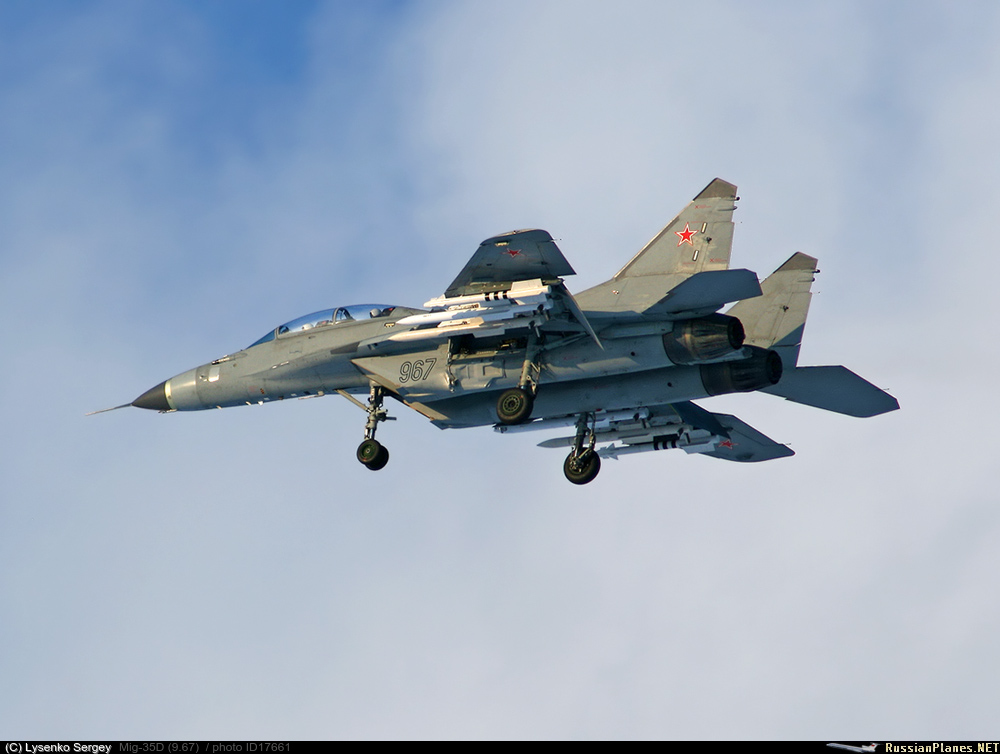

OtakuI’m aligning from the upper surface, so from that POV, the short front landing gear is not an issue.
Of course, as you say, the attitude in flight will be different, but I’m sure most on here can make the estimate change in azimuthal angle. 🙂
Amiga, if paralay’s Tire diameter (Td) figure of ~1.02m is correct, you could use it as a reference to size your disk which (as per 117C) has an inlet/compressor diameter of ~0.93m.
Hence, I think you’ll find the compressor face won’t be visible from any angle. 😉
C/o foxmulder:
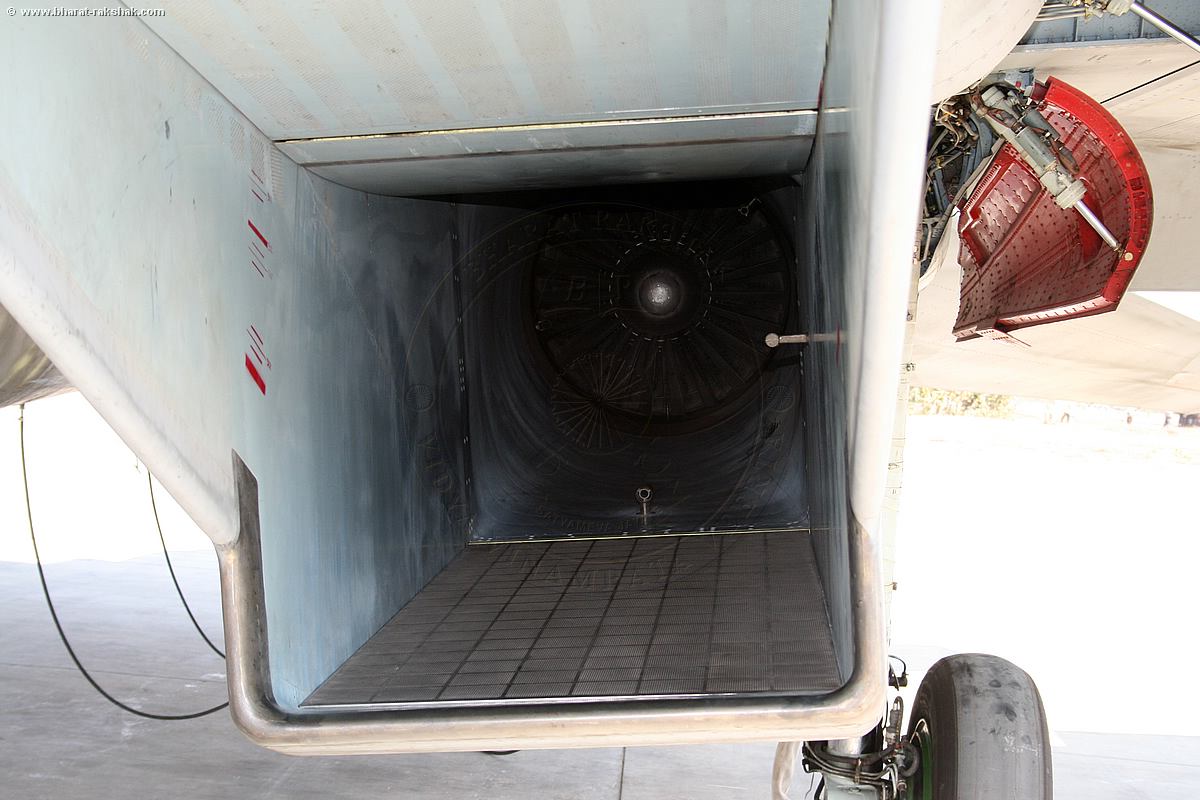
OtakuGuys, I think your ‘disks’ maybe a bit on the large side. Su-30MKI/AL-31FP:
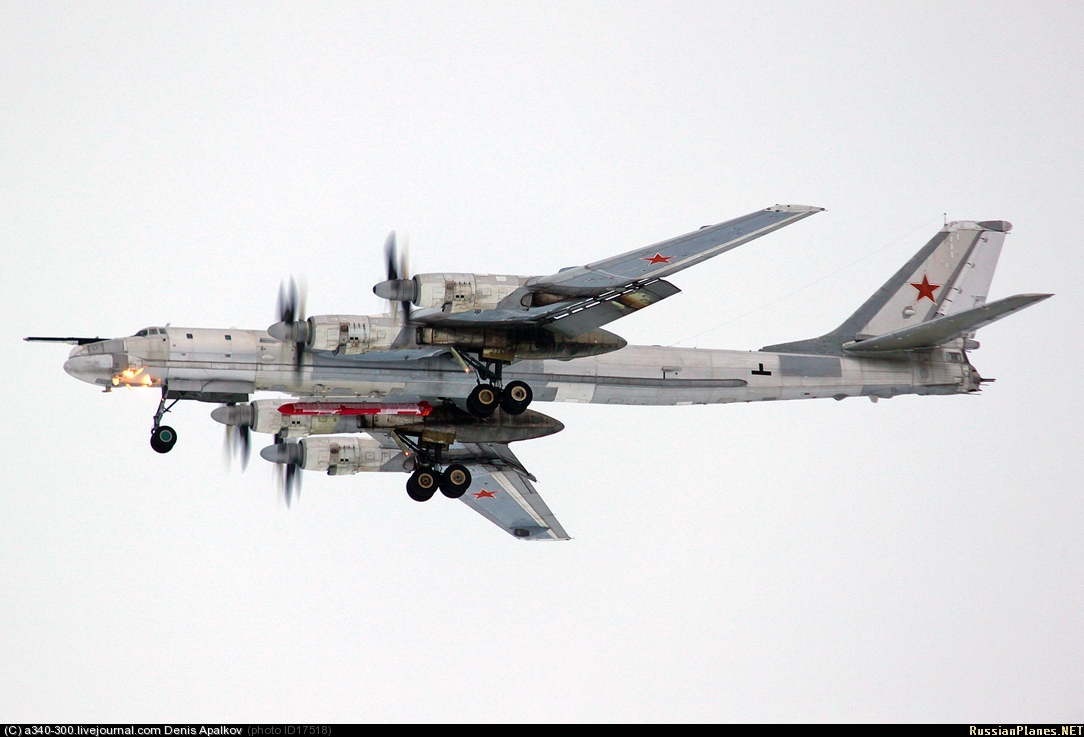
OtakuPAK-DA’s Grandfather with Kh-101(?):

OtakuThe most beautiful plane I’ve ever seen…sorry YF-23- but you’ve held the top spot for some time now…




 Sign In








