 garryA
Honestly i do not really care about your opinion of my track record. Larger array? So what? Btw the 55 cm figure isn’t official i think (and i have near zero confidence in Jon Lake claims). Anw, A huge difference was seen between DRAA and DRAAMA capacities when thalès switched to UMS made modules (better yield, better repetability). Awaited performance was a gain of 40% in range vs PESA antenna, giving performances more or less similar to AN/APG79. But the final radar more than 2 fold improved range, eg. And i suppose Mr Venot has better understanding of F-18 radar than any of us. 1anw, range was quoted several time to be more than 200 Kms vs large targets. There are other ways to improve a radar than sheer size (data treatment, precision of steering etc.) Actual range was reported to be more than 200 Kms vs a large (C160) target
75 cm vs 55 cm in diameter is some where like 66% bigger in area.Physics would be in APG-79 favor. RBE-2 modules will need to be significantly more sensitive and powerful than the one on APG-79 just so the 2 radar can have equal range.And 200 km detection range against large target doesnot seem very impressive TBH , that around the range of APG-80
garryAIf it was trivial as you suggest, then we wouldn’t see specialized IR systems at all. In fact often attack pods have multiple separate cameras. LANTIRN, for example, has FLIR in two separate pods – one with fixed wide FoV field, other with zoomable optics for narrow view. LITENING has two TV cameras and one FLIR sensor, and so on. They wouldn’t bother with multiple cameras if they could just do all that with zoomable optics.
LANTIRN has 2 pod : 1 is targeting pod and the other is navigating pod.The navigating pod has a terrain following radar and a thermal camera for short range navigation . Basically a night vision system that help pilot look outside , while the targeting pod help pilot look at target at distance target at the sametime.
LITENING has 1 pod only and all the CCD and FLIR sensors are included in a single pod just like Sniper-XR.
garryA“that fluffy thing in the middle of the ocean surely has got to be a boat ?
i’ll better have a look outside the window and see what it is !”
A boat is significant smaller than an aircraft
Vs

Moreover , he also said that DAS can identify a Jeep in desert at close range.
garryAYes, in theory. And to some extent in practice too, but you will end up having bulky optical system with inferior optical quality. There is a reason why photographers generally carry a bag of different lenses and change them depending on their needs, instead of one zoomable lens which does everything.
I dont think you realise how big those thermal system are. More than enough space to change the focal length around
garryAIR systems are optics, and laws of optics are pretty ruthless: if you want great resolving power, you are forced to sacrifice field of view, and if you want good field of view, there goes resolving power. Attack pods are designed for identifying ground targets, and generally have good resolving power but poor FoV and scan rates. A2A IRST systems by contrast need to find aerial targets preferably before they find you, and need high scan rates and largish FoVs, similar to radar in A2A mode
Not really , you can choose your momentary FoV depending on the focal length. That the whole point of optical zoom. Moreover, no IR system can actually come close to scan rate of an electronic scanned array
garryASo I’m other words at a given time these ships can target only 2 incoming threats using sea sparrows?
There could be more with Interrupted Continuous Wave Illumination. Main FCR is used for mid course guide and illuminator only used in the last phase
garryAF-18 E/F aerodynamic issues explain its pityful range (considering its size) and the need for CFTs. You are contradicting yourself comparing a “fleet wide” paperplane (ASH) with a reliable, efficient design (Rafale). Not to s&y about superior data fusion and SA, embedded ECM suite, superior aerodynamics, better radar (better modules and signal treatment), longer range and persistance, modular architecture, modular engines, better missiles, Grandad (F-18) was certainly good workhorse, but not as gifted as Rafale.
F-18E/F has internal ECM suite too and i dont think APG-79 is any worse than RBE-2
garryAEOTS allow you to ID the fighter, DAS does not have that ability at any range
DAS can ID the target
Thanks for that. Any specs on it? AN/ALR-94 is said to have a range greater than 250 nmi. I’ve heard when the F-22 is flying a certain altitude the AN/ALR-94 range is much higher
There is no max range for a passive system. It all depending on transmitting power of the radar. Then coding and what not.Obviously the range will be higher at higher altitude due to radar horizon
There were rumors sometime back that the AN/ALR-94 can provide an AIM-120 with most of the information it requires with fairly good accuracy
lacks range and velocity
Journal of Electronic Defense; Bill Sweetman
The F-22 represents a radical departure from the traditional approach to EW. Passive systems, once considered to be defensive in nature, are now critical to detecting, tracking and even attacking the target.
High-priority emitters — such as fighter aircraft at close range — can be tracked in real time by the ALR-94. In this mode, called narrowband interleaved search and track (NBILST), the radar is used only to provide precise range and velocity data to set up a missile attack. If a hostile aircraft is injudicious in its use of radar, the ALR-94 may provide nearly all the information necessary to launch an AIM-120 AMRAAM air-to-air missile (AAM)
garryAwhen a fighter turn, it tends to turn in positive g rather than negative, towards a target,
and is typically rated +9 -3 g.
here, it is preferable if the sensor is on top
At long distance that make no difference regardless whether sensor on top or bottom. At short distance F-35 already got DAS
Yes there is. It is derived from an obsolete (although very good) pod. Btw, genuine question
I really dont see how Sniper-XR is any more obsolete than OLS-35 or FSO. There is EOTS+ in the work as well.
garryAonly thing F-35 got going for it is EOTS, and while not as good as an IR camera optimized for A2A,
its an awful lot better than what F-22 has (nuffing)
TBH, There is no real evidence as to why EOTS should be inferior to others IRST like OLS-35 or FSO.. etc in air to air role.
garryAIf the Russians send over Mig-31 for escort then it does not make a different if its F-15 or SH.
Why not ?
garryALet’s hope that with folding fins they can fit 2 per F-35 bay without needing mods.
I dont think it fit AA station though
garryAi think you already lost the fight if you dropped below transonic speed
Dogfight doesnot happen at transonic because of the significant drag increase
garryAactually, the AoA means little as what counts is the generation of lift. one strong point of the close coupled canard (and reason it has been chosen for the Rafale) is that the canards allow for better control of airflow over the wings, which in turn, allow for more lift for similar AoA without them. That’s why it cn have such a low approach speed despite being a delta, like, say, the mirage 2000
Not really, Cannard will improve CL at the same AoA by creating vortex just like a LERX or chine .But that only help to a certain extent ,aircraft AoA still play very important role.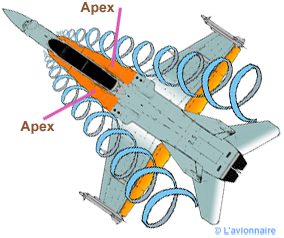

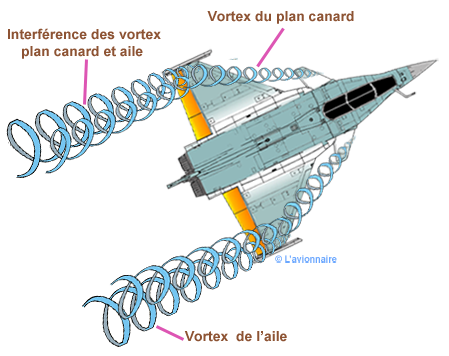
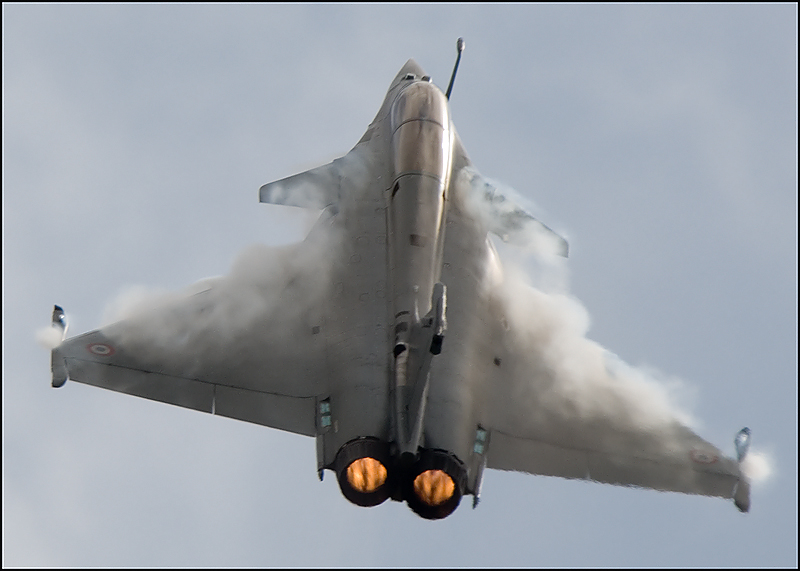
PAK-FA front LEVCONs and F-35 chines also have the same purpose

garryAOk with that, but canted will be more susceptible to reflect radar waves from the ground (eg) than vertical. On the opposite, for radars at same level…
The aircraft surface is canted to reduce reflection from the most important aspect. That the whole point


 Sign In







