 garryA
The air-launched version will not have the booster stage, and seems to have similar proportions to the Derby (3.6m, 160mm diameter). How that’s going to exceed 100km is a mystery, let alone 200km
SAM version of Derby (SPYDER-MR) has similar booster size and length to David’s Sling Stunner. However, SPYDER-MR is limited to maximum range of 50 km and top speed of Mach 4 while Stunner can reach 160 km with top speed of Mach 7.5. May be the elimination of warhead give Stunner that much more propellant?. The air version doesn’t have the booster but the length is extended and it has the benefits of high altitude/speed launch.

garryAWould be great if they could mix the Python-6 sensor with Meteor body.
garryAFor optical systems, bigger lens is better because it can collect more photons. More photons mean you can see/record objects from longer distance. Obviously, the detector material also play a vital role because different material will have very different spectral responses range and amplitude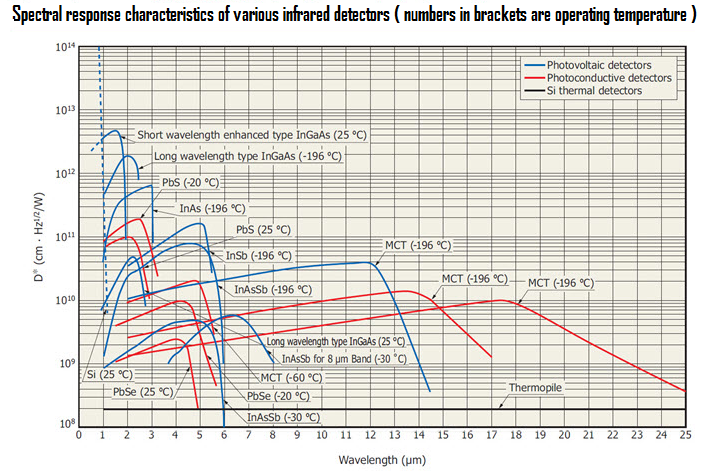

But considering everything equal, bigger sensor like TRS, RECO NG will perform better than EOTS, Pirate or OFS .Just like APG-81, N036 will enjoy big advantage over zhuk, RBE-2 due to the sheer aperture different.
garryAKGB rants on about wikipedia [something any of us can alter FYI] yet claims figures estimated by the company and the Swedish Defence Materiel Administration are bogus. Yeah, that pretty much sums up his whole discussion.
To answer StealthFlanker; Saab are quite proud over the fact that the Gripen has a L/O in a wide spectrum. Here’s an article from DefesaNet:
Some slides presented in Farnborough in the s ame way seen in the offer to Brazil, pointed to the principle “Designed to be Upgraded” what suggest the evolution of Gripen NG as a base for a pure 5th Generation fighter.
Here are some slides from Saab regarding this issue:
I normally disagree with KGB but IMHO you should take these slides with grain of salt.
Full PDF here: http://www.jsfnieuws.nl/wp-content/DutchAirForceAssociation_Gripen_2009.pdf
Full of contraction and questionable information me think, from the same brochure
[ATTACH=CONFIG]256887[/ATTACH]

Since when F-35 only carry 2 AAM?
[ATTACH=CONFIG]256888[/ATTACH]
Compare wing loading and Thrust loading without knowing lift coefficient and equalize combat radius?. No surprised F-15E looks so much better than F-16, F-18
garryAI’ve cited meteor because its the heavier weapon that can be carried by EF semi-conformal pylon , same applies to Amraam or another that can fit: what reduces RCS is the virtual elimination of the pylon not about the missile dimension in itself.
I was talking about RCS of missiles, a Meteor in comformal position likely still increase RCS more than AIM-9X at wing tips
For the specific case of Typhoon, semi comformal Meteor doesn’t need pylons but its inlet is perpendicular to Typhoon’s fuselage, that isn’t desirable
[ATTACH=CONFIG]256842[/ATTACH]
In Rafale or Flanker case, the pylon is still there
[ATTACH=CONFIG]256843[/ATTACH]
Worring however to the perpendicular duct of such a missile fall IMHO
What increase the RCS of a jet duct are the propulsor blades moving, something you just have NOT on a Ramjet.
Add that to see the interior of the Meteor’s duct ,one should have to be at the very same quote and straight in the front of it as an even minimal angle would get it covere
Cavity reflection is not only due to turbine blades. Inlets of stealth aircraft are coated with RAM
To see a missile under the body of a Typhoon of even a Flanker you have to be at a much lower altitude, not just a pair thousand feet and directly in the front
You can see them fine at the same altitude
[ATTACH=CONFIG]256844[/ATTACH]
garryAWhat is there about Meteor’s intakes that makes you think that it will increase the RCS from the front in a semi-recessed position?
Cavity return and also the 2 inlets are perpendicular which make them very good corner reflectors
garryAYes but it depends about how it sits on the plane, a Meteor on the Typhoon conformal mounting probably impact less than a vanilla sidewinder on a wingtip
Consider the diameter, Meteor is quite a bit bigger than average heat seeking missiles though. Its 2 perpendicular inlets aren’t desirable either
(and is covered by plane’s shadow in most cases).
Same with payload sitting in the central tunnel of a Flanker or Fullback, although having a conventional arrangment, they can be seen only from the bottom
Missiles carried in the fuselage can only be seen from similar or lower altitude, but isn’t Typhoon supposed to be a fighter/interceptor that fly at high altitude ?
garryADoes this help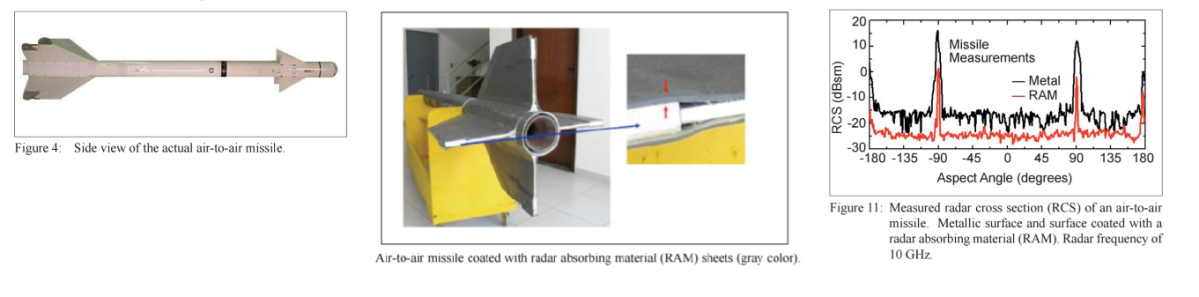
garryAI have a pretty good idea of what a bird can do to a plane, but you don’t seem to have an idea what it takes to make a brand new plane impossible to repair, especially if they say only that “stealth panels were damaged”.. if its definitively out of service for “skin damage”, then LM should reconsider the idea of building combat aircraft which, by definition, may have to suffer damage of much more lethal stuff than birds
Being old or new is hardly relevant here. Birds can sometimes brought down jumbo jet, so it is understandable that they can damage F-35 beyond repair (if they are big enough and aircraft fly fast enough). Modern fighter jet are rather fragile. Moreover, the tabloid article doesn’t even have a consistent narrative.They quote the part where IAF said the F-35 only suffer skin damage but “accidentally” sweep under the rug the part where IAF said the aircraft will fly again in a few days.
garryAa bird strike that would make the airplane definitely out of service because “stealth coating was damaged” sounds strange to the least… you can’t replace damaged panels on it? and if its the structure that’s damaged, it must’ve been a helluva bird, if you ask me..
You have no idea what a bird can do to an airplane.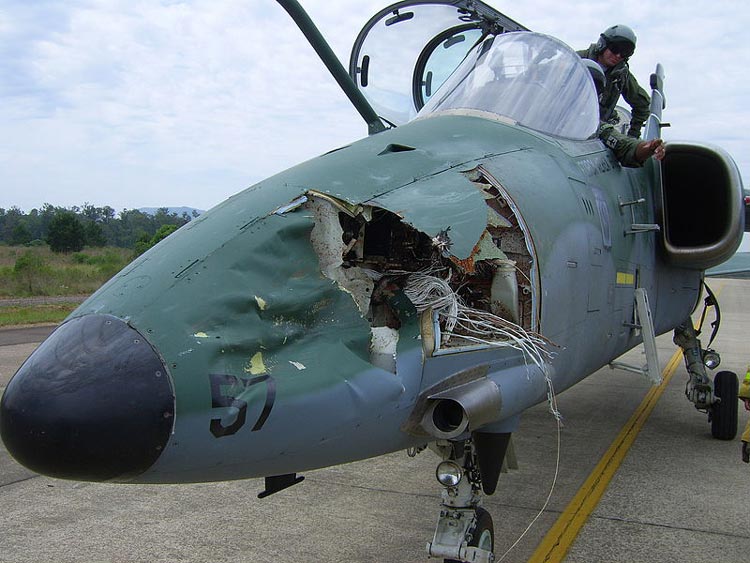
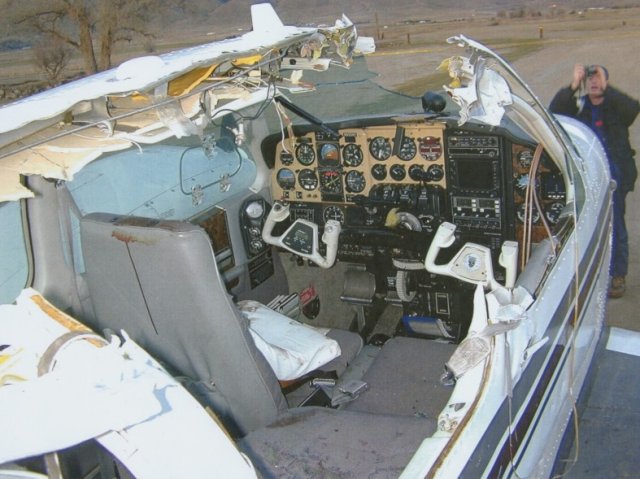
garryAyou certainly otherwise you wouldn’t stop . I write less but always correct
Good joke. Keep thinking that if it makes you feel better while everyone ignore you.
garryAGuys … is there a reason to be so fat off-topic already ? None of Your latest replies has anything to do with either the JF-17, the J-10 or LCA??
My bad, will stop now.
The previous statement above was directed for you but you still continue.
I will be honest with you, with the amount of BS you spill here over years, no one care about your opinions anymore. Certainly not me.
garryAHow many navies around the world can kill a Super Hornet, 250 km from ship? This before we get into a cluttered environment, jamming support and penetrated attack with F-35Cs against the highest threats? Again, as I said with a slow weapon and particularly in the short to medium term threats you do not need a 300+ km weapon against a large number of potential threats. In fact, I would say a vast majority of them
There aren’t many navies with long range air defense, but there aren’t many navies with aircraft carrier either. Most of them are US allies. In short, you can be attack majority of ships with nap of the earth tactic using weapons with 50-70 km range. The argument against the extra range of JSOW-ER can be used against Harpoon-ER as well. Then if we talk about jamming, not only JSOW-ER can benefit more from jamming because of its lower RCS, there are also many more ways to jam a radar seeker than an IIR seeker.
Yes but then they both come with different advantages. As mentioned, the PMO wants an active RF weapon and there are no plans currently in place to bring that into the JSOW requirements. Each and every breifing that I have seen by the PMO, has stressed the complementary nature of these weapons and emphasized the active seeker of the Harpoon. Moreover, a lot many S&T efforts in preparation for a future OSuW have focused on RF seekers and particularly combined RF/IIR seekers stressing the Navy’s intentions to maintain that enterprise and competency
Iam aware that RF seeker can be used in all weather, but iam talk about the advantage of JSOW-ER over Harpoon-ER aka more capable of penetrating air defense, longer range. Harpoon-ER doesn’t offer much in term of AD penetration capability compared to new antiship missiles
What defense? What are some of the defensive capabilities a short to medium term thread across non PACOM scenarios field? All but the highest threat aside, the Harpoon Block II+ is good enough when employed within a networked attack framework when one looks at the holistic capability of the USN to engage surface targets. For the highest end threat they are developing the Increment-2, and fielding the gap filler increment-1 to meet the urgent needs requirements. Whether or not the JSOW-ER is pursued as far as an acquisition program is concerned, the Navy has made it quite clear (by putting dollars into programs, and by agreeing to work with OEMs) that it will continue to enhance the capability of the Harpoon right through to the mid 2020s when it expects a new weapon to emerge. There is no reason to doubt that if the new weapon moves to the right by 3-5 years, they won’t continue down this path which upgrades existing missiles, fields new variants of existing weapons while buying small amounts of gap fillers against specific urgent needs requirements. I see this as a good strategy given budgetary constraints
Missiles can get closer will have better chance of penetrate it assuming same speed regardless the kind of defense.
Moreover, iam not saying that Harpoon isn’t enough for USN, considering that their fleet is bigger than anyone else, they have complementary SM-2/SM-6. Most of their adversaries are countries that barely have a functional navy. USN should be alright even with vanilla Harpoon. Operating both IIR and RF weapons at the same time can help mitigate disadvantages of each. However that doesn’t mean there isn’t an inferior weapon between the two complimentary weapons. For example: a bayonet is a complimentary part of the rifle, it has it’s own advantages but doesn’t mean it isn’t inferior to the gun. Or F-15 and F-16 are complimentary aircraft, but F-15 is generally considered better due to range/load out.. etc. You see my point?.
garryARange is mission specific. While the Extended Range for the JSOW-ER may be very useful in striking non time critical ground targets it may, during many scenarios be totally an overkill given the CONEMP as an anti-ship weapon. The purpose being to place the stand-off platform outside of the threat given a particular air-defense set up and the Harpoon-ER given its expected range of in excess of 230 km would provide the SH with that against a number of the sort of targets it may be deployed against in the near to medium term.
But longer range give more options, especially nowadays when both SAM and AAM have very long range.
Neither is particularly stealthy compared to the LRASM so the tactics employed would still be that of a saturated multi-directional attack with force overmatch from the carrier strike fighters. I don’t see these tactics being particularly different given the JSOW’s likely signature.
. As far as i know, LRASM re use JASSM airframe rather than a completely new airframe. JSOW-ER re use JSOW airframe. I don’t see why JASSM would have significantly lower RCS than JSOW thus, I wouldn’t be so sure that LRASM is much more stealthy than JSOW-ER. On the otherhand, Harpoon-er re use the airframe of basic harpoon without any modification. Even if JSOW-ER has higher RCS than LRASM, it still more stealthy than Harpoon-er by order of magnitude. Along with IIR seeker, JSOW-ER can get significantly closer to target without being noiticed. As a result, it has higher chance of penetrating the defense, and also need fewer missiles for a saturated attack
garryAI don’t see how the Harpoon block II ER is any less capable to the JSOW-ER
Harpoon-er has shorter range than JSOW-ER. While others anti ship missiles have either speed (Brahmos, ASM-3.. etc) or stealth (JSM, JSOW-ER, LRASM.. etc) to help them penetrate air defense better, Harpoon-er has neither.
what are the differences between APKWS RW and FW


 Sign In







