 JSR
JSRIndeed, maintainance and operating costs aside..F-14D continued upgrades would’ve made it a viable fighter today still. Well all hope is not lost. perhaps when Iran goes through a regime change and installs a pro-west leader.. there’sa chance they want to go to Europe or the US to upgrade their F-14s with AESA and all that stuff.
F-14 is not a viable fighter for today. it is too heavy with tiny fuel capacity relative to its size. It has to be completely redesigned.
http://vestnikkavkaza.net/news/economy/29058.html
since Russia is throwing economic life line. it can be predicted that they want to keep pot boiling untill when there is surplus fighter production capacity. Su-35 is by far the best choice.
JSRWell thats your opinion, to which you are entitled, but with all due respect you are posting on an open internet forum whereas the people who actually make such decisions have a somewhat higher level of accountability……not to mention many years of experience operating large deck carriers….in fact they are the only nation in the world to have done so continuously in any serious numbers.
Trend is definitely toward jet powered airplanes. See P-8 replacing P-3C.
Jet has higher cruising altitude by about 15 to 20k feet and can provide more power to radar and onboard electronics.
JSRHe never hinted at bomber being subsonic or supersonic but the extensive use of Titanium or its alloy would indicate its supersonic ….russia has not much use for a subsonic bomber.
Extensive use of modern materials means more efficient design in aerodynamics and weight. I will not be surprized size of Tu-22 but with range & payload of Tu-160. Nothing prevents supersonic bomber flying subsonic for extent periods of time. Even modern Flanker can stay in air for 4hrs on internal fuel. 20 to 30hrs flights are double with bomber.
Russia is large county from Southern Russia entire Middleast can be striked. Northern Part covers EU. and Pacific covers Japan.
JSRWhich might explain why they went with the Rafale in the first place – closest analogue to the M2K.
Certainly heavier than a Mirage 2000, but what the Mig had going for it was the lower price tag, and commonality with other a/c in the fleet, which might have somewhat balanced out the higher ownership costs. BUT, the IAF absolutely was against getting another Russian bird, part of their strategic policy to diversify, they wouldn’t have purchased the 35 unless there were absolutely no other choices.
Rafale will not help in diversify as first operational squardon will not be formed before 2020. and by that time 80% of IAF fighter fleet will be with Russian weopons. along with 100% of IN fighter fleet.
that NLCA is non starter. Time for diversification has passed
JSRagain you avoid putting up numbers
here you go from RAC MiG http://www.migavia.ru/eng/production/?tid=1&id=17
MiG-29SE is 57 feet in length
F-16 is 49.5 in length (http://www.af.mil/information/factsheets/factsheet.asp?id=103_
F-15 is 63.8 feet http://www.af.mil/information/factsheets/factsheet.asp?id=101
Mirage 2000 is 47.1 feet in length
Gripen is 46.3 feet in lengthas you can see its closer to the large F-15 and F-18E in size than the F-16.
True light fighters like Mirage, Gripen, F-16 tend to be 50 feet and under.
Aircrafts are not measured by length . nose can be elongated by few feets without incrasing the size of aircraft.
Gripen NG is almost size of F-16E but F-16E is 50% heavier. I would think F-16E operating costs will be double of Gripen NG.
MIG-35 is size of F-18C but with wing area closer to F-18E.
Since your critizing MIG-29. The first M2k were also shiped with older engines and have Radar not better than MIG-29. Even with half of fleet engine replaced the crash rate of M2K is higher than MIG-29 in IAF fleet.
http://en.wikipedia.org/wiki/Dassault_Mirage_2000#Mirage_2000H_.28India.29
India has acquired a total of 51 Mirages, which include 41 single-seater Mirage 2000Hs and 10 two-seater Mirage 2000TH trainers. Since India wanted the fighter quickly, the first part of an initial batch of 26 single-seaters and 4 two-seaters was shipped to the IAF beginning in 1985 with the older M53-5 engine
Atleast MIG-29M flown by 1986 so MIG was ready for Multi-role fighter.
As i said alot of work was done on MIG-29 during Soviet times thats why the data was available to restart production for relatively short batch order at low price.
http://migavia.ru/eng/news/?page=2&tid=4&id=18
Till 1992 MiG-29K had been developed ad tested for Russian Navy. After 450 flights (including 80 landings on board the carrier) Russian Ministry of Defence issued an aprovement for aircraft series production. But in difficult 1990-s state financing of MiG-29K program was frozen.
JSRso why design a larger heavier aircraft for a short range mission. Other point defense aircraft for short ranges were much lighter and/or smaller.
Much lighter and smaller?. Only Gripen/J-17 comes to mind but that came two decades later in operational form. New F-16 is neither light nor cheap.
but i highly doubt earlier Gripen/J-17 can match the climb rate and rapid acceleration of twin engine MIG-29.
but if you pit MIG-35 against Gripen NG. MIG-35 will still much larger nose and all around superiority in TWR.
I have doubt about Gripen NG loaded range figures. It is already heavy for F414 class engine. and once you load up with 4 or 5 tons. the weight and drag of weopons will make it less than ideal platform.
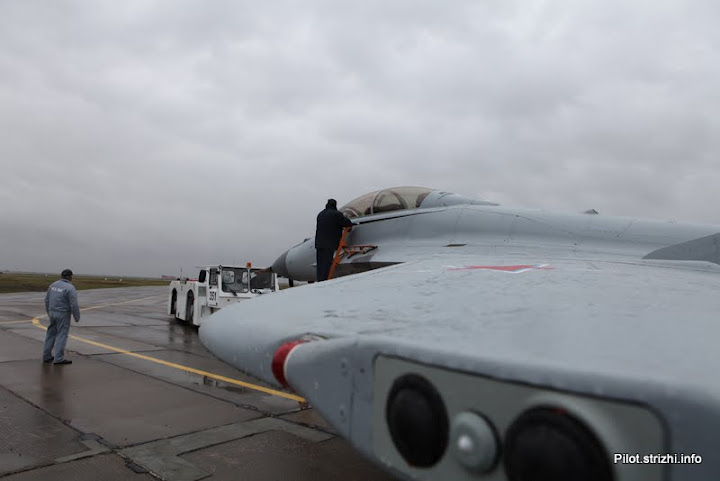
Infact MIG-29 exists because it is the right platform for Carriers.
You cannot do much with F-16/J-10/Gripen-NG for Carriers.
Su-33 will becomes too heavy. It is already 19tons without being multirole.
JSRagain no source, post the real length and data of the Mig-29, F-15A and F-16A.
what is so better in F-15A/F-16A? F-15A is not even a 9G fighter. lacks long bvr like R-27.F-16A was merely putting dumb bomb platform. or do u think F-15A with 6ton internal fuel has such big range advantage.
As is said before MIG-29M flew before F-15E. why dont this thing get in your head. Interntal fuel of MIG-29M and F-15E has only 1 ton difference despite F-15E being 6 tons heavier and lacks quadruplex FBW of MIG-29M.
but Soviet doctorine dont have need of medium multirole fighers as they were busy inducting SU-24M & SU-25.
MIG-29M as efficient as Rafale on internal fuel. that is more than 70% better figure than F-15 based Multirole platform. and time has proved how cheaply MIG-29M can be converted to MIG-29K. Sukhoi despite huge export earnings cannot restart Su-33 production.
JSRsource, and at least use an accurate aircraft. MiG-35 was not around during the cold war, neither F-16E.
stop distorting data.
Nope. I only compare multirole fighters with multirole fighters weight with same generation internal equipment. your assumptions are completely wrong.
F-15C lacks IRST and HMS of MIG-29 in early 1980s. F-15C weighs 14.5 tons.
Multi role MIG-29M flew earlier than F-15E. with FBW.
http://www.sci.fi/~fta/MiG-29-2.htm
It was the export nature of the MiG-29M that led to the debate over whether or not to rename it the new MiG-29, or a MiG-30 or 33, but Waldenberg insisted that the MiG-29 label was famous enough and the original designation should be maintained. Waldenberg was quoted as saying (JDW, 22Aug92, pg5) that the MiG-29M would have an export price of around $30 million. He also stated that the six MiG-29M prototypes were all flying by the end of 1992. Both the MiG-29S and the MiG-29M first appeared at the 1992 Farnborough Air Show. The first of the six prototypes flew in 1986 and by 1989, one flew with an uprated 19,400 lbs (8800 kg / 43.05 kNt) RD-33K engine that was developed for the naval variant..
http://en.wikipedia.org/wiki/McDonnell_Douglas_F-15E_Strike_Eagle
On 31 March 1987, the first officially-completed F-15E made its first flight.[17]
If India had waited couple of years they would have gotten MIG-29M. like buy small number for training like SU-30K and later introduce MIG-29M.
JSRsome very good points and precisely why MiG-29 was a step down for MiG in terms of revolutionary designs like the MiG-15, 21, 25, etc. All the points made in defense of MiG is moot. Sukhoi had a better product and western equivalents to the MiG-29 were going to have BVR added to them anyways as it was designed for it, but were simply not ready at the time. Furthermore, they are not so equivelent either.. a MiG-29 is closer in weight and size to the F-15 than it is to the F-16. Its much larger than the Mirage 2000 or Mirage F-1. Yet its range and limitations made it like a MiG-21 with out a MiG-21s benefits. That’s the Flanker is superior.
How exactly is MIG-29 closer to F-15 in weight. you can deduce relative weights from range figures.
F-16E weighs 10 tons.
MIG-35 around 11.5 tons.
F-15K non AESA is 20 tons.
longer life fighers become too heavy and near the end of there life huge maintainance burden. so better to retire after 40 years. no need for 60 year life fighters.
16.2 tons fuel is used to produce 3840km range. that is non ASEA fighter.
http://www.af.mil/information/factsheets/factsheet.asp?fsID=102
At most 7.4tons fuel is used to produce 3200km range. with one in flight refuelling the range doubles showing aerodynamice efficiency.
http://www.migavia.ru/eng/military_e/MiG_29_M_M2_e.htm
Su-30MKI need 9.4tons fuel for 3000km range.
Single Seat Su-35 consume 11.5ton fuel for 3600 range and it include 4AAM, TVC. Su-27SM with less powerfull engine is 3900km.
with rise in price of oil, materials used in engine maintainance and pilot resources. twin seater heavy figher will lose its appeal.
India shouldnot complain as they receive MIG-29 at throw away prices of 1980s. not some hard currency fortune used. even the MIG-29SMT upgrade is relatively cheap with new engines. if you look at historic context MIG-29M would have been better product as by mid 90s newer RD-33 engines available and it would still be cheaper than M2K upgrade. The same conclusion so many countries arrrived. like MIG-29K for Indian Navy. MIG-29UPG upgrade. MIG-29K for Russian navy.
infact Chinese could easily designed FC-1 around AL-31 and it would still be cheaper than RD-33 due to huge production run of AL-31 by 20X.
.
JSRI take it the Sukhoi figures don’t includes base model Su-27s sold to Vietnam, China and Indonesia?
Also does it include 18 Su-30 delivered to India and since returned to Sukhoi?
As for comparing it with Eurofighter, things get wobbly there.
Most Eurofighter sales are to country of origin (469 a/c)
Actual export sales are 87 aircraft (72 to Saudi Arabia, 15 to Austria).
So Sukhoi with nearly 500 Su-30 sales (in fact I think Indonesia has ordered 6 more bringing it up to 500) is a massive export success.
Basically the Flanker is to Russia what F-16 is to USA (MiG-29 has not been so successful).
However it’s up take in its country of origin is slow (a mere 50 a/c delivered or on order).
However given Russia operates 260 base line Su-27, 20-odd navalised Su-33 (to be retired), has ordered 48 Su-35 and 124 Su-34s then things even out.
There’s also the market for second hand Su-27s (Eritrea, Ethiopia, Angola, Kazakhstan) and operators of former Soviet aircraft as well as licence production in China.
Sukhoi record is even more impressive considering most of its exports were customized advance version at that time.
Flanker exports led to more than 500 AL-31FN engines for J-10.
TVC implementation, long endurance flights along with multirole electronic scanning radar.is perfected on export flanker.. 7 to 10 hrs missions at nite common for India.
http://www.indiastrategic.in/topstories402.htm
There is whole airframe modifications gained from Su-30 can lunch 4 Kh-59 class missiles but for Su-35 it is increased to 5.
EF exports are just the domestic standard exports. Austria one are the least advance among them. I am kind a surpized that Saudi didnot order TVC/CFT/AESA/Enhanced thrust engine for EF.
JSRARJ-21 is being delayed by another 2 years. Bombardier CSeries will be in similar trouble for production ramp up.
Isnt it waste that same firm is building two same generation fighters with identical roles. (J-10/J-17) at similar time scale.
Chinese will have to buy titanium from outside.
http://www.rusbiznews.com/news/n1353.html
VSMPO will supply parts for Chinese aircraft
JSRNot true. Most Russian airlines themselves are buying Airbus and Boeing. How many Tu-204s and Il-96s were sold to Russian airlines anyway?
Even if Zero Tu-204 and IL-96 are sold. it is still massive success of engineering/manufacturing skills and it gives complete independence to Russia government for various operations.
Just to raise IL-476 production to 16 per year. 5000 additional workers are required.
so how many thousand workers are required to raise Tu-204/IL-96 production to 100 each. its only at that level production cost can realistically competitive and weight reduced. I am not even going into global support cost required by airlines.so instead of spending money on 1980s design it is better to produce completely new designs.
Also Boeing has 1200 Engineers not just employees in Moscow. Maintaing 1200 people center is not cheap by any standards.
http://www.boeing.com/Features/2011/01/bca_russia_01_04_11.html
and there Boeing engineering contractors over the top it.
http://www.progresstech.ru/en/activity/engineering/programs/boeing.html
Offcourse that high priced service part will not show up in industry revenues.
JSRI must say quite the opposite here, unfortunately. For some weird reason you have chosen the blank revenues to be the main factor for comparison and you took Canadian 2011 figures and compared them to Wikipedia’s 2008 figure for Russia. It took you thirty seconds of Google-Fu and now you expect to get your 15 minutes of glory? I am afraid it simply ain’t gonna happen.
The fact is that Russian aerospace industry employs roughly 350,000 people in a diversified structure able to design, manage and produce almost anything, form titanium sheet metal, through domestic T/R modules, engine propulsion design up to production of strategic bombers.
OTOH, Canadian aerospace employs up to 70,000 people mostly involved in propulsion and production of parts and subassemblies for US aerospace sector which accounts for 60% revenues in total. This ain’t a real aerospace industry rather than an over-the-border subsidiary of the US.
Without any intention to offend anyone on this forum, what has Canada churned out on aircraft design in the last few decades? DHC-8 Dash? Come on, be realistic. The Russian aerospace sector is only dwarfed by USA and (in some areas) EU as we speak – not in revenue size or future export promises but in capabilities which are only limited by the respective demand. I have little doubt Russians would be able to catch up Canada in bizjet design but we all know that due to prejudice there won’t be any sales for a Russian bizjet anytime soon.
Aerospace industry is very broad term. Two word Aero & Space.
consider Glonass guided bombs and Navigation. since these components are being used in aircraft you can pretty consider Space industry as extension of Aero industry.
There is strong scientific and manufacturing base that has been established to venture into diverse fields. All it is needs is pour money over it and products will be developed.
http://zeenews.india.com/news/world/russia-putin-seeks-new-long-range-bomber-uavs_781921.html
The President said the A-100 airborne warning and control system (AWACS) project should also be implemented within the next five years.
The new AWACS plane will have the capability to detect and track long-range airborne and ground-based targets.
Russia plans to spend around RUB 400 billion (USD 13 billion) on UAV development in the next eight years.
There is no such thing in Canada. All the old Regional and Turbo prop stuff (can even $50 ticketss pay for the aircraft and maintainance.)
JSRTurkey came to right conclusion of no one shot the plane.
JSRIndia 70 or 80 left in total. thats why Su-30SM is taken up so quick.
There are Su-27/Su-27UB built in past 15 years. 105 kits delivered to China between 1999-2004.
Among Su-34/Su-35/Su-30SM/Su-27SM3/T-50 they have to deliver 600 combat before 2020.
http://english.ruvr.ru/2012_07_11/Russian-aviation-in-search-of-foothold/
The internal Russian market is becoming the main site for Russian combat aircraft manufacturers more and more, and this will most probably be the trend in the future. The main reason for it is the fact that the Russian Defense Ministry – specifically the Russian Air Force – has established itself as a reliable long-term customer. The number of aircraft already ordered for the Air Force is close to 400, with 70 already delivered. The total number in the current decade is expected to be 600.


 Sign In







