 srpatterson
Let me look at my passport here…ah, just as I thought, I’m just another dumb American.
So, it seems that now I and my fellow countrymen have to take credit for this mess too, along with the Iran war. My European friends are never going to forgive me.
Anyone got an application for British citizenship?
srpattersonHello Forum…Steve checking in (or as they say in NZ, chicken in). Setter and I spent 20 minutes in Auckland trying to find the “Chicken Counter”, because they kept telling us to go there. Sorry, old joke.
I’m in Singapore waiting for my flight to London. Not much to report on the aviation front in China, as the only airplanes I saw were airliners. I did have a very enjoyable dinner last night in Hong Kong with Gus Larard, the P-40 pilot from Wangaratta, but most of my time was spent at the factory in Shen Zhen. Oh well, time for some more old airplanes!
Mrs. Patterson is arriving at LHR at 11.00 Tues, and then we’re off to Cambridge to meet up with Mr and Mrs. MikeJ. If any forumites want to join in on the festivities and buy me a drink (not in that order) you can reach me all week on my mobile, 07910 477663.
Looking forward to our visit. Please try and fix the weather before I get there (it’s 32C here in Singapore).
Steve
srpattersonWhere did my thread go??? Was it something I said???
Here then, for those of you who may have missed it, is my last post on flying in Australia. Enjoy, and I’ll report again from England next week…
Steve
As you may have gathered from the previous posts, Wangaratta was a wonderful experience. Here are just a few brief observations from my all too brief visit there.
First, in order of appearance, the P-40…
Cockpit is very straightforward and typically “American”. Trims, gear, flaps, throttle quadrant, instruments are all in places that you would expect. Also nice and roomy, with the canopy rail low enough to allow you to rest your arms outside. Canopy can remain open up to 250 MPH, so you can leave it open for take off and landing, but it needs to be closed for acro. This plane had been modified with a direct drive starter, as opposed to the old style fly wheel spin up type. While the old may have been charming and reminiscent of all those old flying movies of our youth, the new system is much safer if you have a stack fire. If you over prime you can get a fire in the exhaust stack, and the procedure is to keep cranking to suck the flames back into the engine. Landing gear is locked down with hydraulic pressure, so the procedure there is to give the handpump a few cycles until you feel the resistance of the pressure building. Very straightforward, although the gear lever is tucked out of the way in approx. the same position as on the Harvard. Engine start with the Allison was very straightforward, and 1000 RPM is maintained for warmup to reduce airframe vibration. On this day it was about 28 Celsius, so overheating was not really a problem. Coolant temperature is monitored as the oil temp comes up, and on this day the oil warmed to 50 C while the coolant temps were still well in the green. Taxi is accomplished with differential braking, and the tail wheel has about 20 degrees of steering either side, and can be broken loose to allow the tail to spin around. Very good visibility over the nose. Next time I’ll tell you what it’s like to fly!
Next the Wirraway…
Well, it looks like a Harvard. Sort of…
Walk around is very T-6 like. Geared engine and three blade prop look more fighter than trainer, as do all the guns. Large round air intake below the cowl gives it a jowly look, but all in all the stance on the ramp is good. Now, the bad news. The cockpit is a mixture of dials, levers and gauges that resemble a Harvard after it’s been put through a cyclone. Worst of all is the hydraulic system, which is completely opposite the Harvard. In the T-6 (before the G model) you press a lever to energize system pressure (it runs for about 45 seconds) and you can then operate gear or flaps. Simple.
In the Wirraway you first move the gear lever from down to up with your left hand, moving a slide guard into place about a third of the way along, then while holding the lever against the up stop (otherwise it will move) you press a hydraulic system energize button with your left elbow. Once the gear is up (good luck finding the indicators…they’re there, but you have to search for them) you then have to turn off the hydraulic system by pulling the lever back out. Wow. But wait, it gets worse. When lowering the gear you move the gear handle about 2/3 of the way down until you hit the gate that hopefully you remembered to slide into position when you retracted the gear. You then push the hydraulic power lever in (again, with your left elbow so you can at least try to fly) wait until the gear cycles (you are never really sure when this moment arrives, but somehow you can just sense that it’s time to move on to the next step) you move the gate, slide the gear lever the rest of the way (forcing in the locking pins) and turn off the hydraulics. After saying all of that I’ve lost the will to live, but believe me when I tell you the flaps are even worse. Every time I retracted the flaps they would bleed down when the pressure was turned off. “Don’t worry about it” was the procedure I was given. On landing everyone just cheats and leaves the system pressured up, forcing the flap lever from up through neutral to down for 3 seconds, then back to neutral. When you’re ready for them all (very short final) just force the lever from neutral to down.
The throttle quadrant is very similar to the Harvard…but…Holy Sh*t, the mixture lever is completely backward. So, throttle and prop levers are forward increase, but the mixture is forward cutoff, back full rich. Definitely a killer item. “Why would anyone design a mixture control like this?” I asked. Something about Pommies was the answer. I thought Pommies where the flowers that they dropped from the Lancaster?
The good news is once you get all that sorted out she is a really fun airplane to fly. Like a Harvard on…well, not exactly steroids…maybe an espresso. Make it a double espresso with guns and you have the flight characteristics of the Wirraway. Take off and landing are exactly like the Harvard, with the same sight picture and numbers, but the vibration and noise from the fabric skin is much greater than her trainer cousin. Likes to wheel land, and like the Harvard doesn’t bounce if you stick the landing. Back on the ground you unlock the tailwheel and taxi with breaking (and lots of power in the turns). She’s definitely no dancer on the ground.
So, my Wirraway report card…
Systems…D+
Flying Quanities…B
Ramp Appeal…B+
Fun Factor…A
And, last but certainly not least, the Winjeel. Little did I know after seeing my first Winjeel in the RAAF museum at Point Cook on Wednesday that I would be flying one on Friday. Hell, I had never even heard of a Winjeel. But I have to say, I’m hooked. Quite simply I don’t believe it’s possible to have any more fun flying behind a P&W R-985. Nice big cockpit, a throttle quadrant and stick for each pilot, one on the left for the pilot, and one in the center for the instructor. Cub simple systems, and barn door flaps. I can only imagine what it would be like if you used them all (think SBD here). Good positive controls, and although lacking power a good trainer, especially for formation practice. Nice roll rate, but you have put the nose down pretty far to get enough speed for anything over the top (about 180 MPH). Having a third seat is nice, and it’s quite roomy (capacity, One Setter and camera). When I asked about approach speeds I got a shrug of the shoulders, but suffice it to say it’s pretty slow (65-70 MPH). Three point landing sits very nice, and rollout is no worse than your typical taildragger. The tailwheel locks, but you have some steering when unlocked, and like the Mustang pushing forward on the stick puts the tailwheel in free caster mode. The Winjeel gets an A across the board from me. Fun, practical, fun to fly, economical, and fun. Did I mention fun?
So, Wangaratta was a fantastic experience and exceeded all my Australian expectations. Well, almost…I didn’t get to see a Platypus
srpattersonOnly 7 days until the first flight of the Rearwin!!!
srpattersonThe boy on the bicycle is getting tired, so I had better sign off. Hong Kong next Sunday, then Heathrow Monday. See you there!
Steve
srpattersonAs you may have gathered from the previous posts, Wangaratta was a wonderful experience. Here are just a few brief observations from my all too brief visit there.
First, in order of appearance, the P-40…
Cockpit is very straightforward and typically “American”. Trims, gear, flaps, throttle quadrant, instruments are all in places that you would expect. Also nice and roomy, with the canopy rail low enough to allow you to rest your arms outside. Canopy can remain open up to 250 MPH, so you can leave it open for take off and landing, but it needs to be closed for acro. This plane had been modified with a direct drive starter, as opposed to the old style fly wheel spin up type. While the old may have been charming and reminiscent of all those old flying movies of our youth, the new system is much safer if you have a stack fire. If you over prime you can get a fire in the exhaust stack, and the procedure is to keep cranking to suck the flames back into the engine. Landing gear is locked down with hydraulic pressure, so the procedure there is to give the handpump a few cycles until you feel the resistance of the pressure building. Very straightforward, although the gear lever is tucked out of the way in approx. the same position as on the Harvard. Engine start with the Allison was very straightforward, and 1000 RPM is maintained for warmup to reduce airframe vibration. On this day it was about 28 Celsius, so overheating was not really a problem. Coolant temperature is monitored as the oil temp comes up, and on this day the oil warmed to 50 C while the coolant temps were still well in the green. Taxi is accomplished with differential braking, and the tail wheel has about 20 degrees of steering either side, and can be broken loose to allow the tail to spin around. Very good visibility over the nose. Next time I’ll tell you what it’s like to fly!
Next the Wirraway…
Well, it looks like a Harvard. Sort of…
Walk around is very T-6 like. Geared engine and three blade prop look more fighter than trainer, as do all the guns. Large round air intake below the cowl gives it a jowly look, but all in all the stance on the ramp is good. Now, the bad news. The cockpit is a mixture of dials, levers and gauges that resemble a Harvard after it’s been put through a cyclone. Worst of all is the hydraulic system, which is completely opposite the Harvard. In the T-6 (before the G model) you press a lever to energize system pressure (it runs for about 45 seconds) and you can then operate gear or flaps. Simple.
In the Wirraway you first move the gear lever from down to up with your left hand, moving a slide guard into place about a third of the way along, then while holding the lever against the up stop (otherwise it will move) you press a hydraulic system energize button with your left elbow. Once the gear is up (good luck finding the indicators…they’re there, but you have to search for them) you then have to turn off the hydraulic system by pulling the lever back out. Wow. But wait, it gets worse. When lowering the gear you move the gear handle about 2/3 of the way down until you hit the gate that hopefully you remembered to slide into position when you retracted the gear. You then push the hydraulic power lever in (again, with your left elbow so you can at least try to fly) wait until the gear cycles (you are never really sure when this moment arrives, but somehow you can just sense that it’s time to move on to the next step) you move the gate, slide the gear lever the rest of the way (forcing in the locking pins) and turn off the hydraulics. After saying all of that I’ve lost the will to live, but believe me when I tell you the flaps are even worse. Every time I retracted the flaps they would bleed down when the pressure was turned off. “Don’t worry about it” was the procedure I was given. On landing everyone just cheats and leaves the system pressured up, forcing the flap lever from up through neutral to down for 3 seconds, then back to neutral. When you’re ready for them all (very short final) just force the lever from neutral to down.
The throttle quadrant is very similar to the Harvard…but…Holy Sh*t, the mixture lever is completely backward. So, throttle and prop levers are forward increase, but the mixture is forward cutoff, back full rich. Definitely a killer item. “Why would anyone design a mixture control like this?” I asked. Something about Pommies was the answer. I thought Pommies where the flowers that they dropped from the Lancaster?
The good news is once you get all that sorted out she is a really fun airplane to fly. Like a Harvard on…well, not exactly steroids…maybe an espresso. Make it a double espresso with guns and you have the flight characteristics of the Wirraway. Take off and landing are exactly like the Harvard, with the same sight picture and numbers, but the vibration and noise from the fabric skin is much greater than her trainer cousin. Likes to wheel land, and like the Harvard doesn’t bounce if you stick the landing. Back on the ground you unlock the tailwheel and taxi with breaking (and lots of power in the turns). She’s definitely no dancer on the ground.
So, my Wirraway report card…
Systems…D+
Flying Quanities…B
Ramp Appeal…B+
Fun Factor…A
And, last but certainly not least, the Winjeel. Little did I know after seeing my first Winjeel in the RAAF museum at Point Cook on Wednesday that I would be flying one on Friday. Hell, I had never even heard of a Winjeel. But I have to say, I’m hooked. Quite simply I don’t believe it’s possible to have any more fun flying behind a P&W R-985. Nice big cockpit, a throttle quadrant and stick for each pilot, one on the left for the pilot, and one in the center for the instructor. Cub simple systems, and barn door flaps. I can only imagine what it would be like if you used them all (think SBD here). Good positive controls, and although lacking power a good trainer, especially for formation practice. Nice roll rate, but you have put the nose down pretty far to get enough speed for anything over the top (about 180 MPH). Having a third seat is nice, and it’s quite roomy (capacity, One Setter and camera). When I asked about approach speeds I got a shrug of the shoulders, but suffice it to say it’s pretty slow (65-70 MPH). Three point landing sits very nice, and rollout is no worse than your typical taildragger. The tailwheel locks, but you have some steering when unlocked, and like the Mustang pushing forward on the stick puts the tailwheel in free caster mode. The Winjeel gets an A across the board from me. Fun, practical, fun to fly, economical, and fun. Did I mention fun?
So, Wangaratta was a fantastic experience and exceeded all my Australian expectations. Well, almost…I didn’t get to see a Platypus.
srpattersonLooks like this will work out just about right. I will be in England next Monday, ready to see another one of Kansas City’s finest (aircraft, that is, as in Rearwin Aircraft Co. of Kansas City, Kansas) take to the air once again.
I just hope the systems are better than that friggin Wirrrrrraway cockpit.
See you in England next week (if the Red Chinese let me out).
Steve
srpattersonWell, the first part of the tour has come to an end. I’m at the airport in Singapore, waiting to catch a plane to Hong Kong. Time for a little work to help pay for warbirds.
A big thank you to my most excellent forum hosts in NZ and OZ—Setter, Dave, Hairy, Dave McD, JDK, Chris, Matt, and Oscar Duck. Also, many thanks to all the restoration shops that opened their doors and made us welcome (especially Wangaratta). Can’t wait to see Mr. Parker and Mr. Tweed’s photos (I was just too knackered to look at them last night).
Formal report to follow the close of the tour after the flight of the Rearwin. Popham is fast approaching boys and girls…don’t forget the popcorn. In the meantime enjoy Setter and JDK’s recap of the weeks events right here on the forum.
See you in a week!
Steve
srpattersonNo offense Nick…I spin all the prop blades I have.
Of course, mine fly more than most, but they would, given that these airplanes are at their best when they’re flying fast and making noise.
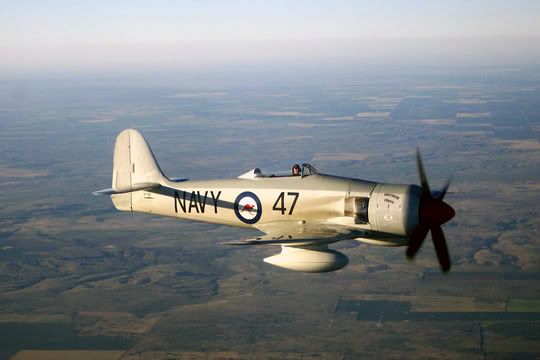
Unlike most of the Centaurus Sea Furies…
srpattersonWhat a crock of ****. We’re not elitiest, we’re the most inclusive group I’ve ever been a member of. What other hobby has the same number of “spectators” who approach you to inspect your aircraft (insert hobby here)? I think we do an excellent job, given the surroundings of the airshow event at which we participate, to include the crowd in the excitement of warbirds.
Oh, BTW Dave, love the new avitar…
Steve
srpattersonI’d go on a mission with Jules Horowitz…after all, he made it back.
But if the game is pick your plane and pick your mission:
11 Group, Summer 1940…any Spit or Hurri. After all, I seem to recall we Americans won that little battle for you (que Mr. Cruise as the music swells) 🙂
Steve
srpattersonSea Fury Mosquito Spitfire!
Dear Mr Patterson,
ive been a very good boy this year and…………
Yes, but can you wave???

srpattersonI am so tired of winter. Here’s a photo that I took 5 minutes ago out the back window. Seems mother nature is giving me a little reminder of what I’ll be missing in NZ/Australia.
Also, my wife has just brought me the mail…which included a nice little package from Mr. Parker. Let’s see…Warbirds over Wanaka and Temora Warbirds Museum. A most excellent way to pass the time.
Steve

srpattersonSteve – how “light” is your Fury? 😉
Lighter than a DC3, Daz!
About 9500 lbs., so OK I’ll go back to my original choice…the Mooney Mite. As much fun as you can have with 65hp, and a better flyer than the WAR replicas, Daz.
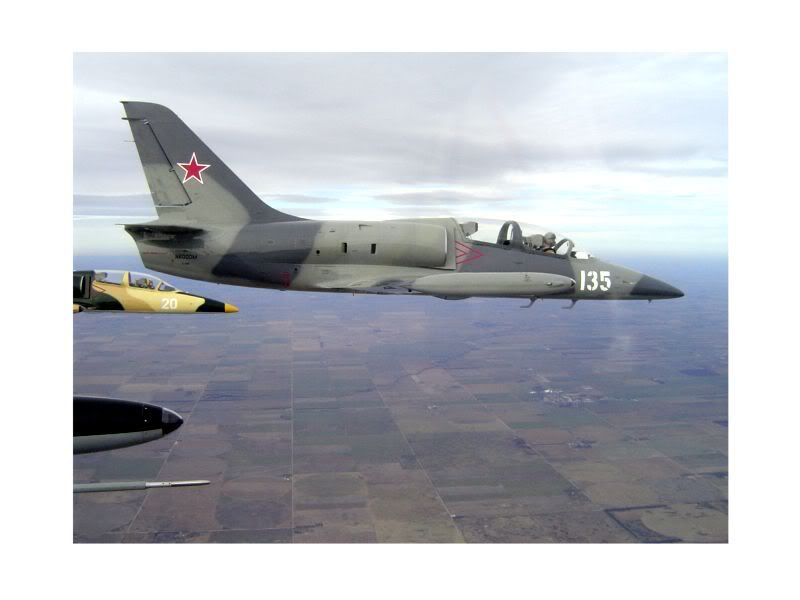
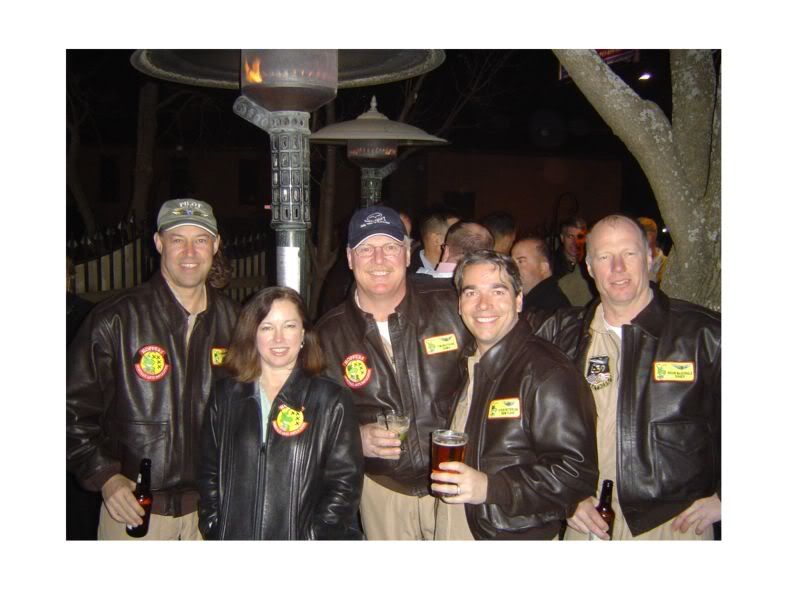
srpattersonHere are a couple of photos I just received from our man servant/fuel b!tch Brian, aka Digger.


 Sign In







