 lukos
lukosI read 75miles.
SPEAR isn’t out yet.;)
lukosYou’re totally right about the LOAL term, but I would still like to see some proof that the mentioned IR variants were actually intended to be launched that way (i.e. without a proper lock) operationally. Yes, there is an override so that they could be launched without a proper lock, but AFAIK, it was intended for jettison purposes since these missiles are carried on rail pylons, not ejector ones, so they cannot be simply jettisoned. The sources I’ve seen indicate that the seeker must be locked on before launch (e.g. to be able to lock the target, it also needs to be cooled down first using the cooling liquid from the tank located in the pylon).
The R-40T/TD were medium range missiles, and I doubt that IR seekers around the time would work from the intended ranges, necessitating command guidance mid-flight.
The information is somewhat scant unfortunately and the only references are hardly that reliable. AFAIK the missiles were designed to be fired in pairs (R-40R and R-40T together). With 70kg proximity fused warheads, that provided a very problematic surprise for the victim.
lukosThe hurdle of LOAL is being able to place a missile in an optical approach for the conical limited seeker. Missiles have oscillations, gyrations, and directional aspects to wield. Simply launching a missile on a ballistic trajectory has always been possible for US aircrews, but perhaps the Soviets used idiot proof safeguards. LOAL really involves traveling to a point in 3-dimensional space in such a way the seeker has a valid opportunity to track the target.
I think the Soviet intention in stuff like Vikhr M was actually jam resistance. By placing the dependence on the missile-aircraft relationship (laser receiver faces carrier) jamming opportunities are almost completely eliminated. The downside is perhaps a small reduction in accuracy because the missile is looking behind itself, rather than at the target, and a flight profile that makes low altitude launches and firing down hills slightly more likely to result in the missile grounding out pre-target. The launch envelope is also more restrictive and it isn’t FaF.
lukosso why can’t AGM-65 do that ? , both agm-114 and AGM-65 are air to ground , both have short range , both dont have data link why , agm-114 can do LOAL but AGM-65 must be lock on target before launch ?
Most AGM-65s have either EO or IIR seekers. Only the C and E variants were laser guided. A laser guided weapon knows the laser code it’s looking for whereas a missile with an IIR seeker doesn’t know what it’s looking for unless told before launch, or unless it has an extensive database of targets and target recognition software.
I’m not sure if the AGM-65s had INS, so even the C and E laser variants wouldn’t know where to fly to if fired before lock. Some reading around the Maverick design suggests that they needed to maintain lock from launch to strike.
Interestingly the proposed AGM-65L “Longhorn” was intended to have a datalink and LOAL.
AGM-84H and AGM-84K both have Automatic Target Acquisition (ATA) so they can do LOAL and can actually lock target by them self , however iam talking about the E version
AGM-84E must be manually locked on to target by pilot , it cannot do that by it self . the question is why ?
all AGM-84 version have INS so they can all go to target area without main seeker , but while the radar version can do LOAL and can lock target by them self automatically , but for the AGM-84E IIR version , pilot must do that manually in final phase of flight .r GBU-15 have exact the same problem
To your first question, the answer is likely software related (see above talk about target database and target recognition). If the E version didn’t have the ATA you mentioned, you’ve answered your own question.;) Visual IIR recognition is more complicated to program than radar signature recognition.
lukos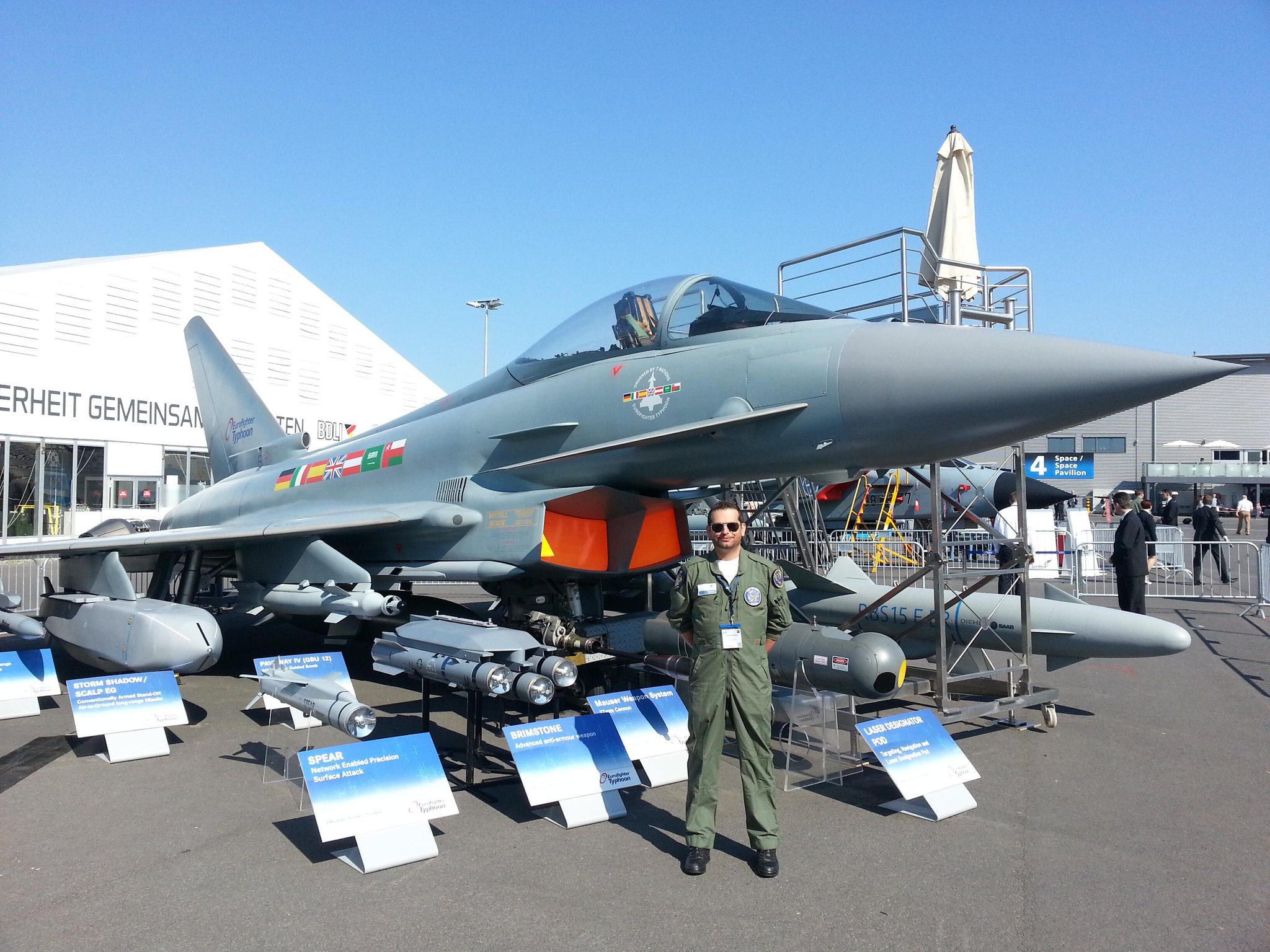
lukosbut how about this ?
AGM-65 can only be used in LOBL mode while AGM-114 can be used both in LOAL and LOBL , both kind of missile dont have data link or anything other than their main seeker
I think the issue there is that most laser guided weapons will always be able to LOAL to a laser spot and MWR seekers (AGM-114L and Brimstone) also have a LOAL capability. Ground targets are also relatively slow compared to aircraft, so if you fire a missile at fairly short ranges to a GPS co-ordinate the MWR will be able to LOAL. Longer range equivalent A2G missiles like SPEAR have a datalink, because the range is such that the target vehicle may have moved considerably between launch and impact.
also what about agm-84 radar version vs AGM-84E ? why the agm-84E cannot lock on target by itself but required pilot control in terminal phase of flight
E, H and K I believe are IIR seeker variants with a datalink. I believe the ARH seeker variants lacked a data link.
Interestingly AGM-62 did have a datalink, which later ended up on the AGM-84E along with the IIR seeker of the AGM-65D.
lukosEurofighter World 2014 download link:
lukosThose would be the weapons to try and hide because I assume the benefit of trying to hide a Stormshadow is less marked?
Putting Storm Shadow in a pod would be like putting a pod in a pod.
So that comes from the BAE tweety account and has a nice image of the weapon hanging under the wing of Typhoon. Interesting because it’s the first time I have seen SPEAR 3 in the flesh and also because this is the first UK a2g weapon to be tested on Typhoon without being cleared on Tornado first!
The worm has definitely turned….
It needs to turn and fast. Tornado is going in 2018 and SPEAR isn’t due until then (or after), so it would be a pointless waste of time and money integrating it on Tornado just before scrapping them.
lukosIDK about R-24T; but R-27T/TE versions are technically not LOAL; they can be fired without lock command but the aircraft itself must maneuver to align missile’s seeker to the target. I am reasonably sure relatively obsolete R-40T and R-24T missiles operate in same fasion. Such implementation would be much simpler, and for BVR shots, it would be pretty effective still.
You are correct about the R-40T/TD and it was one of the missiles that made the MiG-25 relatively successful in combat, despite facing some tough opposition. I think officially it’s record stands at 8:8 KDR in air-combat but unofficially it could >30:8.
lukosBTW does anyone know why all active radar guide missile can be LOAL but not the same for Ir guide missiles
Mainly a datalink issue. It’s difficult to develop LOAL-capable technology without a datalink but the ASRAAM is an exception in that respect.
lukosReally? i wonder what the chaps on the ground requiring support would think of that opinion. Actually no i don’t.
If that is really what you think cas is about then you clearly have an issue defining priorities.
You can’t provide CAS if you’ve been shot down and furthermore, you then put a bigger draw on CAS resources, meaning less CAS for other soldiers potentially.
lukos…”shed loads” and “messy” are not technical terms i’ve come across too often when discussing the tactics and operation of aircraft and air defence systems.
You have repeatedly failed to answer the questions i posed or alternatively admit that you cannot. (In fairness you have defacto admitted you cannot answer them as your failure to do so illustrates.)
Asking for data that supports your opinion and comments is not trolling. Having an opinion that does not coincide with yours is not trolling.
To make claims that a certain situation or event justifies your position then to admit (twice) you don’t actually have the detailed data yet still continue to claim that your position is justified by the data you don’t actually have is beyond belief.
The real world does not operate like that. I can only conclude that you clearly have no idea what you are talking about.
Your career as an internet forum warrior looks to be in good shape, it’s a pity that accuracy, reality and solid data in your world are not.Ignore list activated.
Good, I’m tired of replying to your incessant crap. You haven’t even made any point to be addressed for several posts now. I point out that a fair few (yes not a technical term) aircraft have been shot down and posted links to just some incidents. You somehow counter that with pointless vagueness. What point are you trying to make? That several aircraft haven’t been shot down?
lukosTried to achieve too many goals and didn’t achieve any.
lukosLight interceptors fill the gaps, the heavies form distinctive lobes around the perimeter. The light interceptors can be dispersed to four times the number of airfields. The heavies need substantially long runways, regardless of how heavy the landing gear.
Don’t underestimate the importance of kinetics in BVR fighting.
lukosIt would be interesting to know exactly how many of those advocating cas a al F35 actually have first hand knowledge of modern cas techniques and challenges?
The main challenge is not becoming the primary objective of a CSAR mission.


 Sign In







