Balu the Bear
Isn´t it amazing, that the Iranians haven´t shown some pictures of the “downed drone” yet??;)
This would increase the propaganda effect…:rolleyes:
Balu the BearBalu the BearBalu the BearBalu the BearHe forgot the safety pins, presumably….:confused:
Balu the Bear
BTT:
Are these modifications very difficult to make,or is this like a conversion kit……??
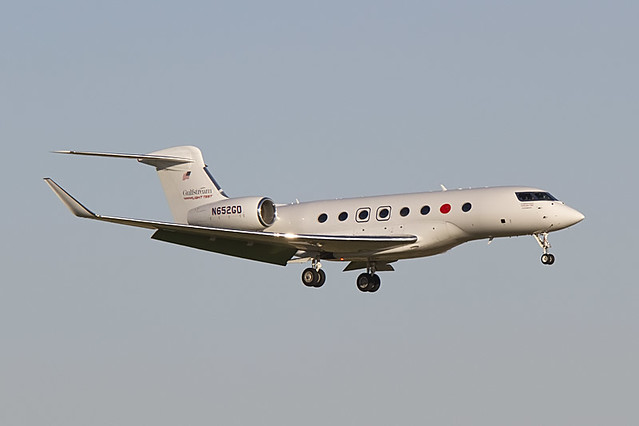
Balu the BearThe Gulfstream G650 involved in the fatal crash that killed four company employees on 2 April was at a high angle of attack just before its right wingtip made contact with the runway, say those directly familiar with events of the accident.
The US National Transportation Safety Board (NTSB) says the wind was 15kts “directly from the left side of the aircraft” when the aircraft began its takeoff roll on Runway 21 at approximately 09:30 local time at Roswell International Air Center Airport in New Mexico.
Wingtip scrape marks appear on runway 21 roughly 1520m (5,000ft) before the end of the 3,960m (13,000ft) runway, which “lead toward the final resting spot approximately 3000 feet from the first marks on the runway,” says the NTSB.
Witnesses near the scene say they saw the G650’s landing gear collapse followed by “sliding on the ground with sparks and smoke and subsequent full involvement with fire while it was still moving,” says the NTSB.
The aircraft then “came to rest upright and fully involved in flames approximately 61m (200 ft) from the base of the airport control tower”.
Airport rescue and fire fighting teams responded quickly to the fire, which they fought for 15min after their arrival.
S/N 6002, registered N652GD, the second of five test aircraft validating the new large-cabin ultra-long range jet , had been out conducting 2.5h of take-off performance and braking evaluations prior to the accident, taking off on runway 21 with teardrop turns to downwind landings on runway 3 prior to the accident.
Participating along with the NTSB, is German safety investigator BFU, as the twin Rolls-Royce Deutschland BR700-725A1-12 engines are manufactured in Germany. Additionally, engine-maker Rolls-Royce and Parker Aerospace, which supplies the aircraft’s fly-by-wire flight control system, are also party to the investigation along with Gulfstream.
Balu the BearLooks pretty bad.:( It´s a miracle they didn´t crash in the tower…..:eek:
Balu the BearAircraft Oxygen-Generating Systems Under Investigation
The U.S. Air Force is investigating whether the On-Board Oxygen Generating System (OBOGS) found on several U.S. Air Force warplanes, including the F-22 Raptor, might be defective.
“Air Force operational commanders have temporarily restricted F-22 flight operations to an altitude at or below 25,000 feet for routine training missions,” said Col. William Nichols, a spokesman for the command, which is responsible for training and equipping the service’s combat air forces.
“Air Combat Command is conducting an investigation to assess on-board oxygen generating systems on several platforms, including the F-22,” Nichols said. “The investigation is designed for mishap prevention and is a prudent measure to ensure the OBOGS are operating safely.
“When the investigation is completed, the results will be reviewed and appropriate actions, if warranted, will be taken,” he said.
A Lockheed Martin spokesman confirmed that the restriction has been in place ever since an F-22 based at Elmendorf Air Force Base, Alaska, crashed in November. Lockheed is the prime contractor for the F-22, a next-generation stealth fighter jet.
One Air Force source said that an OBOGS malfunction might have been responsible for the incident, which resulted in the death of Capt. Jeffery Haney, an F-22 pilot assigned to the 525th Fighter Squadron.
Despite the restrictions, the Raptor remains fully operational and could carry out combat tasks if needed, he said.
“A standard safety practice with all aircraft is, if there is a known or suspected problem, you take measures to fix it,” said Mark Gunzinger, an analyst at the Center for Strategic and Budgetary Assessments, Washington, and a former Air Force pilot. “It’s not something you want to do, but these things happen with complex aircraft.”
While the stealth fighter might be restricted in training operations, that does not mean the Raptor would be restricted during wartime missions, Gunzinger said.
“If it’s a war, if it’s truly a safety-of-flight issue and it’s going to hurt pilots and it’s going to prevent the mission from being accomplished, then obviously the restriction will stand,” he said. “But if it’s something of a temporary nature or there is a work-around in time of war, it may not impact combat operations.”
An OBOGS malfunction can be potentially life-threatening, said Hans Weber, who sat on the U.S. Federal Aviation Administration’s Research, Engineering and Development Advisory Committee, and is the current president of Tecop International, a San Diego consulting firm.
“It’s a big deal if you’re at high altitude and you run out of oxygen,” Weber said.
At 50,000 feet, a human being has less than 10 seconds of useful consciousness, he said. The 25,000-foot altitude restriction would allow the pilot to quickly dive below 18,000 feet, where the atmosphere has enough oxygen to ensure prolonged survival in case of an emergency.
Balu the BearGulfstream Aerospace, located in Savannah, Ga., has confirmed the crash of a Gulfstream G650 flight test aircraft at Roswell International Air Center, N.M., Saturday morning, April 2. Four lives were lost in the accident. The following statement was released by the company early Saturday evening:
“Gulfstream Aerospace Corp. confirmed today that a Gulfstream G650 crashed Saturday morning during takeoff-performance tests in Roswell, N.M. Two Gulfstream pilots and two Gulfstream flight-test engineers died in the crash. ‘Our thoughts and prayers go out to the families of those who were lost,’ said Joe Lombardo, president, Gulfstream Aerospace. The accident is under investigation by Gulfstream, the National Transportation Safety Board and the Federal Aviation Administration. ‘We are cooperating 100 percent with the investigation,’ Lombardo said.”
FAA Southwest Region spokesman Lynn Lunsford of the told AOPA Pilot that the aircraft, N652GD, had just taken off when the right wing hit the ground. The aircraft crashed back to the runway, collapsing the gear. “The aircraft skidded for quite some distance,” Lunsford said. “It came to rest 35 to 40 feet from the tower.” Lunsford said the aircraft had been in the pattern for at least two hours. It was his understanding that the aircraft was conducting brake testing.
Balu the BearBalu the BearThx mate. I´m fine so far.
B.T.W. Live feed has started….:D
Balu the BearNo it isn’t!
No-fly zones were enforced in the 1990s without attacks on command structures. Despite what Robert Gates says, there was no initial suppression of air defences. They began with air patrols, & air defences were attacked only when they attacked, or targeted, the patrolling aircraft. There is no reason why the same couldn’t be done again.
Over a city, where the Lybian Air Force is attacking people on the streets?? There is no parking space fpr a mobile SAM- Launcher, guided by a radar positioned on a hospital or a school yard????
Balu the BearEnforcing a no- fly zone isn´t just doing CAP. It is about SEAD, Strikes agianst Shelters of the Command Chain. Can anyone guarantee, that no civilian will be harmed??
Because only one Lybian casualty, and there would be a huge diplomatic, politic and military mess to clean up………
Balu the BearNo worries! 
The problem of the C2 was the insufficient ejection envelope. The M/B was a 0/0 model, so fatalities were reduced significantly.
Many people neglectinging the fact, that the accident rate was lower compared to F84s, RF 84s and the F 86.
And I always wonder, why many people pick on the 104??
It had a greater low level range than the SEPECAT Jaguar, it was faster M 2.0/ 800 KIAS ( compressor inlet temperature limited)- speeds the F8 won´t go.
The 104 was not very easy to fly. My father talked about t/o speeds around 200 KIAS, depending on loadout and temparatures and final approach speeds at 170 kts + 5 kts per 1,000 lbs fuel/ payload over 1,000 lbs.
( alfakilo will correct this, just in case I´m wrong….)
So thats the exact opposite of a carrier aircraft.
The 104 had the better gun compared to the four Mk 12 installed in the F8 (keywords are here: unreliable, not very accurate, lighter bullets, ergo a spray gun).
The radar installed in the 104 was superior to the radar installed in the Crusader, and heavy weapons carrying capability was superior compared to the Crusader, which only had two underwing hardpoints, relying on TERs and MERs, to carry enough load in a CAS or counter air mission, thereby enhancing drag and fuel consumption while degrading speed and endurance…
My father stepped up from the F 84 F and he said he never really liked it. Then the upgrade to the 104 was a very tough one, regarding training, tactics and handling the systems.
So in my opinion one can´t compare these two aircraft from a neutral point of view…..


 Sign In