 Timc63
Hi Mike,
Just to give an impression of the Hercs when they come through here’s a few shots taken over the years!


Timc63Hi Wulfie, is that “the” Boulton Paul collection that was at Pendeford? Thought Cosford eventually took on the aircraft or am I thinking of something else?!
Not gone on the facebook page just yet so the info might be there, but when do you envisage that the museum will be open to the public?
Cheers
Tim
Timc63With all due respect to Eric and his photos, here’s my efforts on putting a little bit of a 2014 twist on with the technology available which I”d like to think Eric would approve?
Many thanks to Alan for making Eric’s shots available, they have certainly brightened up my, and many others day!
Cheers
Tim


Timc63I’ve just spent a couple of hours “restoring” two of these fantastic photographs, not that I make a habit of downloading other peoples property, far from it, but if I have permission off the copyright holder to post them I’m willing to do so.
It’s just to illustrate with a limited amount of knowledge what can be done with old photographs!
Cheers
Tim
Timc63Apologies for the late reply.
Thanks for the kind comments guys and to answer some questions:
Yes the Loop is very accessible as it falls within the southern part of the Snowdonia National Park.
If you fancy dipping your toe in the water Pegasus911 then I’d opt for a location known as “Cad East” as it’s a 10 minute walk (if that), to the place you want to be and once arrived is relatively flat in that part of the country.
The expense involved is more to do with the cost of petrol to get there and back in the first place!
It’s very much a case of pot luck if you see anything if I’m honest but I reckon on average there’s a 75% chance you will!
Most people who travel any sort of distance tend to book into a local B&B to maximise their stay.
One thing to note, the RAF don’t fly training missions at weekends or bank holidays!
If you require any further info, PM me and I’ll be happy to help!
Cheers
Tim
Timc63Ok chaps.
Here’s a few more!
The rest can be seen here: https://www.flickr.com/photos/timc63/sets/72157643152577283/
Cheers
Tim
8.
9.
10.
11.
12.
13.
14.
15.
16.
17.
18.
19.
Timc63Here’s few photos from Cosford’s Spit, not brilliant I’m afraid but hopefully gives an idea?
Cheers
Tim


Timc63I’m sure this has been asked before but. How far off being in airworthy condition are the Jaguars ?
I’m afraid they will never be airworthy, from what I can gather the re-heat has been inhibited on all the Jags at Cosford but would love to be proved wrong!
There’s plenty of other hardware at Cosford that 238 Sqn practice on that not many people are probably aware of, I was lucky a couple of years ago to be invited to an unofficial tour of the base on the Saturday before the Airshow. The aircraft were moved from their hangars to make way for exhibitions/demos for the weekend.
Follow the link!
http://www.flickr.com/photos/timc63/sets/72157630344985636/
Cheers
Tim
Timc63Ahh yes, the elusive cross-over shot has always eluded me no matter how hard I try!
Personally my technique is simply “spray and pray” and I always seem to focus on the aircraft furthest away on the cross-over when both are running in!
Anyway, here’s my near misses!
Cheers
Tim


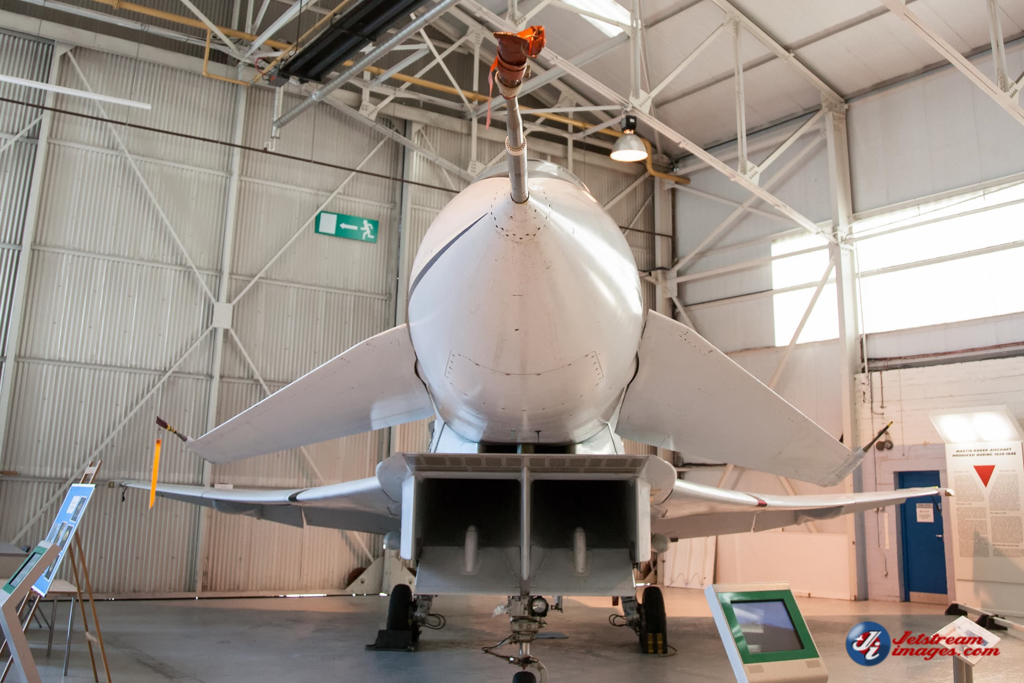
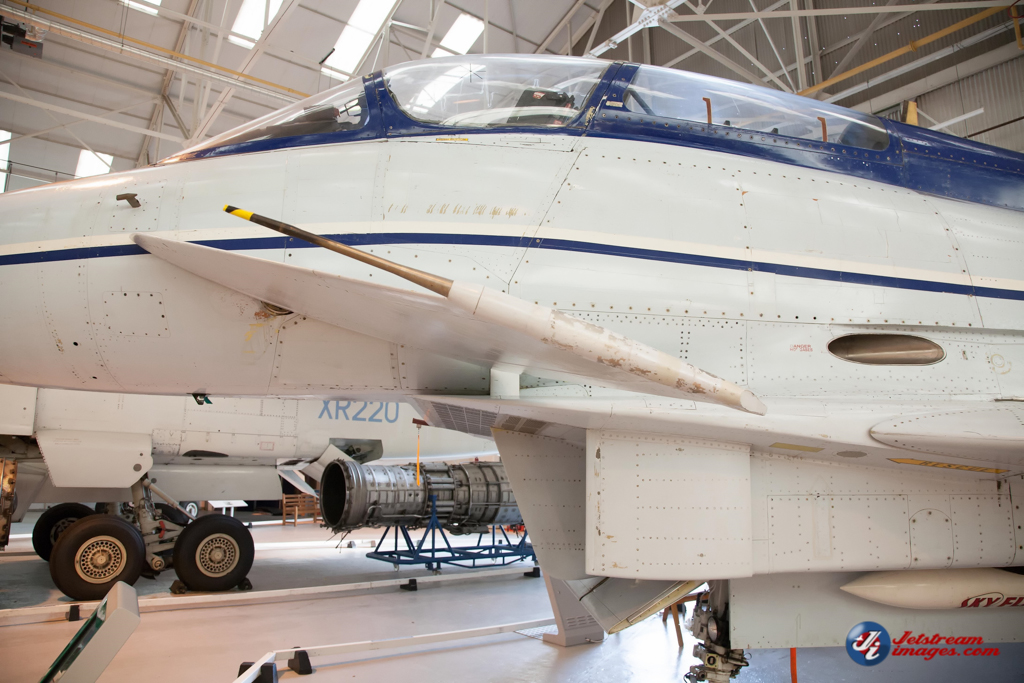
Timc63A few more photos taken this morning!
1.
2.
3.
4.
More photos here: http://www.flickr.com/photos/timc63/sets/72157637968967623/
Cheers
Tim
Timc63Possibly on a more serious note, posting a photo of a gentleman on a public forum of this nature may well be considered “Defamation of Character” as the said “Hedgecutter” person is not actually committing a criminal act!
Although this thread exhibits a balance between the various viewpoints regarding “freeloading” you simply cannot “slander” somebody or a group of persons in this way as the current law stands.
God forbid that the person in the photo takes offence, but it would seem that they would have a valid case to sue?!
The following taken from the current UK legal perspective.
Defamation – Elements of a Claim
Under Article 10(2) of the Convention, the protection of the reputation of others is a legitimate ground for restricting the right to freedom of expression. Libel and slander are legal claims that protect an individual’s reputation against defamation. An individual is defamed when a person publishes to a third party words or matter containing an untrue imputation against his or her reputation.
Libel and Slander
If the publication is in a permanent form (for example in a book, magazine or film), then the defamation is libel. It is slander if the publication is in a transient form (speech). Signs, gestures, photographs, pictures, statues, cartoons etc. can also give rise to a claim for defamation, but the most obvious types of defamatory statements are written or spoken words.
The principal practical difference between claims for libel and claims for slander is what a claimant must prove to succeed in his or her claim. In libel claims, the claimant does not have to prove that he or she has suffered loss or damage as a result of the publication. In contrast, in claims for slander, the claimant must prove actual damage. There are however several exceptions to the rule that actual damage must be proved in claims for slander.
For example, if the spoken words accuse the claimant of committing a crime; of having a contagious disease; of being unfit for his or her office, business or profession; or if the communication is an attack of the credit of trades people; or an accusation of being unchaste or adulterous against a woman or girl. In these cases damage is presumed and need not be proved.
Meaning of Defamation
There is no single comprehensive definition of what is defamatory. Various suggestions have been made before the courts, including any material which:
Is to a person’s discredit.
Tends to lower him or her in the estimation of others.
Causes him or her to be shunned or avoided.
Causes him or her to be exposed to hatred, ridicule or contempt.
For a statement to be defamatory the imputation must tend to lower the claimant in the estimation of right-thinking members of society generally. Even if the words damage a person in the eyes of a section of society or the community, they are not defamatory unless they amount to a disparagement of the reputation in the eyes of right-thinking people generally.
A statement that amounts to an insult or is mere vulgar abuse is not defamatory. This is because the words do not convey a defamatory meaning to those who heard them (simple abuse is unlikely to cause real damage to a reputation). It is arguable that the defence of vulgar abuse is not available if the statement is a libel. The reason for this distinction is that it is more likely that written words will be taken seriously and understood to have a defamatory meaning.
In contrast to most civil cases, juries usually hear defamation claims. Once the judge has decided that the words – or other material – could possibly have a meaning that is damaging to the claimant’s reputation, the jury’s role is twofold. First, it must determine what the words mean in their natural and ordinary sense. Second, the jury must decide whether that meaning is defamatory. When deciding what the words mean the intention and knowledge of the person who published the words are irrelevant.
The law of defamation recognises two types of meanings. The first type of meaning is the natural and ordinary meaning of the words. This is not limited to the obvious and literal meaning, but includes any inference which the ordinary, reasonable reader would draw from the words. The second type of meaning is the innuendo meaning:
False Innuendo: An alternative meaning which the ordinary, reasonable person who can read between the lines would infer from the words is known as the ‘false innuendo’ meaning.
True Innuendo: True innuendo arises when words that appear to be innocent to some people appear as defamatory to others because they possess special knowledge or extra information (for example, reading about someone getting married wouldn’t seem damaging to their reputation – unless you knew that they were already married!).
A claimant can ask that the court consider a statement’s false or true innuendo meaning.
Publication
The words complained of must have been published by the person sued to a third party. Publication includes any means of communication even if only to one other person. Due to the breadth of the term publication, many individuals with only a slight connection to the work can find themselves ensnared in defamation proceedings.
However, the Defamation Act 1996 provides a defence to persons who are not authors, editors or commercial publishers of the statement if they took reasonable care in relation to its publication and they did not know and had no reason to believe that what they did caused or contributed to the publication of a defamatory statement. This is intended to cover printers, distributors, on-line service providers and live broadcasters.
The High Court has held for the purposes of the Defamation Act 1996 that an Internet Service Provider (ISP) which transmits a posting from its news server to subscribers who want to use it, is not the publisher of the posting, although at common law it would be considered to be. However, the court held that because the ISP had not removed the offending material as soon as it was notified of its existence, it had not acted reasonably and the defence under the Defamation Act 1996 was not available.
Identification
A claimant must prove that the defamatory statement refers to him or her. In most cases this can be done without difficulty, as the claimant will be named. However, a claimant who has not been referred to by name must prove that the words complained of were understood by some readers as referring to him or her.
The claimant can rely on the fact that he or she was referred to by a nickname or initials or that he or she was a member of a class or group of people included in the defamatory statement.
The fact that a publisher did not intend to refer to the claimant is irrelevant to the question of whether or not that person has been defamed. A person whose name is the same or similar to that of a fictitious character can sue for defamation if the words complained of would be understood to refer to the claimant by reasonable people who knew him or her.
Similarly, a member of a group or class of people can sue in relation to a defamatory allegation referring to the group as a whole, if the group is sufficiently small that the allegation would be understood to refer to him or her personally.
Timc63I see a book was published in 2003 called Fledglings: The Story of HMS Fledgling by G Bebbington, does anyone have a copy because none seem to be for sale anywhere.
Richard
We must have been thinking along similar lines?!
Managed to get a used copy as in “New Condition” from Amazon, although there was only one left in stock!
Hopefully will be delivered at some point next week, so will give it a read and post the main points of interest regarding HMS Fledgling!
Drove through Millmeece (Mill Meece) many times on the way to Stafford from Newport (Shropshire) and never realised the significance of the place!
Cheers
Tim
Timc63Worked on a few more this evening.
They can be found here:
http://www.flickr.com/photos/timc63/sets/72157636363199225/
Cheers
Tim
Timc63Just a few more, hopefully I’ll get round to processing the rest over the weekend.
Unfortunately no cockpit shots though.
Cheers
Tim
4.
5.
6.
Timc63In the local Shropshire Star tonight.
“RAF Cosford Museum is to create an exhibition linked to the restoration work on the Second World War Dornier 17 aircraft.
The attraction will open on October 16th, offering visitors the chance to get closer to the German bomber, the last surviving aircraft of it’s kind”
Might be of interest to some folk?!
Cheers
Tim


 Sign In







