Re the ex FAAM, thanks Dave.
Re the unique paint hue (and your earlier point about flight gear) on the F.3s I seem to remember the same explanation as the one that you have given here.
However I have a poor history when it comes to paint topics!
Absolutely without a doubt, this crash happened at RAF Syerston.
I can’t say that I’ve heard of a Vulcan crash at RAF Newton (apologies if not the case), especially such a dramatic and public one as this one sadly was.
….aaaand just for the GSE spotters,


It’s XX722 was used by the refinishing and painting section (hence it always appeared in new colours, demobbed pic here,http://www.demobbed.org.uk/image_view.php?a=24301&s=xx722.jpg) of the training school at St Athan.
It’s disappeared off the ‘radar’ now though.:confused:
I think they were!
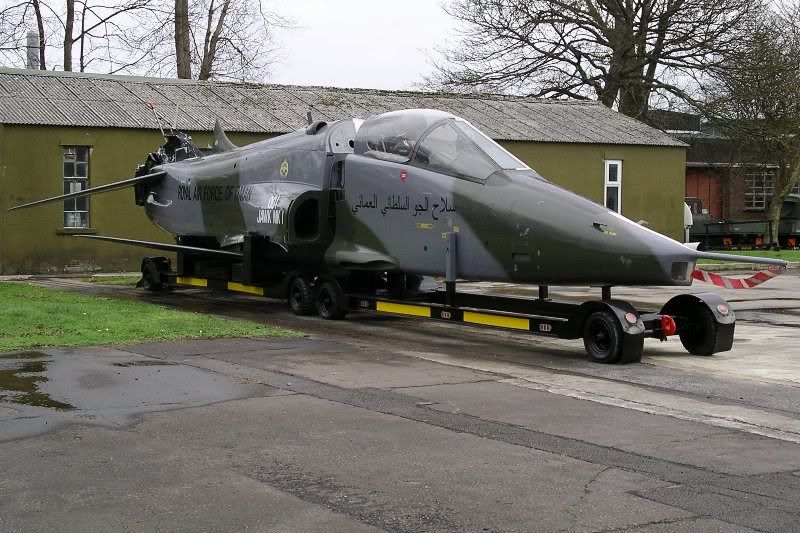
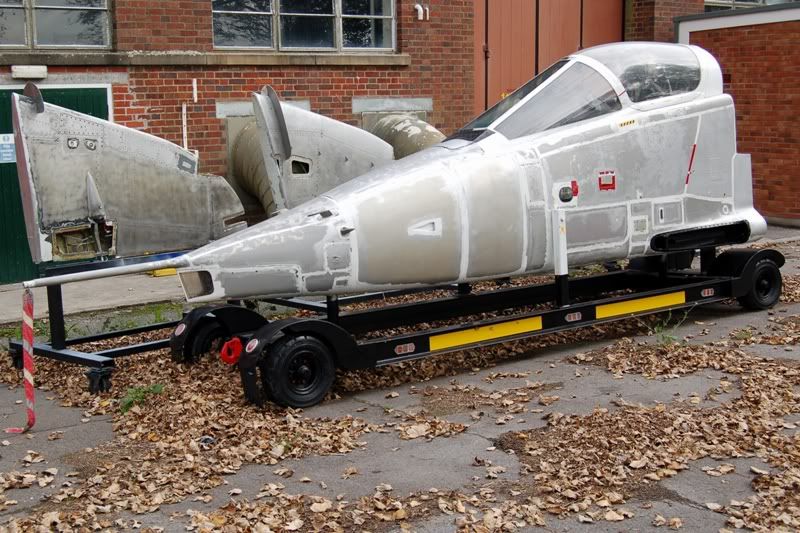
Previous example of cockpit to bomb trolly,


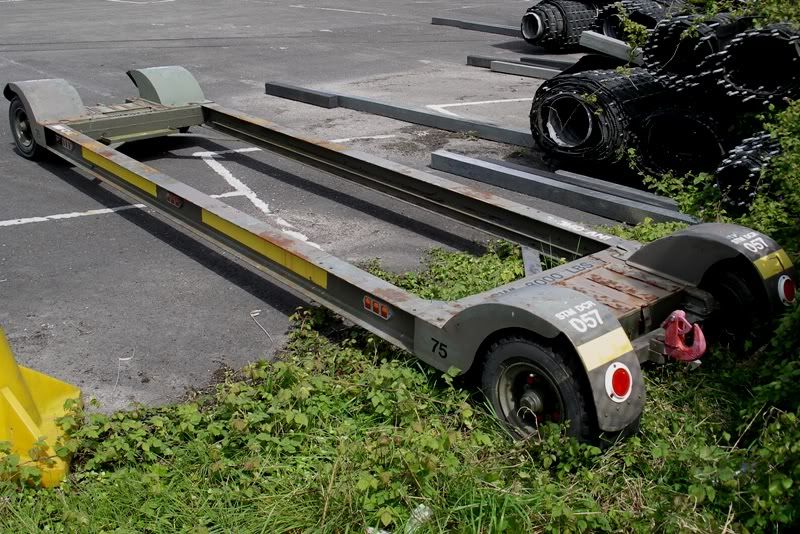
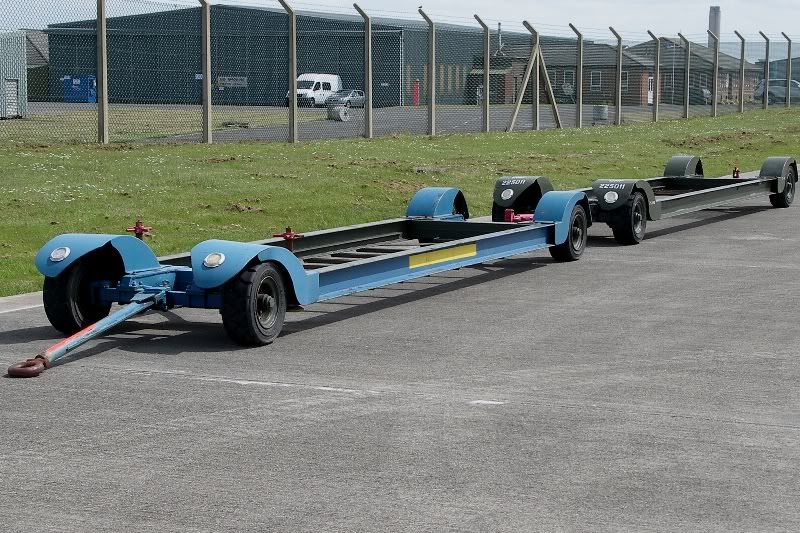
Yep definitely an F Type, tell you what the weight of these things is something else.
VX927 no apologies needed, well done on saving the beast, and good luck with your endeavours:)
I was offered the pictured trollies and two more modern HDU and ammo trollies, the modern ones were better for weight and ground clearance wise, but not a patch on the strength of an F.
I will do some digging around at work on Weds, but the place has pretty well been cleaned out.
The trolly is TonyTs link looks capable, but I think it will get a good price.
Just to cheer Anne up, I saw 5 or 6 of the old classic trolley accs in the disposal pen at Mawgan, I couldn’t touch any of them (local operator wanted one), but the based regiment later turned them into Roman chariots for a do!
The Swift probably appeals most to those who are perhaps 55+ years old and none of us are getting any younger. The fewer old uns there are around who know the history of the Swift the less appeal (and therefore value) the airframe will have.
Your whole post is a pretty fair appraisal of the situation I think, however I’ve only just hit 40 (keep thinking I’m young in a deluded kind of way!:eek:) and I’m fascinated by these types.
What is often overlooked through the mists of time is just how fine the balance was at one time between the Hunter and the Swift in the very early development period, both suffered problems in the prototype and early production stages.
Even the established Sabre F.1 was part of the steep learning curve for the RAF.
The Hawker type was more thoroughly developed through its production and service career, and rightly I suppose the AM/RAF opted to concentrate on the one type. However it should be remembered that the FR.5 was a capable and liked low-level fast recce type and the F.7 went on to pioneer guided weapons use for the RAF.
I would agree that the floatplane (8.S.1), same a/c pictured twice (?), is an Aichi E13A ‘Jake’.
My problem with the linked thread is that so much of the information is blatently wrong that I just hope that the one aircraft is a Japanese type being operated by the French over Indo China/Vietnam in WWII as the OP here suggests.
The other aircraft shown looks like a Ki-43 ‘Oscar’, if so what markings is it in?
Didn’t you also restore the cockpit from that one Tony, or have I got my wires crossed.
Nice Shack MR.2 conversion, did it use the Aeroclub conversion kit?
Is it the Bristol Aeronautics XLRQ-1?
(I am unable to credit the photographer for the use of this image… If it’s yours, please accept my apologies.)
It’s one of mine, but please feel free:)
If you had asked this question about 8 months ago I could have probably saved those two and one other trolley for you! All cut up now though.:(
The value of any static airframe is dictated by several factors including its rareity, condition, historic significance, location, size, wow factor and in some cases potential for return to flight.
I would suggest that this Swift falls short on virtually all of these counts, even its size precludes it being moved whole.
I would suggest otherwise,
This airframe is the only complete reminder of the pure fighter type Swift which was from that righ risk era when both aircraft companies and the services were grappling with high-speed aeronautics, the type provided the first RAF experience of Swept-wings, reheat, and all flying tails, all be it with a short and infamous service life.
The sorted FR.5s/F.7 doesn’t quite reflect that early period.
I do get that it is a bit of a marmite aircraft, people either love the type and would like to see it saved, or are completely indifferent to its fate, unlike the universally admired Hunter.
Either someone with money and really likes the type will step in and save it at reasonable cost (around what TonyD suggests), and can bear the costs of storage and restoration, or it will meet the indifferent fate and end up as a cockpit or parts (wings and other bits could be very useful to WK198).
Personally I maintain that this aircraft is a unique survivor, but even if people disagree with that and want to lump this in with the other three complete Swifts, it would still be a loss for this one not to be saved as a complete example.
Personally though I still think the owner isn’t that keen to get rid of this arcraft.
Maybe a save the Swift group could be formed?

One of my very early paintings in acrylics…….
That is absolutely fantastic work Tony, caught the lines perfectly!:)
Looking back over recent posts has prompted some questions, is there a reason why the Yeovilton USN F-4 couldn’t go to Duxford, thus leaving their J as an RAF F.3? Where did it end up?
Also why did the J at Manston, once displayed at the museum, moved back to the fire school?
I see a few rare images such as a G4M Betty and a floatplane and Zero in French colours?
Hope this is of use to others in aviation research and modelling on a era rarely shown.
Actually the pictures showing the Mitsubishi A6M Zero, J2M Raidens ‘Jacks’, and the G4M ‘Betty’ are in British RAF South East Asia command markings, and flying as part of the immediate post WWII Allied Technical Air Intelligence Unit.
I rarely trust websites showing people dressed up in uniforms and toting guns in their own living rooms.