Really? Which history book is that from? Wasn’t the first Afghan War fought between 1839 and 1842? During the course of which Great Britain had it’s backside kicked?
He’s right, I’ve seen the film.
It features the much feared Afgan fighters, under the command of the Khasi of Khalabar, who aim to defeat the British 3rd Foot and Mouth Regiment who’s tough reputation was such that they were better known as the ‘Devils in Skirts’!
All this is was played out around the hostile Khyber Pass.
Really? Which history book is that from? Wasn’t the first Afghan War fought between 1839 and 1842? During the course of which Great Britain had it’s backside kicked?
He’s right, I’ve seen the film.
It features the much feared Afgan fighters, under the command of the Khasi of Khalabar, who aim to defeat the British 3rd Foot and Mouth Regiment who’s tough reputation was such that they were better known as the ‘Devils in Skirts’!
All this is was played out around the hostile Khyber Pass.
Thanks for the insight Steve, as an outsider the type seemed well suited for the RAF, but I guess actually working on them was something else.
It seems a shame that more weren’t ordered, maybe a more ‘production’ type of airframe would have resulted?
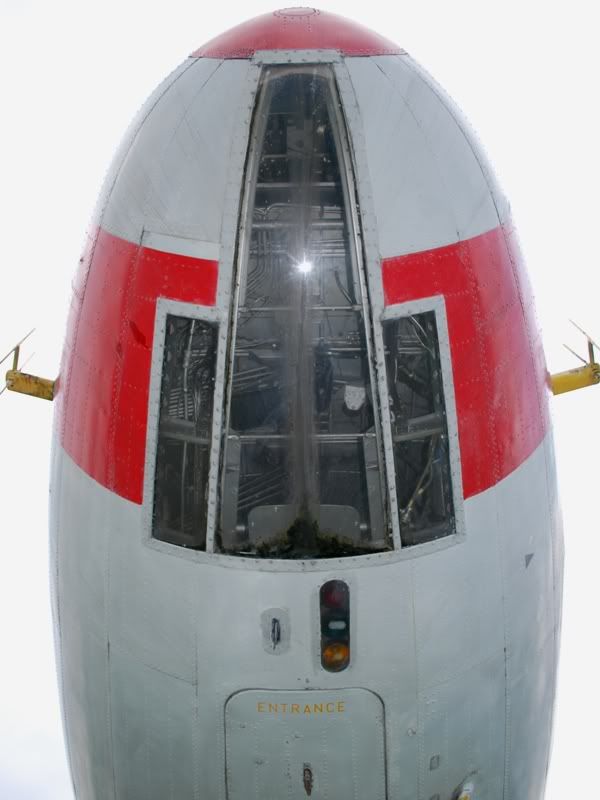
The size of the Belfasts’ flight deck and forward crew area always surprised me.

Someone mentioned Matchbox kits earlier, for me these were the kit manufacturers of my generation.
They produced these lovely boxes with great paintings on the front, and on the rear the colour scheme options of he finished model, plus the clear window so that you could see the guaderly coloured plastic.
They also choose to model some quite unusual and obscure aircraft types that no one else did, such as the Heyford, Stranraer, & Privateer.
I remember breaking my foot and and coming out of hopsital and my old man taking me to a model shop where I brought three Canberra PR.9 kits, then went home and built them all there and then!
At this time Airfix had gone to the photo of the model over sprue plans box art so the Matchbox artwork really stood out, one of my favourites being the HP Victor box.
Down side was some heavy surface detail on some of the kits (Phantom being very bad!) and the multi coloured plastic could be a headache if you were making a light coloured model.
Art is subjective of course but personally I much preferred the work of Matchbox’s Roy Huxley to Roy Cross, the paintings were less dramatic but more technically correct while giving a nice ‘painterly’ feel.

Someone mentioned Matchbox kits earlier, for me these were the kit manufacturers of my generation.
They produced these lovely boxes with great paintings on the front, and on the rear the colour scheme options of he finished model, plus the clear window so that you could see the guaderly coloured plastic.
They also choose to model some quite unusual and obscure aircraft types that no one else did, such as the Heyford, Stranraer, & Privateer.
I remember breaking my foot and and coming out of hopsital and my old man taking me to a model shop where I brought three Canberra PR.9 kits, then went home and built them all there and then!
At this time Airfix had gone to the photo of the model over sprue plans box art so the Matchbox artwork really stood out, one of my favourites being the HP Victor box.
Down side was some heavy surface detail on some of the kits (Phantom being very bad!) and the multi coloured plastic could be a headache if you were making a light coloured model.
Art is subjective of course but personally I much preferred the work of Matchbox’s Roy Huxley to Roy Cross, the paintings were less dramatic but more technically correct while giving a nice ‘painterly’ feel.
Yes, a bog standard aircraft downward identification light which is fitted with an 80W bulb, has a light spread of 135 degrees and is, as already stated, available with red, green, amber or clear lenses.
All taken from my 1959 training notes which also tells me that they were used for air to air and air to ground signalling.
Wasn’t the idea of the ID lights that they had a ‘colour of the day’ (ie red, green, or amber) and also a morse ‘signal of the day’, thus they knew that they were signalling a ‘friendly’ or not?
The lower ID lights seemed to be the same for a long time and across a multitude of types but the upwards one seems to vary, including a single housing with different colour filters within.
You can see the lights in this pic of Newarks’ Hastings
BTW does anyone know how types were choosen to get these lights? For example they were fitted to Hastings but I’ve never seen them on a Shackleton.

Lovely shot of the Trent Meteor Mk12!:)
Excellent images again David, they look so clear and sharp.:)
I get quite heated when it comes to this type of discussion, and despite the fact that most of the forum probably disagrees with me and thinks I’m an idiot, I have to stick to my guns.
Despite my offering up some opposing views, I do agree that the right thing ultimately has been done, and my respect to you for putting your point across in your own way, no apologies needed.
I think we have seen enough of your aviation posts on here to know you are no idiot!:)
I get quite heated when it comes to this type of discussion, and despite the fact that most of the forum probably disagrees with me and thinks I’m an idiot, I have to stick to my guns.
Despite my offering up some opposing views, I do agree that the right thing ultimately has been done, and my respect to you for putting your point across in your own way, no apologies needed.
I think we have seen enough of your aviation posts on here to know you are no idiot!:)
Same here, I get that it was slow, but as a large airlifter for the RAF it must have been ideal? Gave very safe service aswel.
Well ideal enough that they still contracted them in after they pushed them out of service!
I guess it wasn’t truely replaced in size capability until the C-17 came into service?
nice picture!:)
Looks very nice, especially in those colours, has it had a recent repaint or is it regularly kept very clean?
Ah, I have been under the misapprehension that it was Duxfords’ first post-war cupola, the current one in use coming from RAF Nuneaton.
Thanks for correction.
Nice pictures thanks for sharing, it is nice that at least one of the Concordes is preserved in what I would regard as the classic BA colours.
Duxford towers’ old VCR cupola can be seen in the second shot to the left.
i use Specialistauctions for selling things feebay do not like such as weapons, shells etc:-
And it can be accessed from work computor, outstanding!:)







