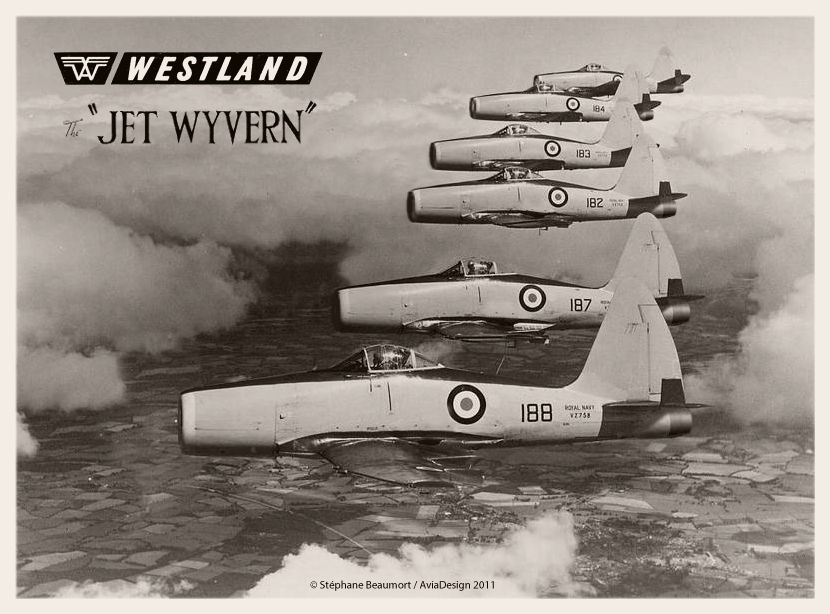
And of course there is Wyvernfans’ collection of Wyvernalia!
Seem to think that the FAAM store might have some parts, possibly later style canopy.
Didn’t realise that Robertsbridge had a canopy as well.
Thanks for the responses, sorry to hear about that TT, another time perhaps!
CA310 appears ok, but there are things in the photos I’ve seen of it which suggest a bit of ‘cobbling together’, the wheels look to be of the wrong type (unles Ceylon had different version).
I have never seen pictures of CA302 at all, at least they preserved two of type.
The Shuttleworth info above has reminded of an age old question in my mind, as to why the Balliol never found favour as a private or display aircraft?
They were retired in abundance, with low hours, three seats, and powered by a Merlin – and pretty to boot!
Must admit I was hoping that the Staverton idea would come to fruition, purely on the selfish grounds of it being straight forward to get to for me!
I know Griffons were overhaulled at St Athan, with tales of a dark, sooty, sweat shop type atmosphere being endured! The engine test-house (pre-war build) which was used into the late Shackleton AEW period still stands.
Thanks for the responses, gave her a quick rub earlier aswel!
Still not that clear as to why the FAA needed the type though?
Thanx Jason for posting the link to one of the most friendliest forums on the web!
I tend not to post pictures of my cockpits here (unless it is to aid someones request or project) – often there are side remarks about ‘not another spitfire post etc!’. Besides, I dont want others to think i am blowing my own trumpet.
I’m surprised to hear that Tony, but you shouldn’t feel constrained about posting about your projects, there will always be silly comments made on forums, nature of the beast and all that!
At the end of the day most of us appreciate that this kind of thing is hard work, no matter the subject.
Glad that you have posted your excellent work above.
Re, the jet cockpits seemingly more glamourous thing, my theory is that this is the case because you can look at a whole jet fighter, bomber, or airliner cockpit and see it for what it is, while invariably a single seat piston engine cockpit display doesn’t have the engine and forward structure, making them less hard to visualise, and for some to be captivated by.
I’ve posted this before but i never tire watching it, although sadly there’s no sound. The Wyvern starts at 2:34 😎
First time I’ve seen that, boy does the Wyvern look awfully big on Illustrious!:eek:
Jim your last para is quite fitting, the Wyvern reflected a changing era where we initially, and desperately, needed a large long-range fighter but was then pushed to the forefront of turbo-prop on carrier technology.
But it does need to be remembered that a team under the outstanding ‘Teddy’ Petter designed this aircraft, test-pilots risked, and at least two lost, their lives testing it, and service ground and air crews had to make it work, through good times and bad These mens’ success and sacrifice was as great as paid by any other crews during war or peace.
Had it come up against contemporary Russian designed jet fighters then it would not of stood much chance. With a relatively low maximum speed, and a turning circle the size of Yorkshire because of its high wing loading, it was said that a lightly loaded Wyvern would even struggle in a dogfight against a fully loaded F-84 Thunderjet. It was also very vulnerable to ground and small arms fire.
My feeling with that is is that it is all relative, ie how would the Skyraider fare without top cover, or even the Buccaneer or A-10 (though more manouverble)? All good dedicated ground attack aircraft really need fighter air superiority for the ensemble to work properly, I don’t think any of them would be good in a dog fight – just my thoughts.
I do like the Penrose quote, along with the access to the cockpit one!
BTW that sound clip of the TF.2 is from the Farnborough air show DVD, and it does indeed sound fantastic!
TT, did you take any pictures? Would love to see the Balliols if you got them!
Very good!:D
My annual trip down South is coming up, and although it was several years ago, I will go and look at this fantastic looking beast. Would you happen to know why they never went into full production, were they too difficult to master, what could she cruise at and her top speed please, if you happen to know.
Jim, when I visited the FAA Museum in May this year the Wyvern was in the storage facility, so be aware that it might not be on display when you visit.
The Wyvern did go into full production (I have it at 16 TF.1s, 13 TF.2s, 1 T.3, & 97 TF/S.4s), but the design was well and truly compromised early on in its life by Air Ministry and MoS indecision, mainly on behalf of changing RAF and RN requirements.
It was originally specified as a Pacific theatre long-range fighter, which soon lapsed at the end of the war.
My own viewpoint is that the final S.4 variant was a superb ground attack platform, which could have been up there with the Skyraider, but the Python engine wasn’t a great unit to power it – high power turbo-prop options at the time were limited though. It’s possibly fair to say there was never a reliable enough piston or turbo-prop engine around at the time for this aircraft.
Rob can provide a far more in depth answer than I can, and possibly a different viewpoint on why it wasn’t more successful.

TY TT!:D
Prototype and pre-production TF.1s piston engined, pre-production and production TF.2, T.3, & S.4 turbo-prop powered.:rolleyes:
Excellent thank you Paul, I did look on that site but failed in my navigation of it!:o
Certainly didn’t realise that there were so few of them.
I think it’s the gun camera installation, but why it’s taped over I don’t know.
Well aesthetics is subjective, and personally speaking I think the Wyvern is a handsome and purposeful looking beast.
Aerodynamics, it could move through the air quite well, and quickly for a large turbo-prop aircraft, so it must have been ok in that regard.







