 G-ORDY
On a similar tack – I was asked by a static JP owner the other day if I could help with sourcing correct paint for a respray … and did I know anyone who would be able to do the job for him. If anyone can assist please send me a PM and I’ll put you in touch.
Merry Christmas!
G-ORDYThe Sea Lion hull/fuselage certainly sounds like the prime candidate. Did it look anything like the title photograph in this article?
G-ORDYSome interesting material there Mark.
On the subject of the lack of wing drawings being available for the Brooklands rebuild that quote came directly from Ron Paine who was one of the engineers involved. He was a very well respected engineer and racing pilot (Miles Hawk Speed Six G-ADGP) and had a very good recollection of the events. He told me this in the early 1980s.
As for your question as to whether the prototype Gull had flaps – the answer is “no”. Split, trailing-edge flaps were not fitted to Gulls until 1935, they were of the Schrenk kind and worked by twisting a tube fitted to their leading edges.
At the Press Launch of the re-designed 1935 model Gull Percival stated that the Mew Gull, G-ACND, had been the first British aircraft to be fitted with split flaps (for its first appearance in the King’s Cup Air Race in 1934) but they had been screwed shut during the event and a retractable air-brake used instead.
I must say I never considered whether the Hendy 302 had folding wings, I suppose I assumed it had them as virtually all light aircraft of the period had folding wings, but I’ve never seen a photo of the wings folded nor any drawings of folding mechanism.
G-ORDYVintage Aircraft magazine # 30, April-June 1984
OK guys – you’ve dragged me away from “SS3” for a while …
I knew AJJ very well when I was publishing “Vintage Aircraft” magazine between 1976-1986 and as I was interested in Percival and his aircraft I made a point of asking about this one.
It was the threat of legal action which brought about the wording in the 2nd Edition – pure and simple.
One had to be very careful when publishing anything about Percival during his lifetime – I remember him ringing me at home one day after I’d published the photo of the prototype Gull under construction at Maidstone – a negative which I found in the photo archive of Motor Sport magazine and which Bill Boddy gave me permission to publish.
The story of the crash in Scotland is correct – that information came from Ron Paine who was working at Brooklands and who helped rebuild the wings – for which there were NO DRAWINGS! They stripped the fabric off the Hendy 302 and copied the structure! Read into that what you will.
The following is a copy of the first part of a feature article which I wrote for Issue # 30 of Vintage Aircraft and which was – I believe – the first time that all the facts had been brought together in one publication:
EDGAR PERCIVAL’S ideas on the design and construction of the ideal private owner’s aeroplane had evolved during the early and mid 192Os, a period of his life that had been spent conducting performance trials on a variety of types following his appointment to test pilot duties by the Air Ministry. The opportunity to put these ideas into practice came in 1929 with the design of the Hendy 302, a collaborative effort between Percival and Basil B. Henderson of the Hendy Aircraft Co. The latter company was little more than a design agency, although it did actually build the little Hendy 281 Hobo, G-AAIG, at its Shoreham premises most of the construction work on Hendy projects was subcontracted to manufacturers with spare capacity — a state which many concerns found themselves to be in at the end of the 1920s.
Precisely how deep was Percival’s involvement in the 302 is difficult to ascertain, the design brief was prepared by Percival and he claimed subsequently that “… I personally prepared approximately one third of the drawings for this machine.” What is clear is that the patent Hendy spar construction was incorporated into the wing and that the wing planform and airfoil section were both designed by Basil Henderson. Construction of the single example built was entrusted to George Parnall & Co. Ltd of Yate, near Bristol, and G-AAVT obtained its Certificate of Airworthiness on 27 June 1930.
The 302 was a sensationally clean design for its day being a low-wing cantilever monoplane powered by a single 105 hp Cirrus Hermes I and seating two persons in tandem. Percival’s idea was to display the type’s advanced performance in the 1930 King’s Cup Air Race which started and finished at Hanworth on 5 July that year. The field was the biggest ever, 101 entrants of which 88 eventually started, but he failed to beat the handicappers and the race was won by Miss Winifred Brown in an Avro Avian at a speed of 102.75 mph, the 302 putting up an average speed of 121.5 mph.
After the 302 had been flying for a few months Henderson and Percival appear to have gone their separate ways, Percival to design the Saro-Percival Mailplane, G-ABLI, which was built by Saunders-Roe Ltd at Cowes in 1931, and Henderson to prepare designs for N.A. de Bruyne (the Snark) and Bert Hinkler (the wing of the Ibis amphibian). Don L. Brown, who was involved with the Miles brothers at Shoreham at this time, stated in 1948 that Henderson did, in fact, prepare a design for a three-seat version of the 302, known as the 311, and that it was this aircraft which eventually appeared as the Percival Gull in 1932.
The precise origins of the Gull led to some acrimonious letters published in The Aeroplane during 1932. Percival was at pains to point out that Henderson was in no way connected with the Percival Aircraft Company Ltd recently formed with himself and Lt.Cdr E.W.B. Leake as directors plus R.H. Bound as chief draughtsman — and that the Gull, with the exception of the patent Hendy spar had been ‘… completely designed, drawn and stressed in these offices without any outside assistance.’ Henderson’s reply to this was to suggest that perhaps Percival had ‘. . . forgotten that the Hendy Aircraft Co. designed and supplied him with the complete drawings of not only the spar structure but of the entire wing structure…? The first Gull which was built (and thus presumably is the “Type Aircraft”) was granted a C of A as an aircraft subsequent to the Hendy 302, and consequently did not have to go to Martlesham Heath as would be necessary for a new type.’ Percival’s closing comments stated that between 80 and 90% of the drawings supplied by Henderson had been redrawn and modified in the Percival D.O. No mention is made of the part played by R.H. Bound, although some authorities have suggested that he designed the Gull. Percival himself stated categorically that it was entirely his own design and one which he had prepared solely and not with the assistance of others. Bound had previously worked with Hinkler on the Ibis from 1929 to 1931, he left the Percival Aircraft Company in 1935 and his place was taken by A.A. Bage.
The prototype Gull, G-ABUR, was built by the British Aircraft Company Ltd at its works at Maidstone, Kent, and is believed to have been test flown by Percival at the small aerodrome at Malling – now absorbed into the present West Malling aerodrome. The correct designation for this aircraft is the Percival Type D.1 Gull Four and in its initial form it was powered by a 130 hp Cirrus Hermes lv. Its first public appearance was in the 1932 King’s Cup Air Race which was held over 8 – 9 July and in which it put up an average speed of 142.73 mph, closely matching the speed of 145 mph which its predecessor the Hendy 302 had achieved in the London – Newcastle Race the previous year. What was never made public at the time was the fact that G-ABUR was almost totally destroyed in a forced landing accident a few weeks before the race. Percival — anxious that the type should be seen in this most prestigious of races insisted that it was rebuilt and the work was carried out with considerable secrecy by Brooklands Aviation Ltd. What is most interesting is the fact that no drawings were available when it came for the wings to be rebuilt and as a last resort the fabric was removed from the wings of the Hendy 302, which happened to be at Brooklands at the time, and the structure was copied exactly in order to manufacture a new pair of wings for the Gull. This information came from Ron Paine, who worked on the Gull at the time, and who clearly recalls that it was only by a stroke of fortune that they could do the work anyway, this being that Vickers Ltd had just laid off a large number of carpenters following the cancellation of an order for Virginias and these were rapidly contracted to carry out much of the rebuilding of the Gull.
And here are some photos:

The man himself with the Hendy 302 in the 1930 Kings Cup Air Race – look at the hood design and neat little curved rear window and compare with the Gull photos below.

The prototype under construction at Lowe-Wylde’s Maidstone workshop in 1932.

Probably an early test flight from Malling – compare canopy etc with the Hendy 302.

Practice flight for the 1932 King’s Cup Air Race after the Brooklands rebuild, Percival at the controls – photo from Alex Henshaw.
I hope that clears it up for you – if only we could track down any relatives of Basil Henderson – he went to Parnalls and designed Frazer-Nash gun-turrets.
BTW – Anyone know what the Percival Types A, B and C were and why did his c/n’s always start at 20? (It’s not a quiz … a don’t know either answer!)
G-ORDYWithout doubt this unique a/c should be with either the Boulton Paul Collection at Pendeford Wolverhampton or failing that at RAFM Cosford.
Planemike
Perhaps – but if the original Midland Aircraft Preservation Society hadn’t taken it on when Cranfield got rid of their airframes chances are it wouldn’t be here at all.
G-ORDYHere’s a few I’ve posted over the years in the Historic Forum
When I get the time I’ll scan some more:
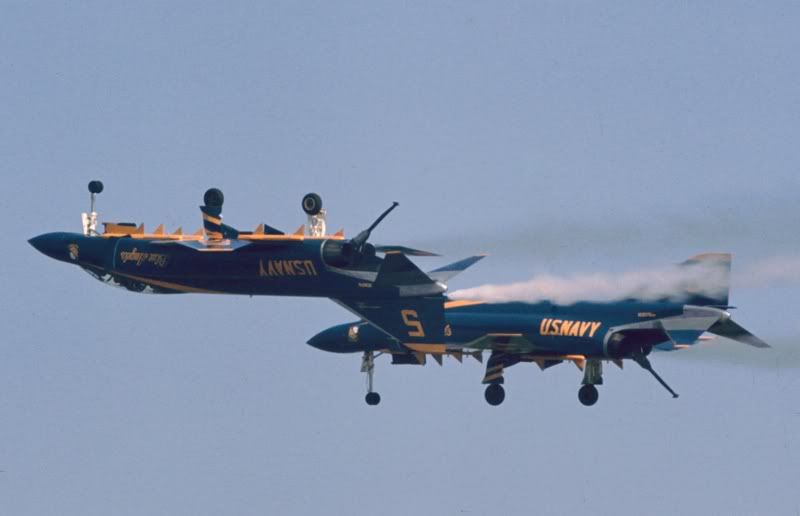
Blue Angels F-4J at Bentwaters, May 1973

31+88, Fiat G.91, Chivenor, 1969

XL617, Hunter T.7, Chivenor, 1969
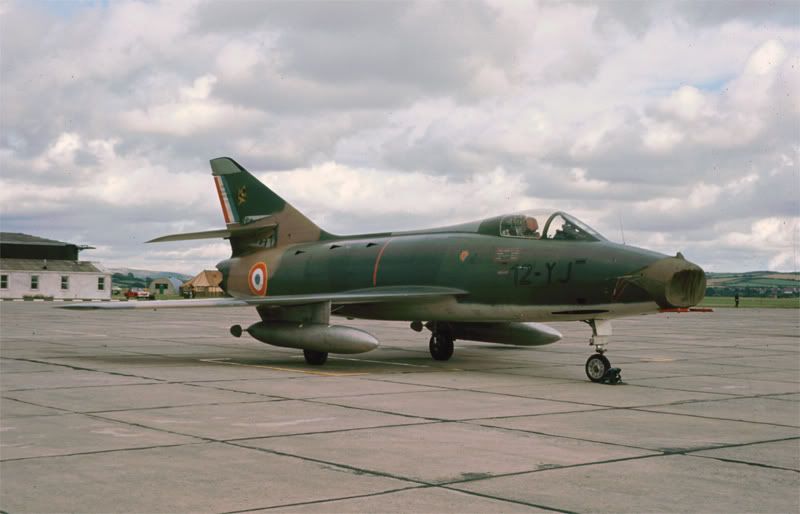
Super-Mystere, Chivenor, 1969

XM144, Lightning, Chivenor, 1969

62443, Kaman Huskie, Upper Heyford, 29 August 1970
G-ORDYAnother one which went missing was G-AEOH, also flown from Walsall by builder/pilot R.C.Streather. I sold it to Roger Windley around 1978 but recent enquiries came up blank. Roger sold it but can’ remember when or to whom.
G-ORDYThe “Flight International” photo library has some wonderful photos of G-ACSS arriving at Croydon as “The Burberry”. I published an article by Air Cdr Clouston in “Vintage Aircraft magazine” which used several of them – he was kind enough to autograph one which hangs on my study wall – next to another autographed by Alex Henshaw. It really was a privilege to have met & corresponded with these extraordinary people. Best of luck with the project.
G-ORDYWould this project have any connection with the one started by Tim Moore & the late John Evetts in the days of EMK Aeroplane or is it another one?
(I never realised Mew Gulls had spade grips, always assumed it to be a normal stick)
G-ORDYI rather like the way in which the RAF Museum restored/conserved the hull of the Supermarine Southampton (N9899) which is displayed at Hendon and in which the new and original parts can be clearly distinguished from one another.
Much better than a waterlogged heap of wood.
G-ORDYIf it were up to me I’d put two fingers up to Cambridge City Council and move the entire operation to “Robin Hood International” …
G-ORDYHeathrow – 4th March 1973
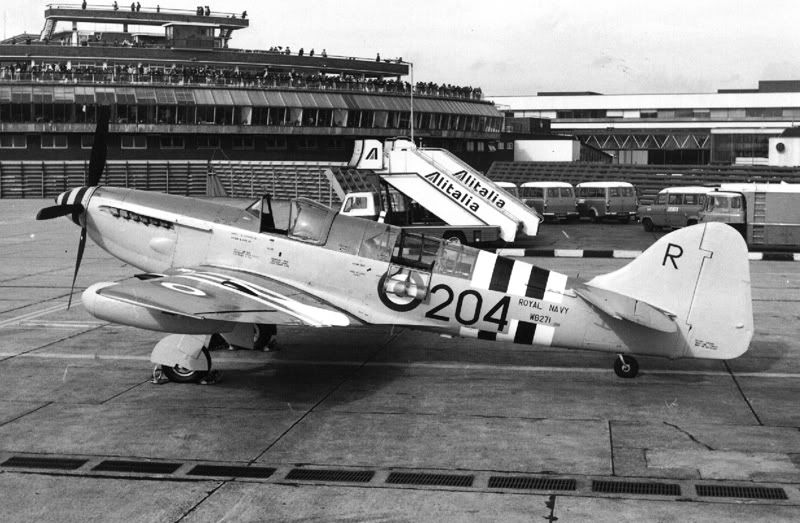
We used this on the front cover of “Aviation News” – I think it was also on the FC of “Control Column”
My one and only airside visit to Heathrow!
G-ORDYThe BGA 804 at Keevil was previously at Dishforth! As the owner of it I am also interested to know how to gliders claim to have the same identity!
I would certainly be interested in an invite to inspect the MAM example.
When Bob Ogden and I picked up the Kirby Cadet from Perranporth all those years ago it was doped Royal Blue with white trim and marked BGA804. I think that the fuselage was broken just ahead of the tail section.
I remember a rather odd looking single seat sailplane stored at Perranporth at the time, natural doped fabric and the wing can only be described as “diamond shaped”, very stange … no idea what it was or what became of it.
G-ORDYI thought that a Moth developed into a Mosquito via a Dragonfly stage …
G-ORDYDoest this airframe has a set of wings?
Cheers
Cees
Yes and no! It did have a set but I believe that they were left in the USA. The fuselage has been converted into a high-back.


 Sign In







