So I was wondering how many Comet Racers were made, what colours did they fly in and, how many still survive?
They were G-ACSP ‘Black Magic’ black & gold (became CS-AAJ ‘Salazar’), G-ACSR green (became F-ANPY red), G-ACSS ‘Grosvenor House’ red & white, G-ADEF ‘Boomerang’ silver & blue, & F-ANPZ red.
The survivors are ‘SP at Derby airfield and ‘SS at Shuttleworth.
So I was wondering how many Comet Racers were made, what colours did they fly in and, how many still survive?
They were G-ACSP ‘Black Magic’ black & gold (became CS-AAJ ‘Salazar’), G-ACSR green (became F-ANPY red), G-ACSS ‘Grosvenor House’ red & white, G-ADEF ‘Boomerang’ silver & blue, & F-ANPZ red.
The survivors are ‘SP at Derby airfield and ‘SS at Shuttleworth.
The Venezuela Venoms were a new variant, the FB.54.
The Vampire trainer shown was unique to the VAF, a mention in ‘Flight’ (Jan ’53) says the aircraft was assembled there and was unique, featuring A/C – I wonder if that explains the NF style canopy? They also used four standard T.55s.
Nice pics, thanks for sharing, interesting mix of British & American types, did you get any shots of the Canberras?
Also worth noting that one of the ex Flambards Dragonfly’s (WG725) is in the same museum.
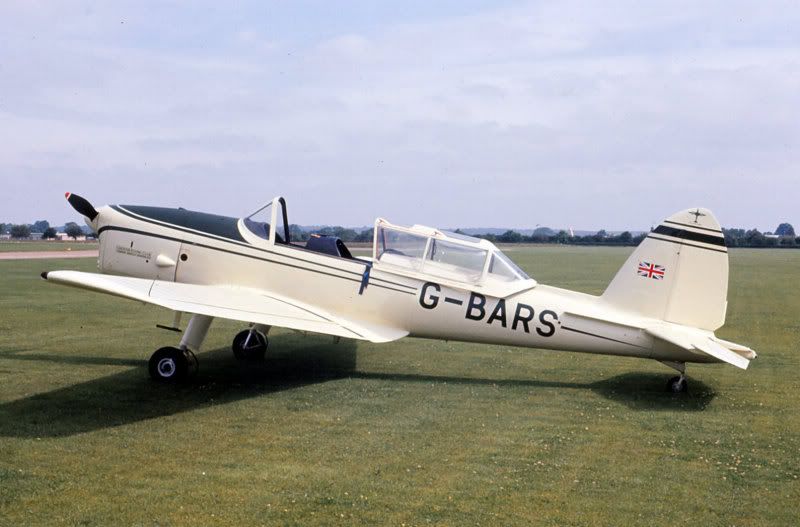
Thanks Janie, I kind of knew that (prompted by G-BARS), just wonderd what the Mk.22 mods were that seperated if from just being a standard T.10 operated by civilians?
Sure, but worth reminding ourselves of what Hunter XG194 looked like until recently, http://www.thunder-and-lightnings.co.uk/hunter/survivor.php?id=313!
Superb, my favourite JP scheme!
This might be a good place to pop the question, what makes a Chipmunk T.10 into a Mk.22?
I’m not sure why, but I enjoy seeing aircraft in bits, or that are not in absolutely mint condition. Maybe it’s that you get a greater understanding of how they are built and work.
Interesting to see a B-57 cockpit in Australia.
The Cornish coast path passes to the west of the airfield, there are a couple of areas which open on to the airfield but are signed MoD property, there’s no public right of way through the airfield and around the various ‘dumped’ airframes – museum style! These airframes are in use training aids and not safe for public access.
Besides the rotary activity in the week, there is VGS gliding at the weekends.
Reading the appropriately named posters piece, really illustrates why you shouldn’t enter the site without permission or escort, especially with an animal.
Which Brabazon class did the Viscount come under?
IIB, though I think the design and particularly the turbo-prop power was driven from the Vickers end.
Coincidentally, IIA was the aforementioned, conventionally powered Airspeed Ambassador (I can see the Flamingo influence there).
Time for that book, surely Ken?!
Blimey, Bader is taking some body blows lately!
I used to know an old chap who knew, and his wife worked with, Bader post-war, and both had nothing but good to say about him.
I think the problem here is society in general, we tend to like to pick out a personality from a certain popular sector of the time (then pilots, now footballers) and really big them up through the media and films etc, beyond their normal human achievement mostly, they obviously get drawn into this themselves – this then leaves them wide open to be knocked back down again.
A certain jealousy from peers when someone gets choosen as a popular figurehead can also occur.
Also, as with any of us, there are characters that won’t get on.
I’m going to hang on to my heroic version of DB, rose tinted or otherwise.

G-BARS at Hatfield, 7 July 1973
G-BARS seen a couple of weeks a go at the hands of John Beattie,

Chipmunk 22 1377 (G-BARS) 6 Sep 12 by jamtey71, on Flickr

Chipmunk 22 1377 (G-BARS / WK520) 6 Sep 12 by jamtey71, on Flickr
Very nice, I saw the 8 sqn tail dragger trainer at Lossie on a visit in the late ’80s, always wondered what happened to it, good to see it’s still flying.
Well done to Parkhouse aviation and to whoever it is that has acquired her.
Classic Flight/Air Base for St Mawgan.
Be great to see it gain a local twist and get repainted as the less obvious Coastal Command Comms Flt, 42 sqn, and Stn Flt Varsity WF330 that served at Mawgan.
Good to see Mr Parkhouse gainfully employed in moving these aircraft!